hit counter

Alzheimer’s Progression AI Model Reaches 0.965 mAUC in TADPOLE Dataset

Editorial card showing Alzheimer progression prediction with longitudinal brain scans, model uncertainty, and TADPOLE cohort data.

A 2026 TADPOLE modeling study reported that a sequential neural process with normalizing flows predicted future Alzheimer diagnostic stage with mAUC 0.965 ± 0.006, ahead of the authors’ earlier sequential-neural-process model at 0.937 ± 0.014.1 The result is a strong benchmark signal for uncertainty-aware disease-progression AI, but it is still retrospective modeling evidence rather than …

Read more

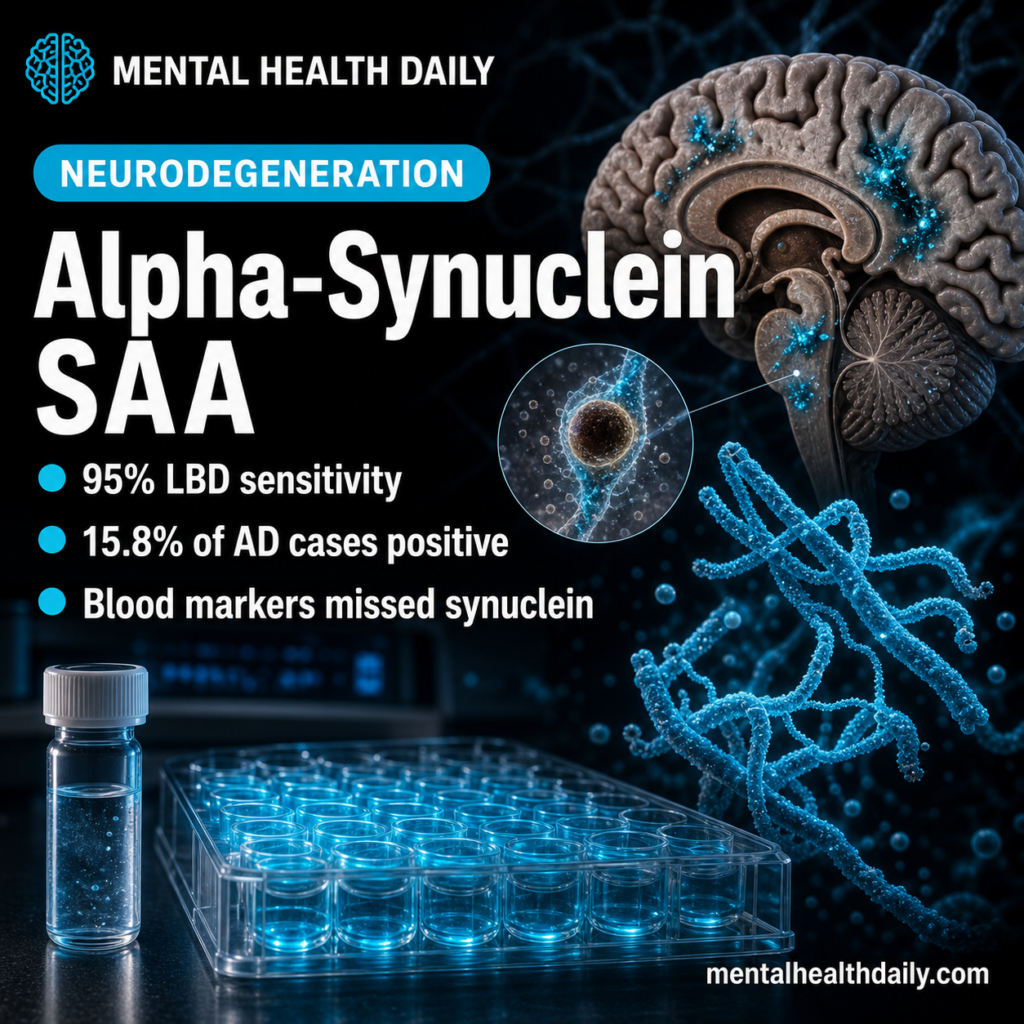
Alpha-Synuclein SAA Detected 95% of Lewy Body Dementia in ALZAN

MHD featured image for alpha-synuclein SAA and Lewy body dementia biomarkers.

A 2026 ALZAN memory-clinic cohort found that cerebrospinal-fluid alpha-synuclein seed amplification assay detected 19 of 20 Lewy body dementia cases, with 95% sensitivity and 93.5% specificity against non-Lewy-body, non-Alzheimer’s controls.1 The same assay was positive in 32 of 203 Alzheimer’s disease patients, which makes the result a co-pathology warning as much as a diagnostic win. …

Read more

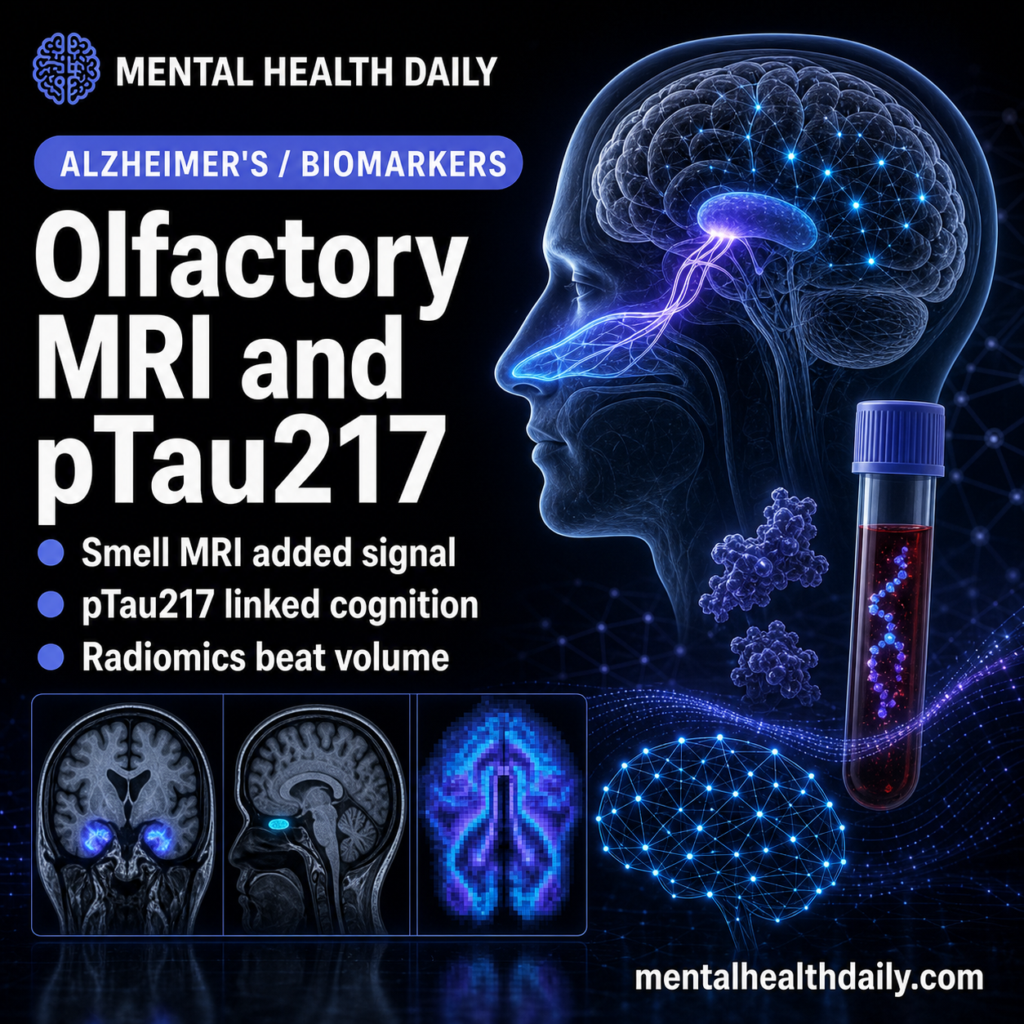
Olfactory MRI Radiomics Link pTau217 to Alzheimer’s Cognition

MHD featured image for olfactory MRI radiomics, pTau217, and Alzheimer's disease cognitive impairment.

A 2026 multi-cohort Alzheimer’s disease study found that MRI radiomics from the hippocampus and amygdala linked plasma pTau217 and smell identification to cognitive impairment — with more added cognitive signal than simple regional volume. The result is useful because it points to a possible bridge between blood biomarkers and brain-circuit damage, but it is still …

Read more

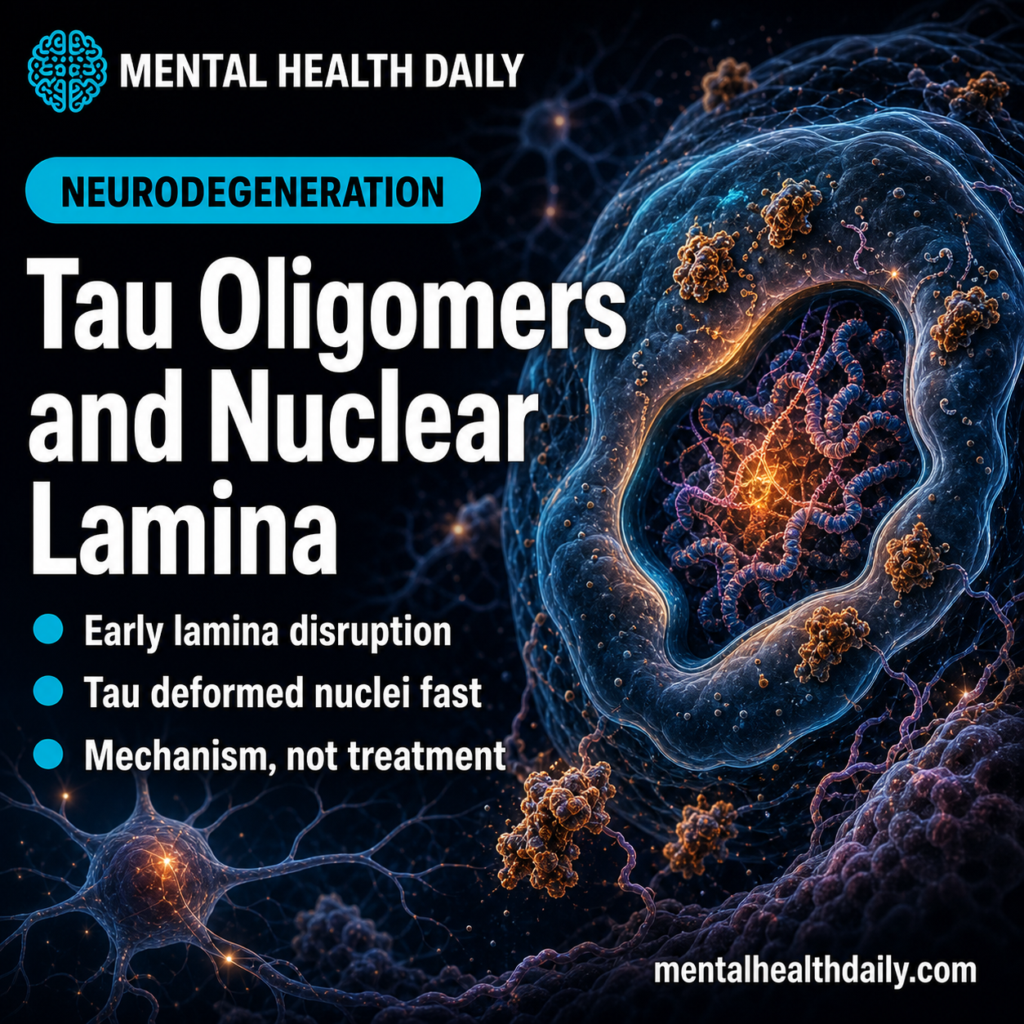
Tau Oligomers Disrupted Nuclear Lamina in Alzheimer’s Disease Models

MHD featured image for tau oligomers, nuclear lamina disruption, and Alzheimer's disease models.

A 2026 Acta Neuropathologica study found that oligomeric tau was linked to early nuclear lamina disruption in Alzheimer’s disease tissue, PS19 tauopathy mice, and human induced pluripotent stem cell (iPSC)-derived neurons.1 The strongest claim is mechanistic: tau oligomers appeared to deform the nuclear envelope and disturb chromatin before overt neurodegeneration, but the work does not …

Read more

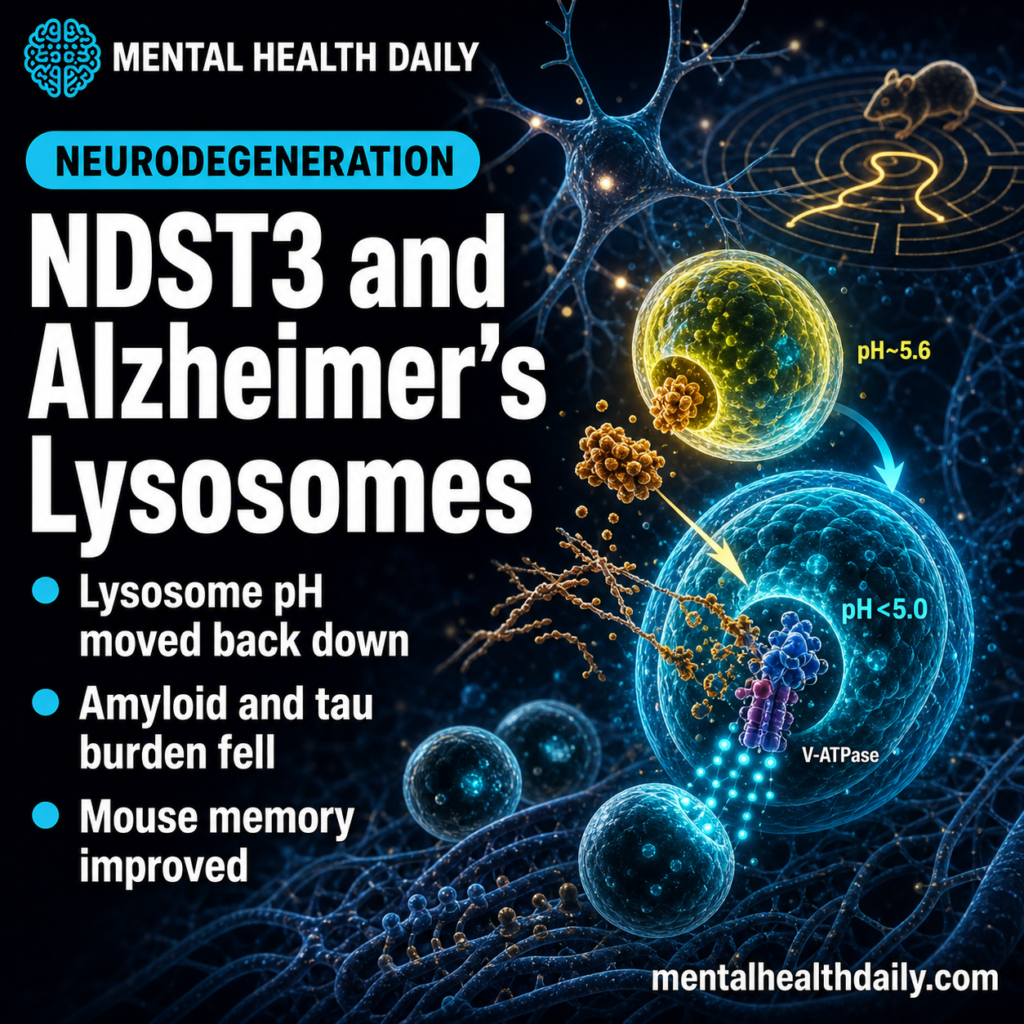
NDST3 Suppression Restores Lysosome Acidity in Alzheimer’s Mouse Models

MHD featured image for NDST3 suppression and lysosomal acidification in Alzheimer's disease models.

A 2026 mechanistic Alzheimer’s study found that suppressing NDST3 shifted lysosomal pH in APP695Swe neuronal cells from 5.6 back below 5.0, then reduced amyloid-β, MAPT/tau pathology, neuronal injury, and memory deficits in 3xTg-AD mice.1 Research Highlights Lysosome pH moved back down: APP695Swe-overexpressing HT22 cells had lysosomal pH around 5.6, while NDST3 knockdown re-acidified lysosomes to …

Read more

Alzheimer’s AI MRI Diagnosis: ANA-GNN Reaches 85.23% Accuracy in ADNI

MHD featured image for ANA-GNN Alzheimer's AI MRI diagnosis in the ADNI cohort.

A 2026 ADNI study reported 85.23% accuracy for ANA-GNN, a graph neural network that combined structural MRI regional features with clinical variables to classify cognitively normal controls, mild cognitive impairment, and Alzheimer’s disease.1 The result is useful, but the clinical-feature ablation dropped accuracy to 68.35%, so the model should be read as multimodal decision-support research, …

Read more

Alzheimer’s Amyloid Plaques Recruit CD8 T Cells Through Type I Interferon

MHD featured image for Alzheimer's amyloid plaques, CD8 T cells, type I interferon, and CXCL10 signaling.

A 2026 single-cell and spatial-transcriptomics study of 21,156 brain immune cells found that late amyloid disease shifted interferon-driven neuroinflammation from microglia toward plaque-associated CD8 T cells, with T-cell frequency strongly tracking total amyloid deposits (Spearman rho = 0.844, p < 0.0001).1 The result does not turn Alzheimer’s disease into an autoimmune disease, but it makes …

Read more