hit counter

Virgin Olive Oil Linked to Cognitive Preservation and Gut Diversity
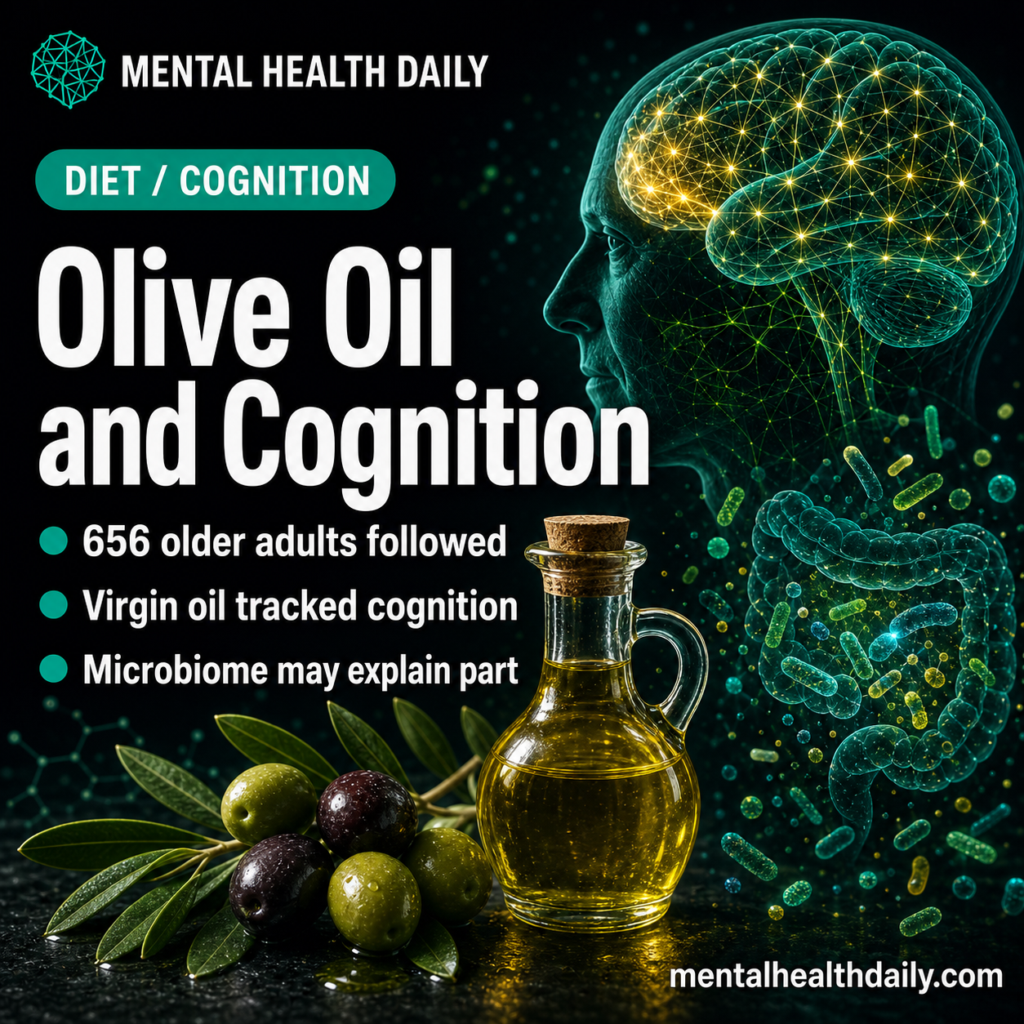
MHD featured image for virgin olive oil, gut microbiome diversity, and cognition.

A 2026 PREDIMED-Plus cohort analysis linked higher olive-oil intake with 2-year cognitive preservation in 656 older adults, with each 10 g/day increment associated with higher global cognition change compared with lower intake (beta 0.044 z-score; 95% CI 0.013 to 0.075; p = 0.006).1 The more specific signal favored virgin olive oil and gut-microbiome diversity, while …
Read more

Chronic Disease Linked Loneliness to Cognitive Risk

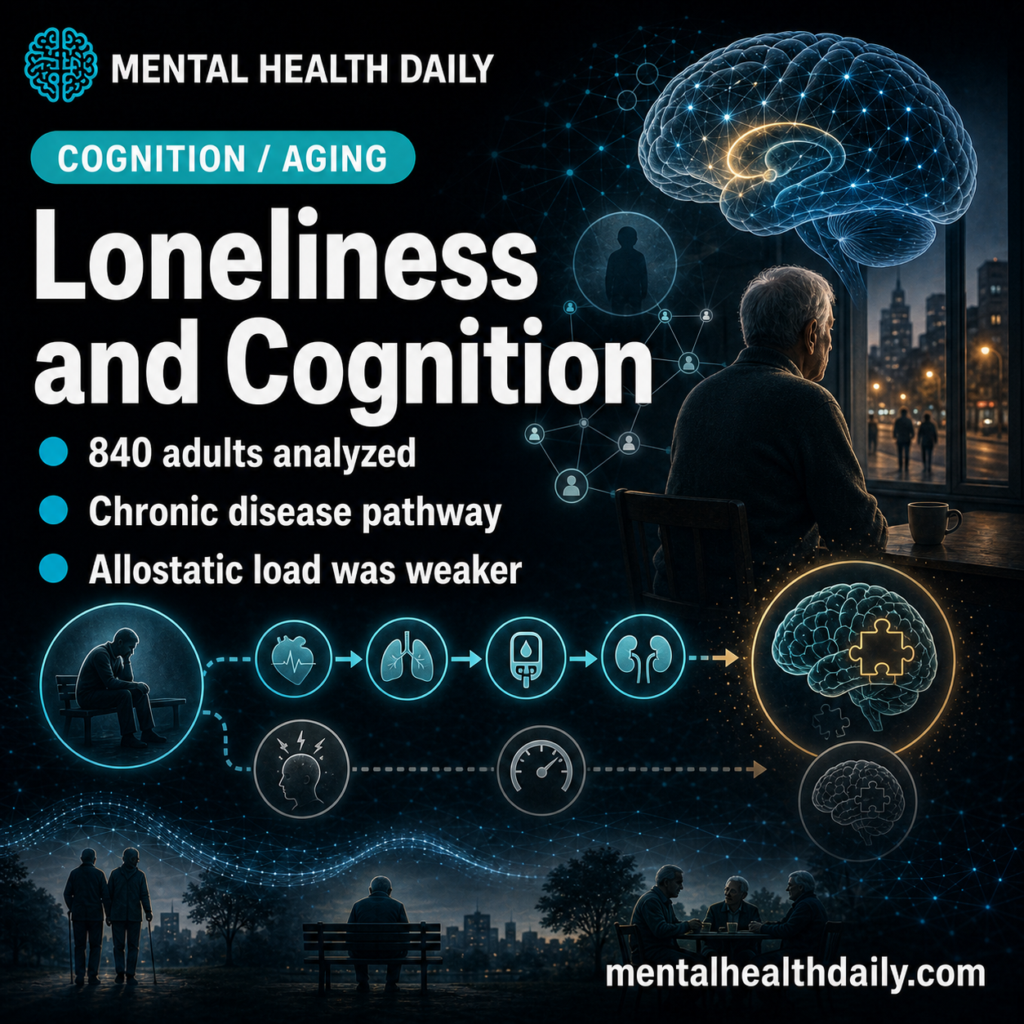
A longitudinal MIDUS analysis involving 840 adults found that loneliness scores higher than a person's objective social-isolation score were linked to later cognitive impairment mainly through chronic disease burden, while the allostatic-load pathway was weaker than the chronic-disease pathway and not statistically confirmed for the main cognitive outcomes.1 Research Highlights Loneliness was separated from isolation: …

Read more

Long COVID Fatigue Was Severe Without Clear Inflammation Biomarkers

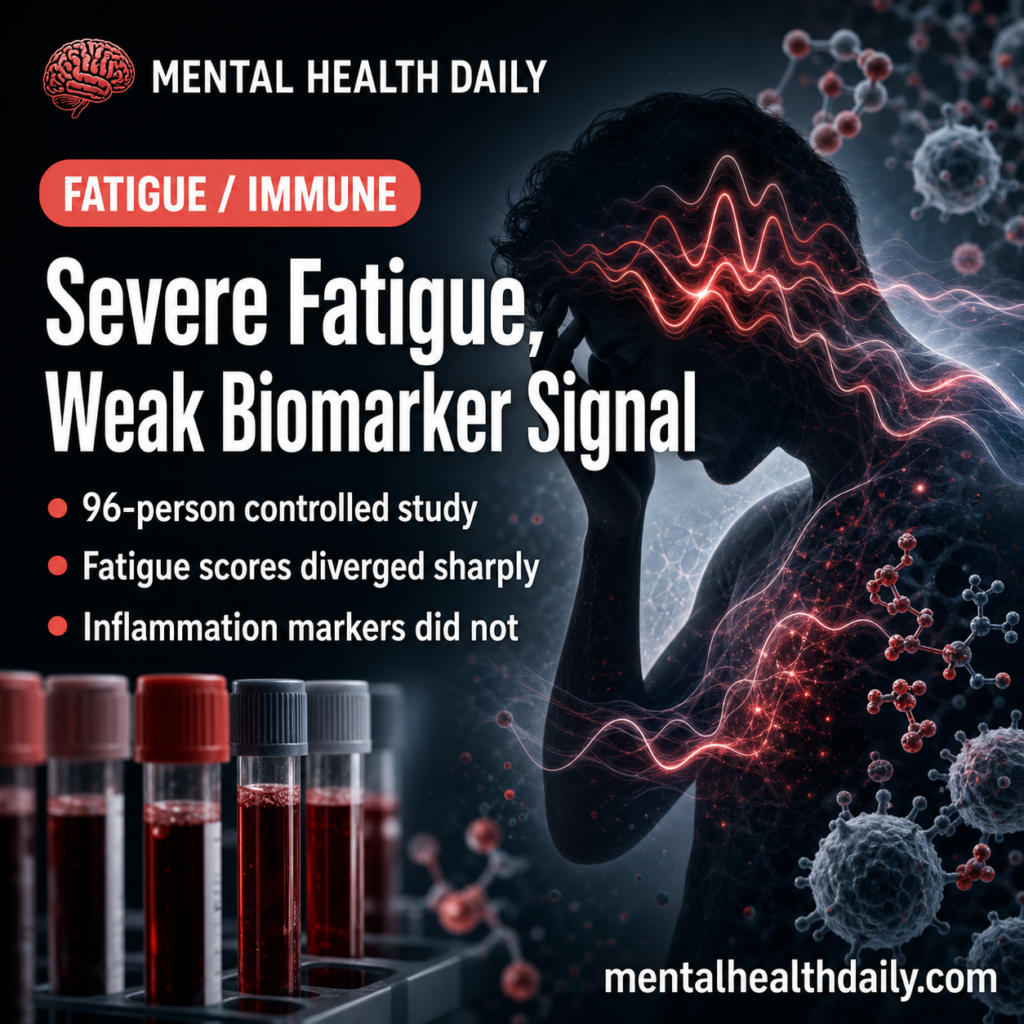
MHD featured image for long COVID fatigue biomarkers and inflammation.

A 2026 controlled study of 96 people found severe long-COVID fatigue across 3 validated fatigue scales, but the tested peripheral inflammation, cellular-stress, neuroprotection, and autoimmunity markers did not significantly differ by group or explain fatigue severity.1 The finding argues against a simple blood-marker story, not against the reality of long-COVID fatigue. Research Highlights Fatigue was …

Read more

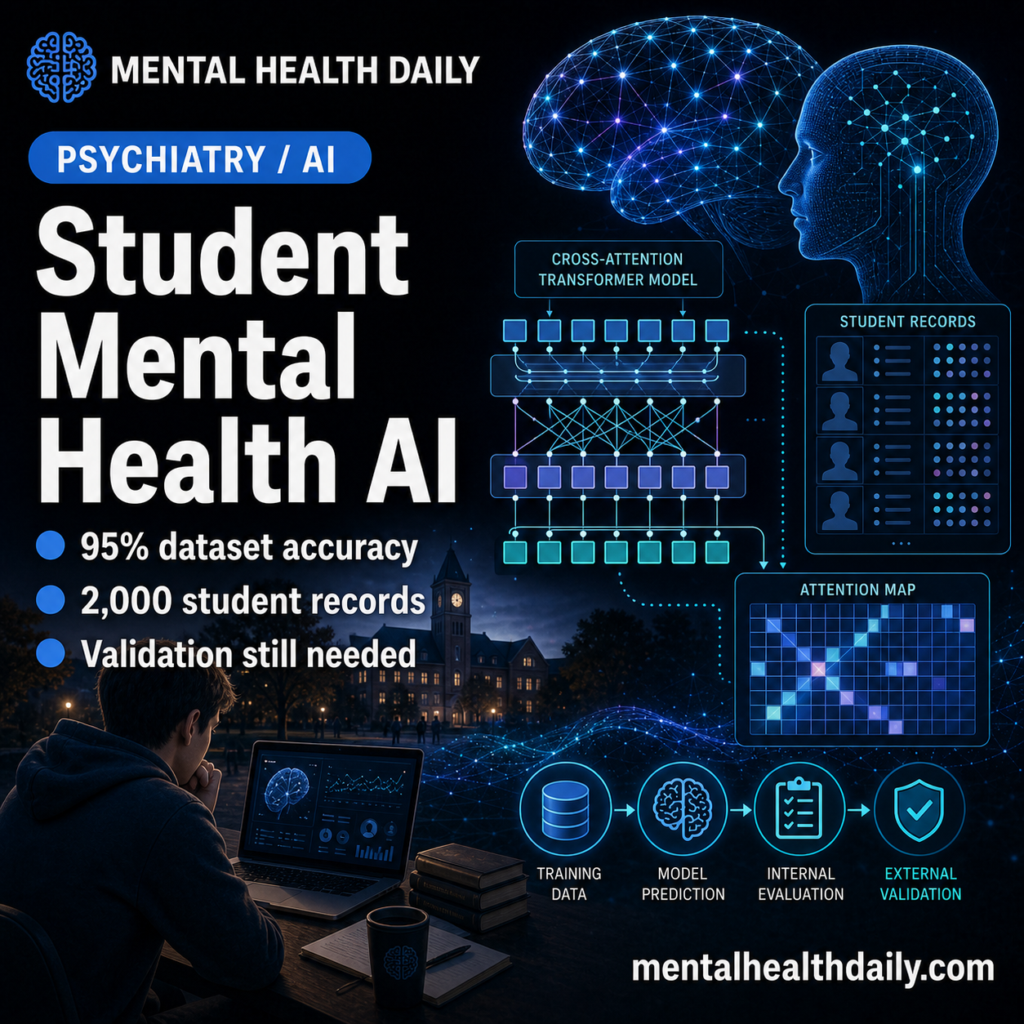
Student Mental Health AI Reached 95% Accuracy in Kaggle Data

A 2026 PLOS One machine-learning study reported 95.0% accuracy for a hybrid FT-Transformer plus long short-term memory (LSTM) model predicting student mental-health risk. The technical result is strong inside the dataset, but the clinical claim is still limited because the labels came from repository data rather than prospective clinical diagnosis.1 Research Highlights 95.0% accuracy was …

Read more

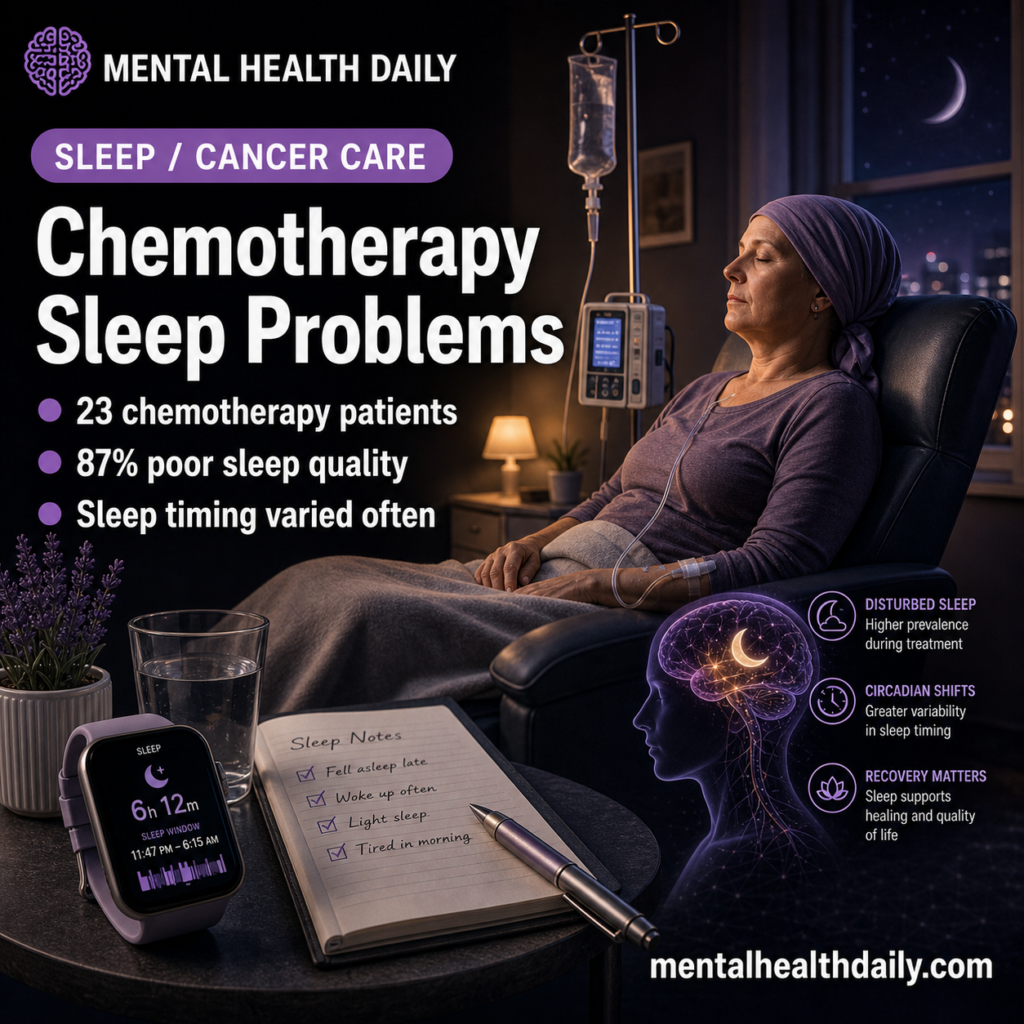
Chemotherapy Sleep: 87% Poor Quality, 61% Variable Timing

MHD featured image for chemotherapy sleep quality and sleep timing.

Sleep problems during chemotherapy include more than daytime fatigue. In a 2026 outpatient chemotherapy sample, 87% reported poor sleep quality and 61% had variable sleep timing, while measured bedroom light, temperature, and self-reported environmental disruption were not significantly linked to overall sleep health.1 Research Highlights Small chemotherapy sample: Adams et al. studied 23 adults receiving …

Read more

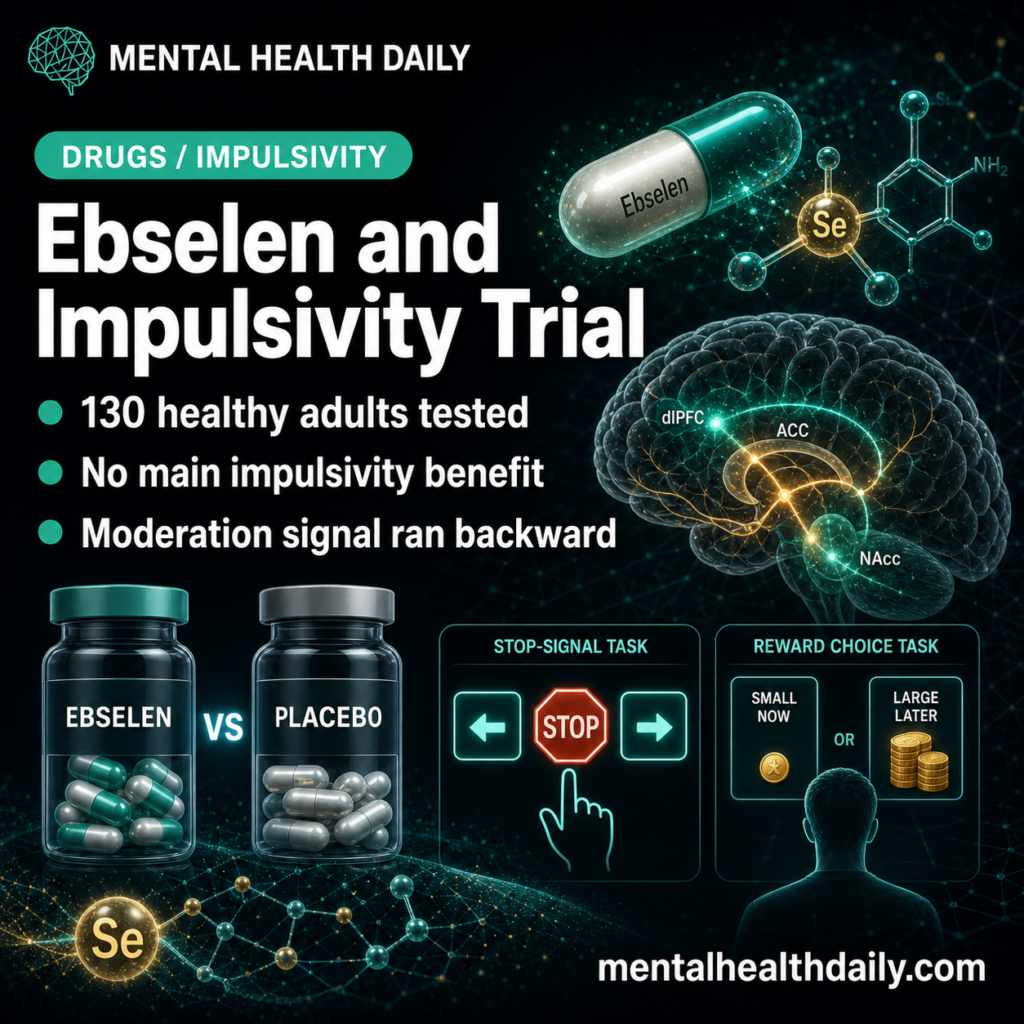
Ebselen Failed to Reduce Impulsivity in 130 Healthy Adults

MHD featured image for ebselen and impulsivity placebo trial.

A double-blind placebo-controlled trial found no evidence that ebselen reduced impulsivity in 130 healthy adults: 66 received ebselen, 64 received placebo, and the 1,800 mg 2-day regimen did not improve motor impulsivity, reflection impulsivity, or delay discounting.1 The more interesting calibration is that several trait-impulsivity interactions ran opposite the secondary prediction, weakening the idea that …

Read more

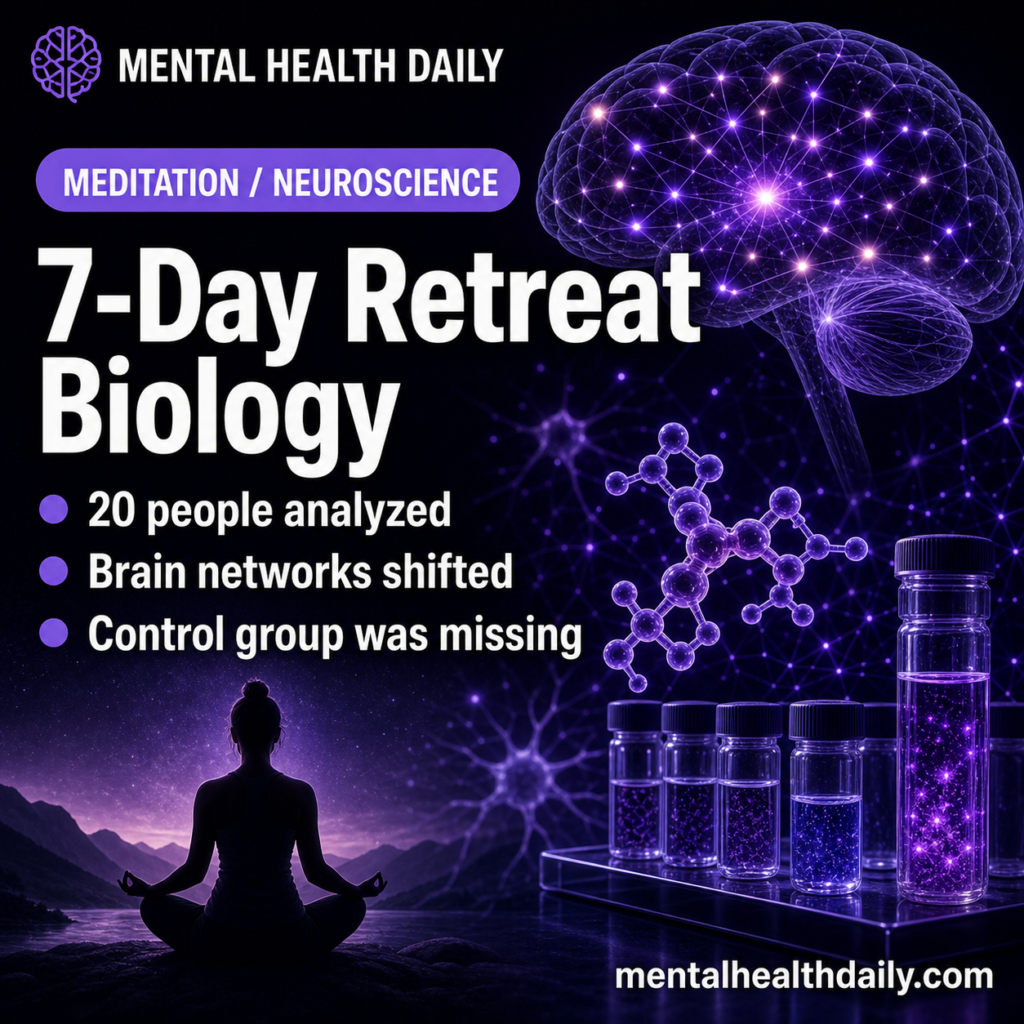
7-Day Mind-Body Retreat Changed Brain Networks and BDNF Pathways

MHD featured image for a 7-day mind-body retreat and BDNF pathway signals.

A 7-day mind-body retreat study in 20 healthy adults found pre/post shifts across fMRI brain networks and plasma biology, with p values as low as 0.000003.1 Those numbers are striking, but the design was observational, so the honest reading is biological signal without causal isolation. Research Highlights Neural signal was broad: Meditation-state fMRI showed lower …

Read more