hit counter

Teenage Cannabis Use vs. Cognition and Brain Development: THC vs. CBD (Toxicology Data)

Photoreal illustration of an adolescent brain with overlay of cannabis molecules and cognitive metrics, conveying developmental neurocognitive impact.

Studies of adolescent cannabis effects on cognition have been limited by self-report and confounding. A 2026 longitudinal study by Wade and colleagues uses the Adolescent Brain Cognitive Development (ABCD) cohort with both self-report and biological toxicology, separating THC and CBD effects on developing cognition.1 Research Highlights Adolescence is a critical window for cognitive maturation, with …

Read more

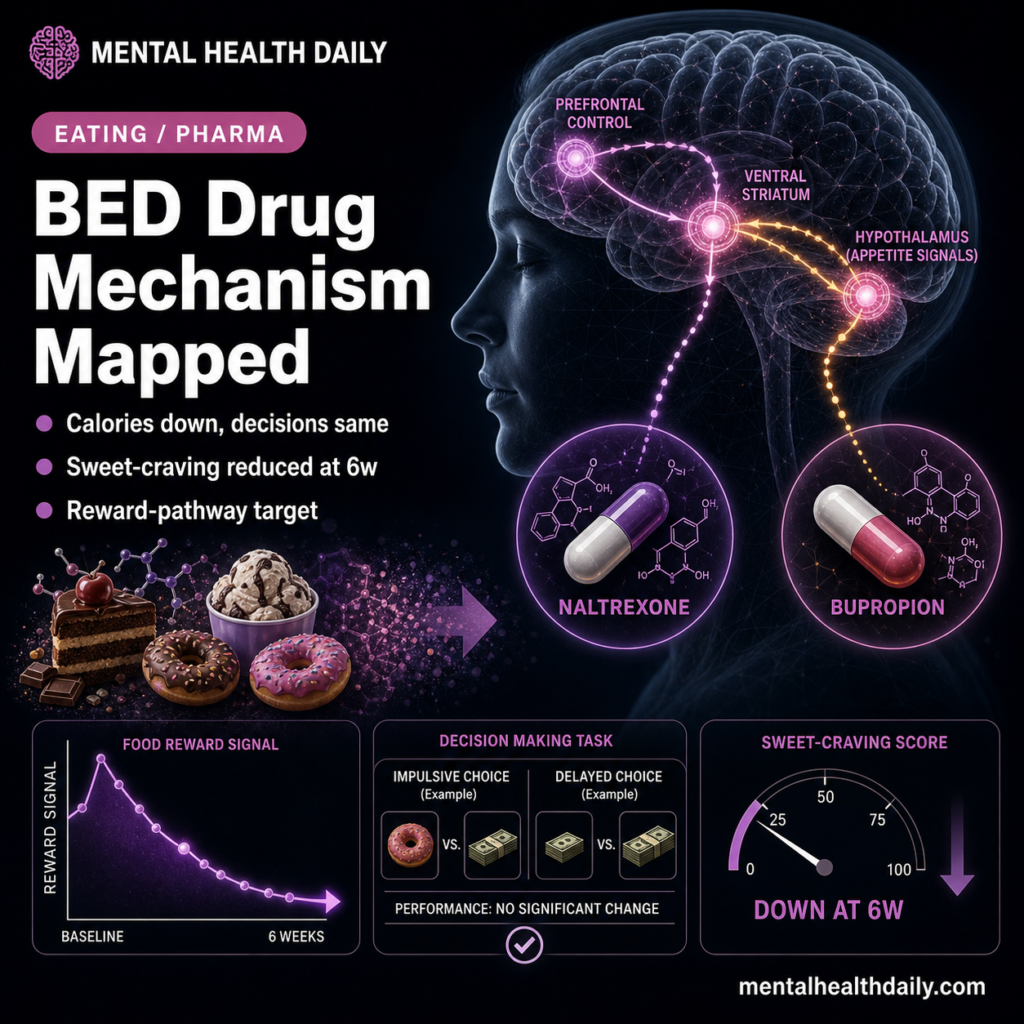
Naltrexone/Bupropion Reduced Food Intake in Binge-Eating Lab Study

Photoreal illustration of brain reward circuitry overlaid on imagery of palatable food, conveying pharmacological reduction of consummatory reward.

Lisdexamfetamine remains the only FDA-approved medication for binge-eating disorder — a serious condition affecting roughly 1.2% of adults. A 2026 human laboratory study by McKee and colleagues tests whether naltrexone/bupropion, already approved for obesity, reduces the food-reward mechanisms that drive binge episodes.1 Research Highlights Binge-eating disorder (BED) is the most common eating disorder in the …

Read more

Uncensored Media Trauma and Modern Psychological Effects

Photoreal illustration of a person scrolling through phone with overlay of trauma imagery, conveying mental health impact of uncensored media.

The internet era has dramatically changed how people are exposed to traumatic events — uncensored video of violence, war, and disaster reaches civilian audiences within minutes of occurrence. A 2026 study by Allouche-Kam and colleagues examines the mental health consequences of this indirect-trauma exposure in modern populations.1 Research Highlights Indirect trauma exposure through media has …

Read more

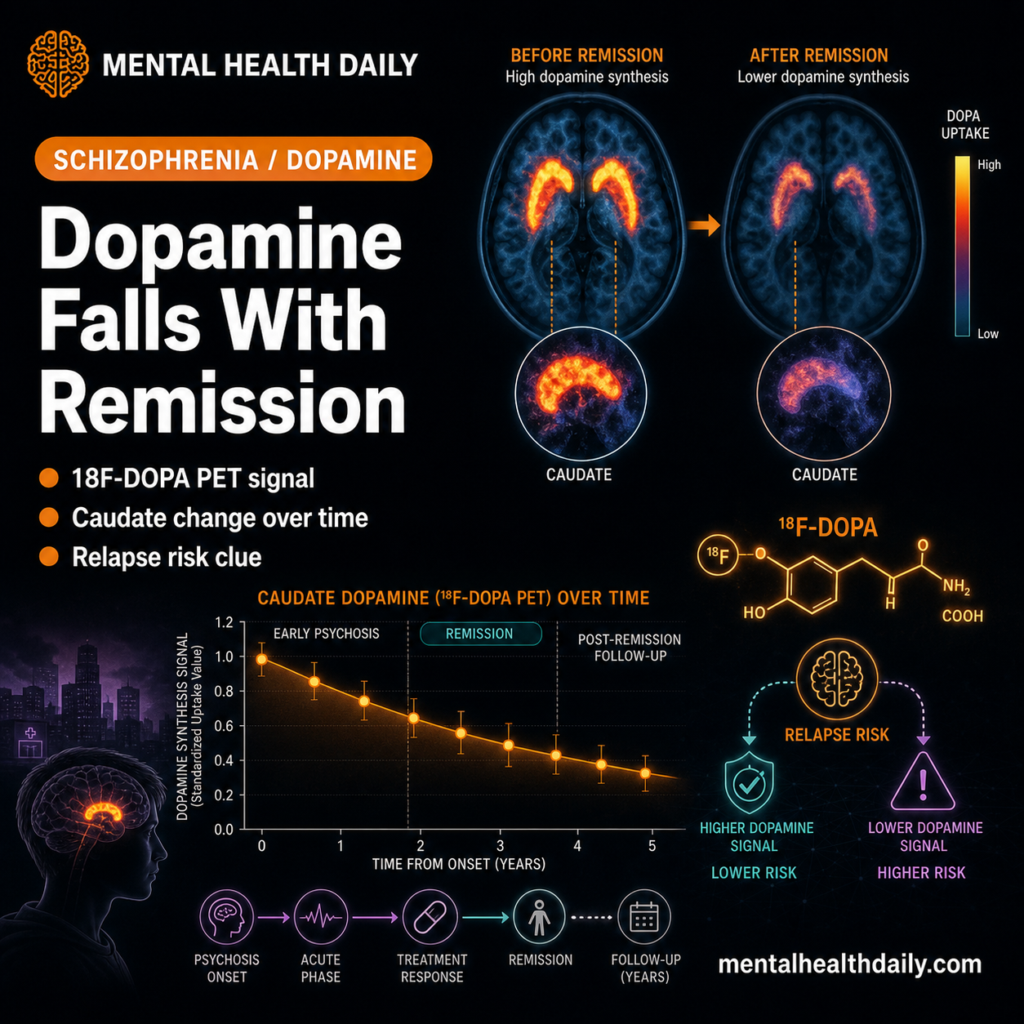
Striatal Dopamine Drops From Psychosis to Schizophrenia Remission

Photoreal illustration of a brain with the striatum highlighted and dopamine synthesis pathways visualized, representing longitudinal PET imaging in schizophrenia.

The dopamine hypothesis of schizophrenia is the field’s longest-running mechanistic story, and most of its supporting evidence has been cross-sectional. A 2026 longitudinal PET study by Schulz and colleagues followed the same 28 patients across psychosis and early remission.1 Research Highlights The dopamine hypothesis of schizophrenia is the field’s longest-running mechanistic story. Cross-sectional 18F-DOPA PET …

Read more

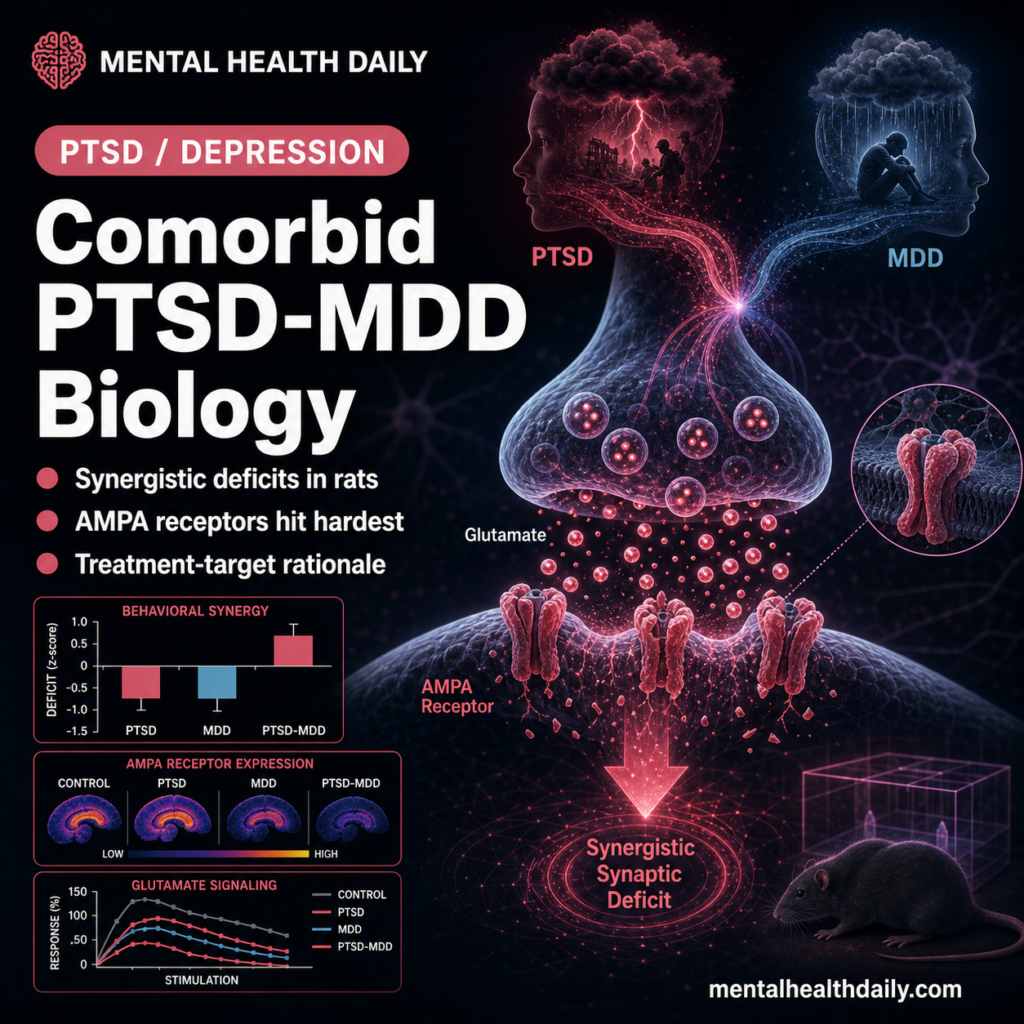
PTSD With Depression Hits AMPA Receptors Harder in Rat Models

Photoreal illustration of synaptic AMPA receptors and stressed neuron, conveying glutamate-system dysregulation in PTSD-MDD comorbidity.

PTSD and major depressive disorder co-occur in roughly half of patients with either diagnosis, and the comorbid presentation is more severe than either alone. The mechanistic question has been whether comorbidity reflects synergistic biology or simple symptom additivity. A 2026 rat-model study by Jiang and colleagues tests this directly, finding that PTSD-MDD comorbid rats show …

Read more

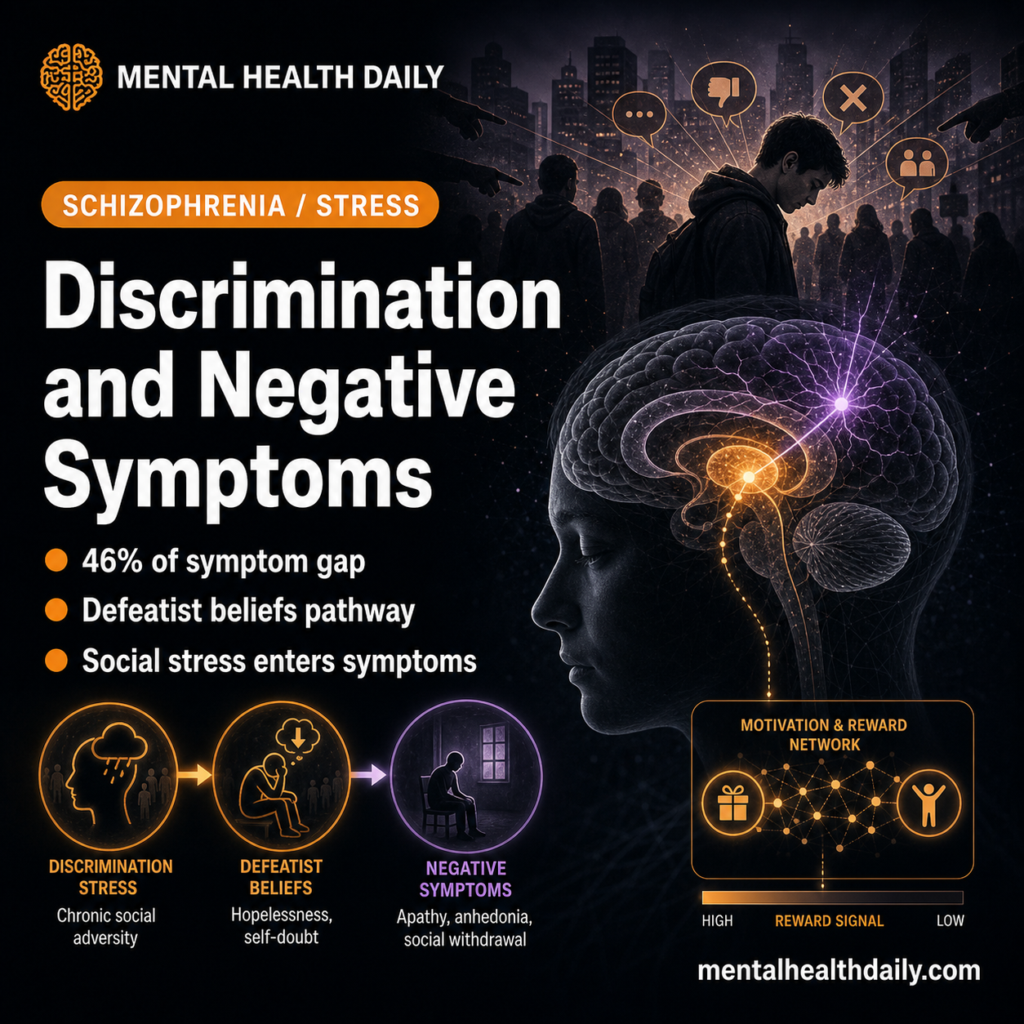
Black Americans Diagnosed with Schizophrenia 2.42x the Rate of White Americans: More Negative Symptoms

Photoreal illustration representing racial stress and mental health, with conceptual imagery of contemplation, identity, and cognitive pathways.

Black Americans are diagnosed with schizophrenia-spectrum disorders at 2.42 times the rate of White Americans, and they also score higher on negative-symptom measures than White patients carrying the same diagnosis.2 A 2026 paper by Spann and colleagues asks why. Research Highlights Black Americans are diagnosed with schizophrenia-spectrum disorders at 2.42x the rate of White Americans, …

Read more