hit counter

Teen Substance Use in South Africa: 30-Study Meta-Analysis
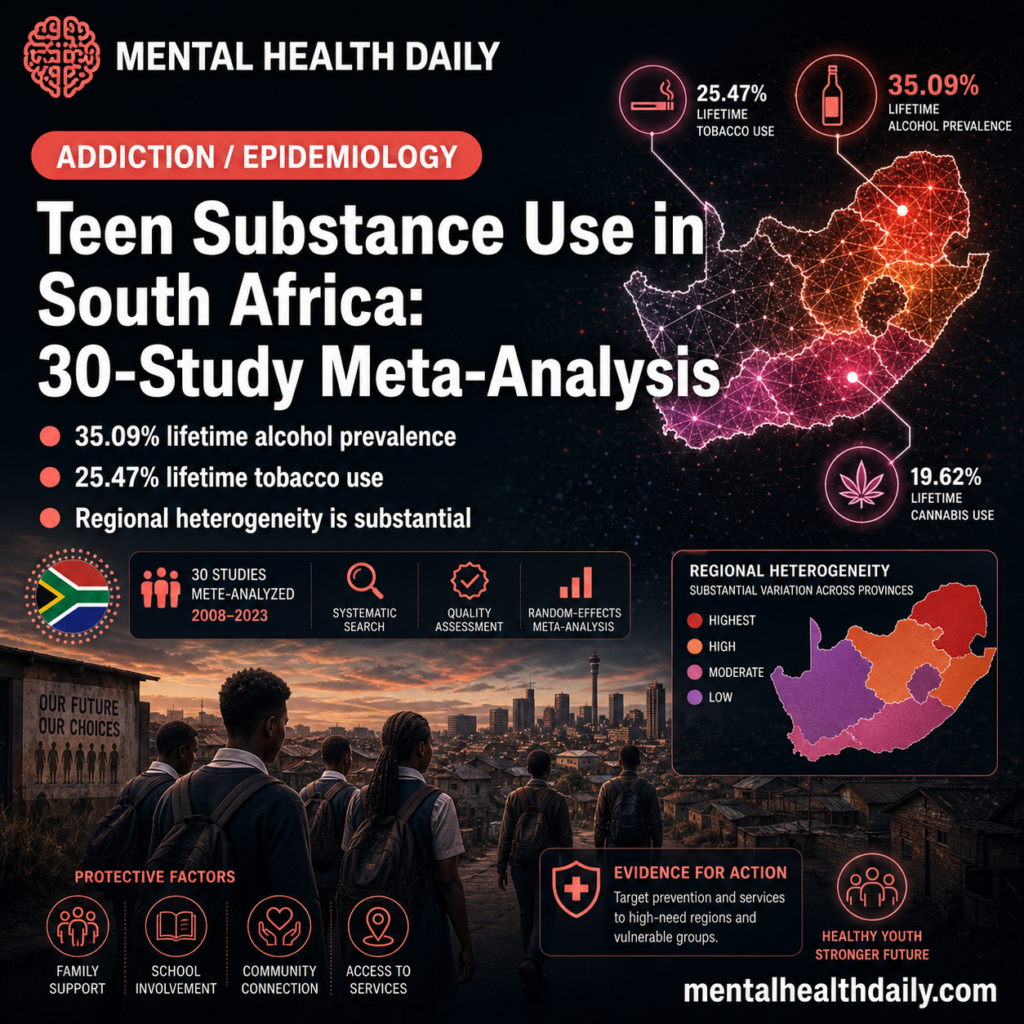
A 2026 PRISMA-compliant systematic review and meta-analysis in Drug and Alcohol Review consolidated 30 publications covering 202 prevalence estimates from 120,041 South African adolescents: pooled lifetime prevalence was 35.09% for alcohol use, 25.47% for tobacco use, and 10.47% for cannabis use.1 Research Highlights 30 publications, 202 estimates: pooled data covered 120,041 South African adolescents. Alcohol …
Read more

Statins and Dementia Risk: No Long-Term Signal in 322,358 Patients

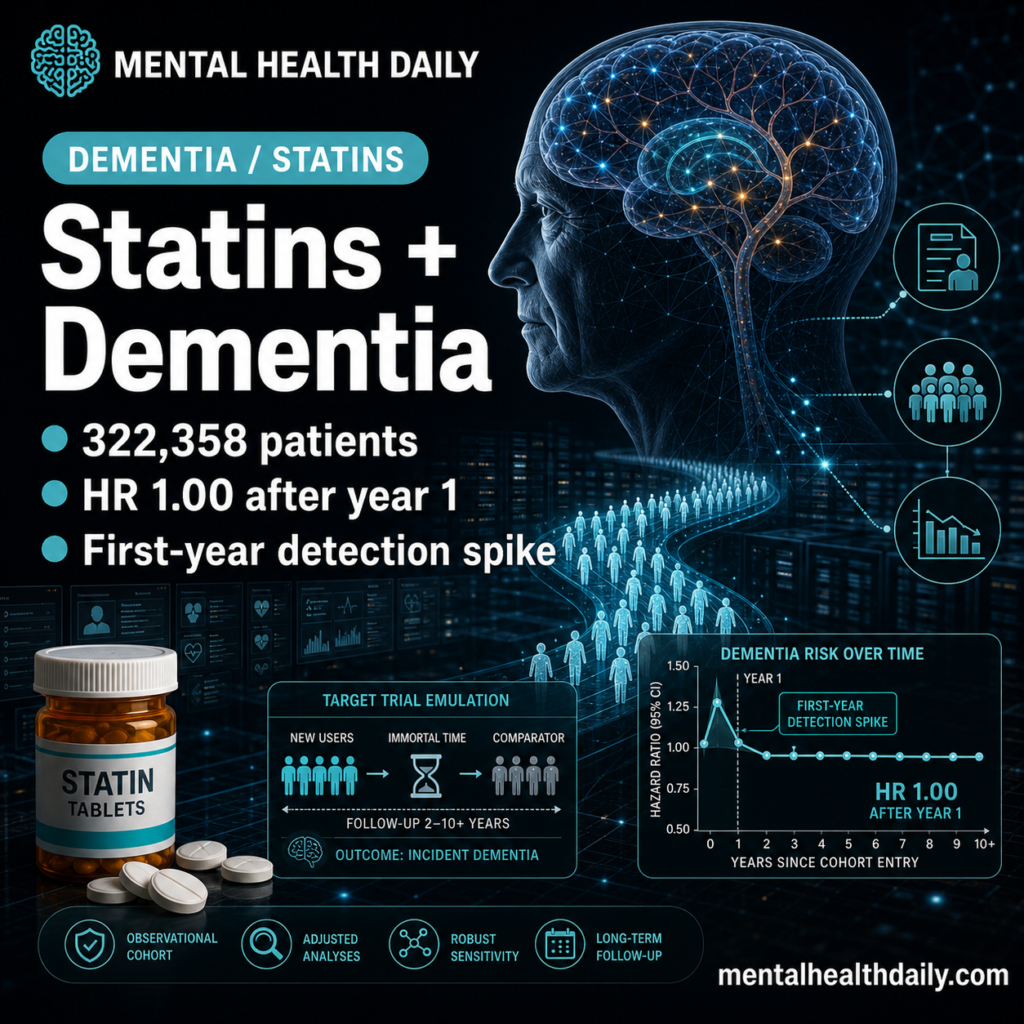
Statins do not look like a dementia-prevention drug, but they do not look like a dementia hazard either. In 322,358 Kaiser Permanente Northern California patients followed for an average of 11.8 years, dementia diagnoses rose right after statins were started, then flattened: after the first year, the hazard ratio for Alzheimer’s disease and related dementias …

Read more

PGx Testing Found Actionable Genotypes in 30% of Veterans

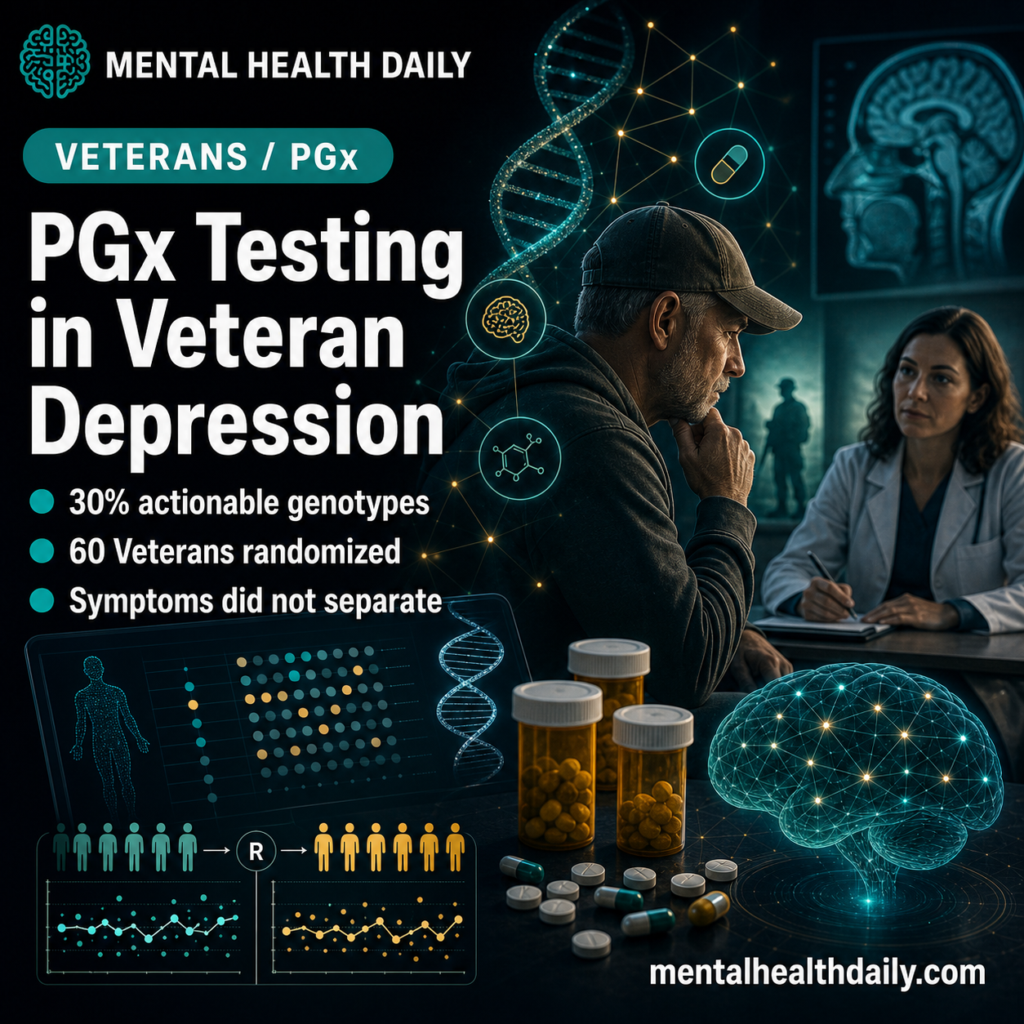
MHD featured image for pharmacogenomic testing in veteran depression and antidepressant polypharmacy.

A 12-week randomized pilot trial in 60 Veterans with depression and psychiatric polypharmacy found that 30% had an actionable antidepressant gene-drug interaction, but immediate access to pharmacogenomic results did not clearly change prescribing or Patient Health Questionnaire-9 depression scores compared with delayed access.1 Research Highlights Actionable PGx results were common: 18 of 60 Veterans, or …

Read more

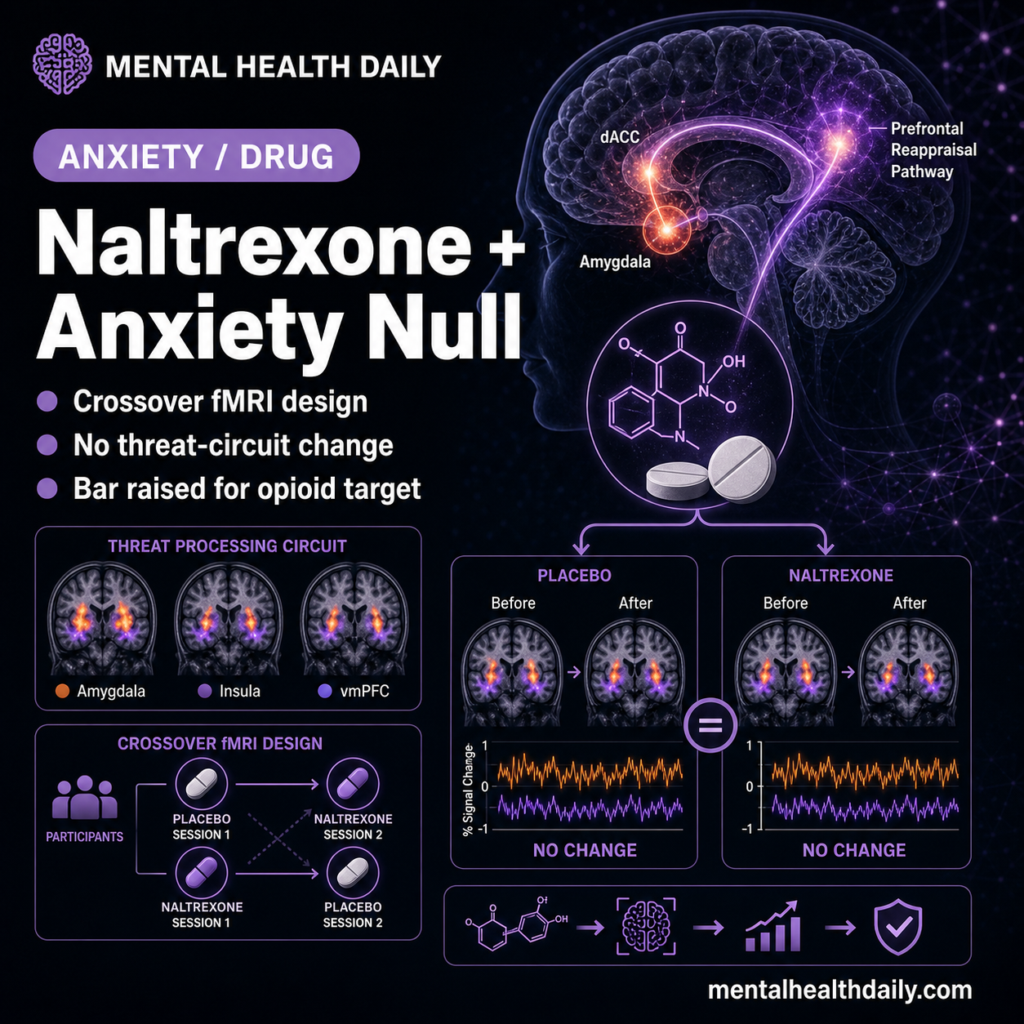
Naltrexone Reduced Reappraisal Distress in 38-Person Threat fMRI Trial

Photoreal illustration of brain with vmPFC, amygdala, and threat-processing circuitry highlighted under pharmacological challenge.

The endogenous opioid system has been a candidate target for novel anxiety treatments, but a 2026 placebo-controlled crossover fMRI study in 38 healthy volunteers ran opposite the hypothesis: instead of increasing threat-related distress and amygdala reactivity, 50 mg oral naltrexone reduced subjective distress during cognitive reappraisal (p = 0.044, d = 0.57) and shifted ventromedial …

Read more

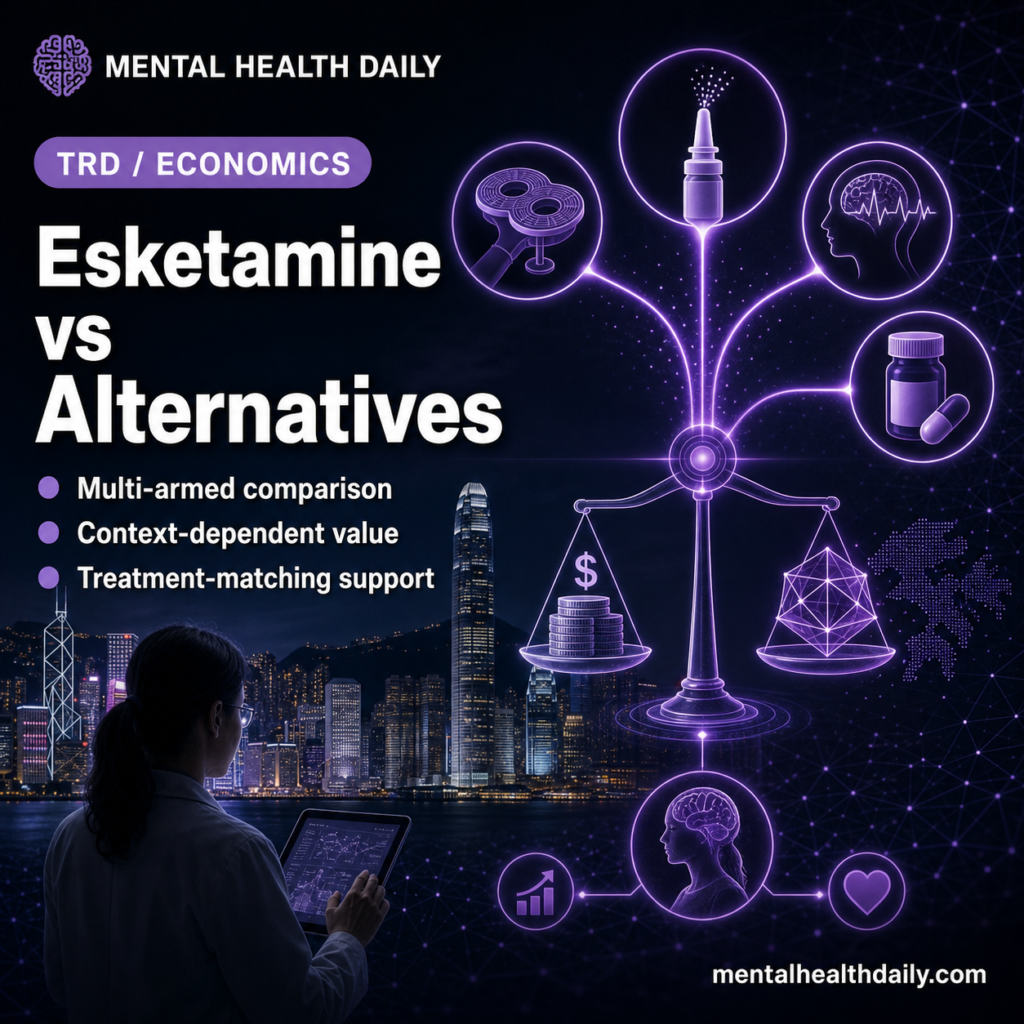
Esketamine Failed Cost-Effectiveness vs. Cheaper TRD Options at $50K/QALY

Photoreal illustration of a depression-treatment decision with cost and outcome imagery, conveying healthcare-economic decision-making.

Intranasal esketamine — FDA-approved for treatment-resistant depression in 2019 — failed cost-effectiveness benchmarks against four cheaper third-line options in a 2026 Hong Kong modeling study, with incremental cost-effectiveness ratios (ICERs) of US$134,127 to US$312,750 per quality-adjusted life-year (QALY) at a US$50,000/QALY willingness-to-pay (WTP) threshold.1 Combination antidepressant therapy was the most cost-effective strategy modeled. Research Highlights …

Read more

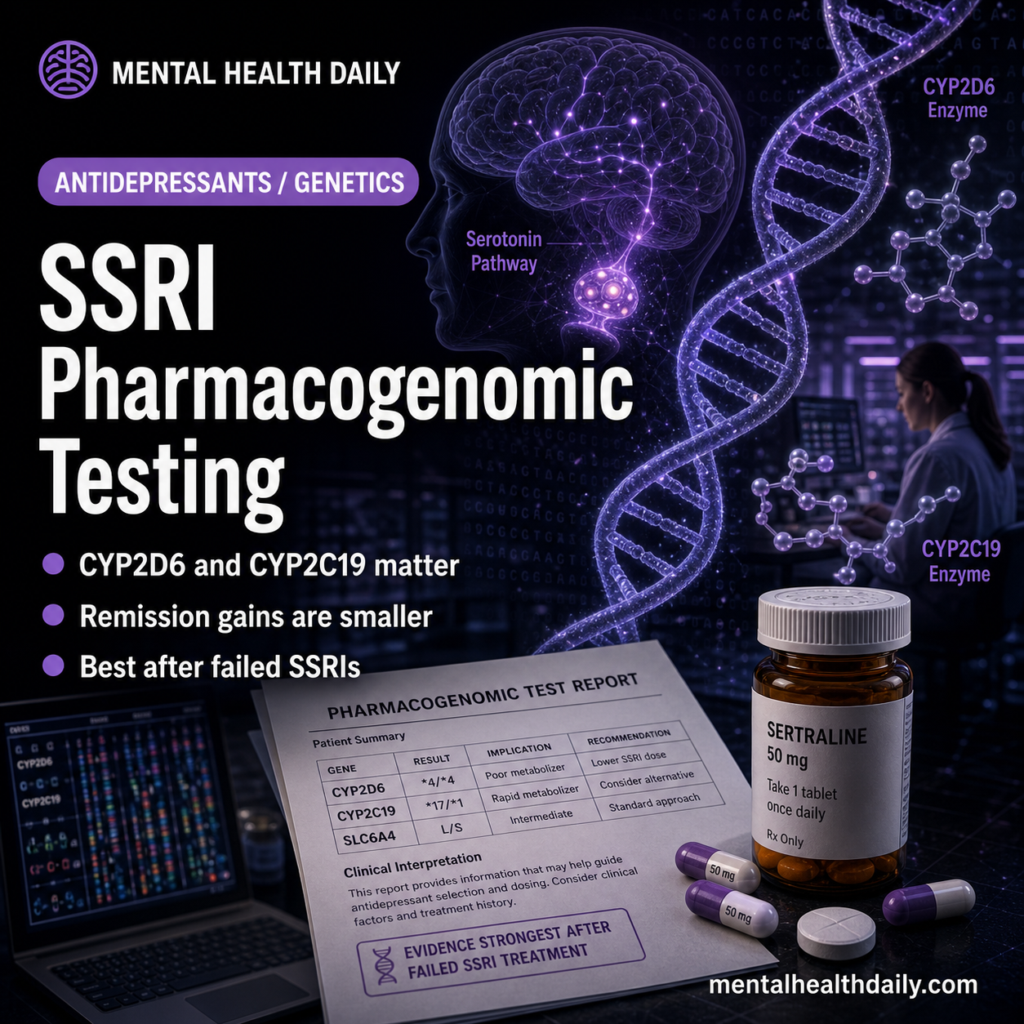
SSRI Pharmacogenomic Testing: CYP2D6, CYP2C19, Remission

MHD featured image for SSRI Pharmacogenomic Testing: CYP2D6, CYP2C19, Remission.

A 2026 methylome-wide association study by Shen et al. found 48 CpG methylation sites tied to the quadratic CYP2C19 metabolizer-status term in 18,396 Generation Scotland participants, with 19 sites showing non-linear patterns and targeted replication in 1,238 older adults.1 That supports CYP2C19 as real biology beneath SSRI pharmacogenomics, but it does not prove universal antidepressant …

Read more