hit counter

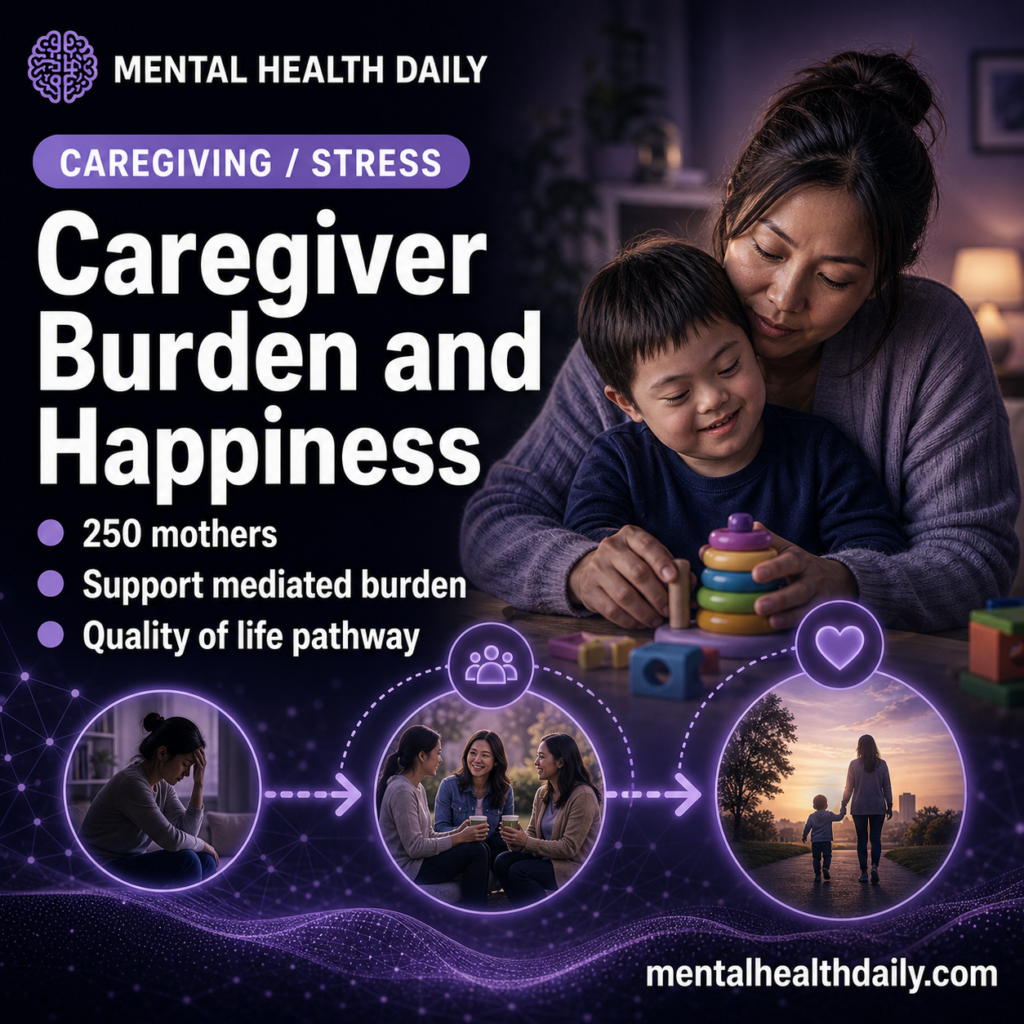
Mothers of Children With IDD: Support Predicted Happiness

A 2026 study of 250 mothers of children with intellectual and developmental disabilities (IDDs) found that family burden was strongly tied to lower social support, lower family quality of life, and lower happiness. In the structural model, the burden-happiness link was explained by perceived support and family quality of life rather than a direct burden-to-happiness …

Read more

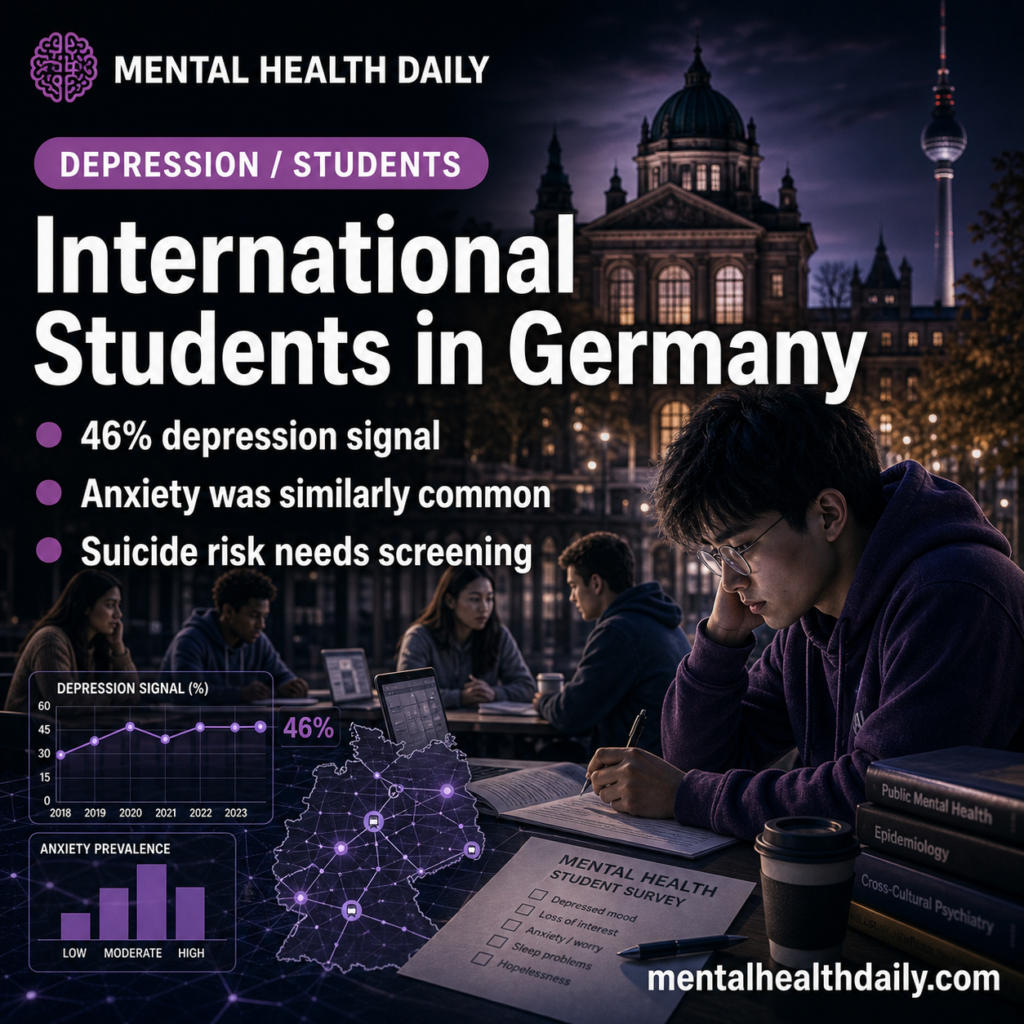
Germany International Students: 46% Depression, 47% Anxiety

MHD featured image for depression, anxiety, suicidal ideation, and acculturative stress among international students.

A 2026 survey of 327 international students in Germany found high symptom burden: 46.5% screened positive for moderate-to-severe depression, 46.8% for moderate-to-severe anxiety, and 31.2% endorsed recent death or self-harm thoughts on PHQ-9 item 9. Only 10.9% of students with moderate-to-severe depression and/or anxiety reported professional help.1 Research Highlights 327 international students were surveyed: Karing …

Read more

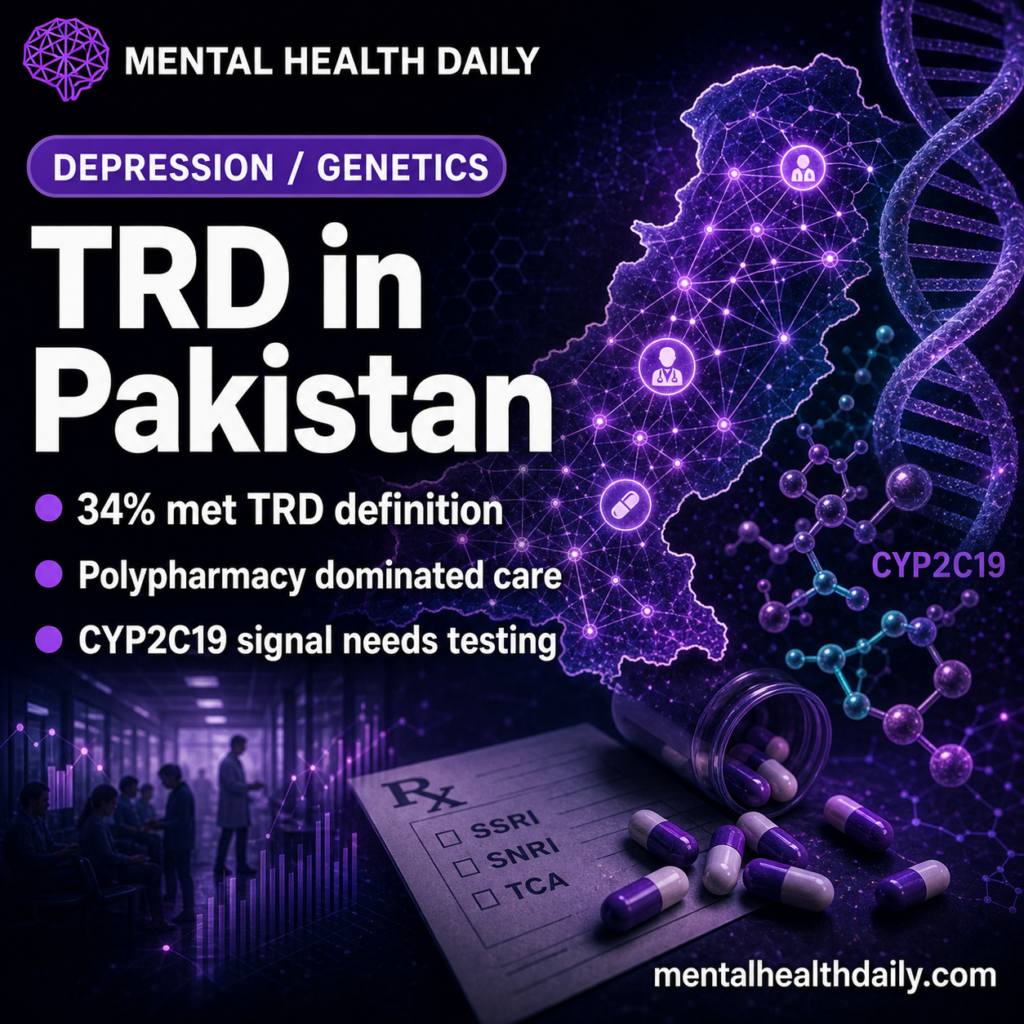
Treatment-Resistant Depression in Pakistan: 34% TRD, 86% Polypharmacy

MHD featured image for treatment-resistant depression, polypharmacy, and CYP2C19 findings in Pakistan.

A 2026 DIVERGE analysis of 3,677 antidepressant-exposed patients with major depressive disorder in Pakistan classified 34% as treatment resistant, while 86% received psychotropic polypharmacy and only 6% received psychotherapy.1 The CYP2C19 signal is real enough to study prospectively, but the main treatment-system finding is medication stacking in a setting where psychological care was rare. Research …

Read more

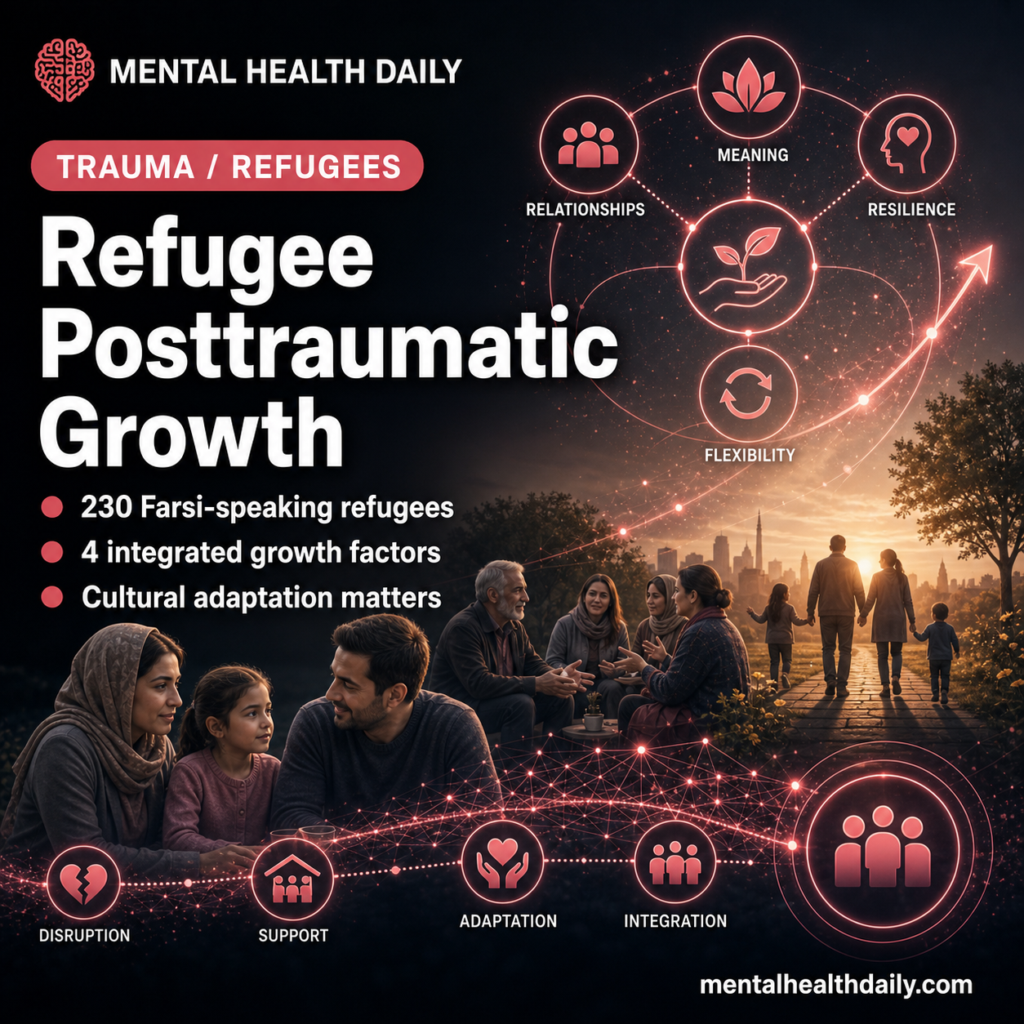
Posttraumatic Growth in Farsi Refugees: 61% Explained by 4 Factors

Photoreal illustration of refugees in community setting with imagery of resilience and growth, conveying integrated trauma adaptation.

A 2026 survey of 230 Farsi-speaking refugees in German camps found a hard double signal: 69.1% screened above the RHS-15 threshold for depression, anxiety, and PTSD symptoms, while 4 protective factors explained 61% of posttraumatic-growth variance.1 Research Highlights High distress and growth coexisted: 159 of 230 participants (69.1%) scored ≥12 on the RHS-15 symptom scale, …

Read more