hit counter

LIFU vs. rTMS for Stroke Recovery: Same 2-Week Endpoint, Larger FMA Gains
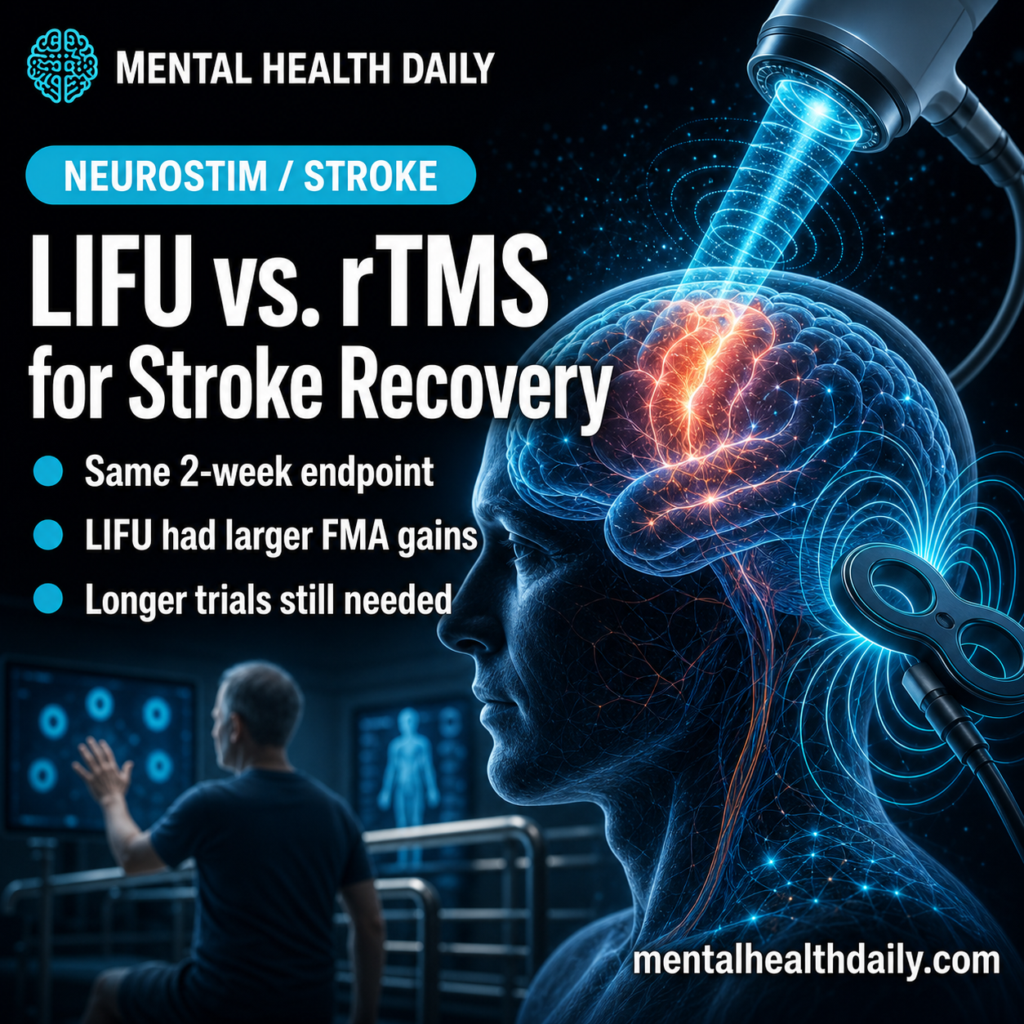
MHD featured image for LIFU vs. rTMS in post-stroke motor recovery.

A 2026 secondary randomized-trial analysis found that low-intensity focused ultrasound and repetitive transcranial magnetic stimulation reached statistically similar 2-week post-treatment motor scores after subacute stroke, even though LIFU produced larger median Fugl–Meyer Assessment gains than rTMS: 7 vs. 2 upper-limb points and 3 vs. 1 lower-limb points.1 LIFU therefore carries the recovery-dynamics signal in this …

Read more

Multiple Sclerosis Frailty Exercise Improved Fatigue in 6 Weeks

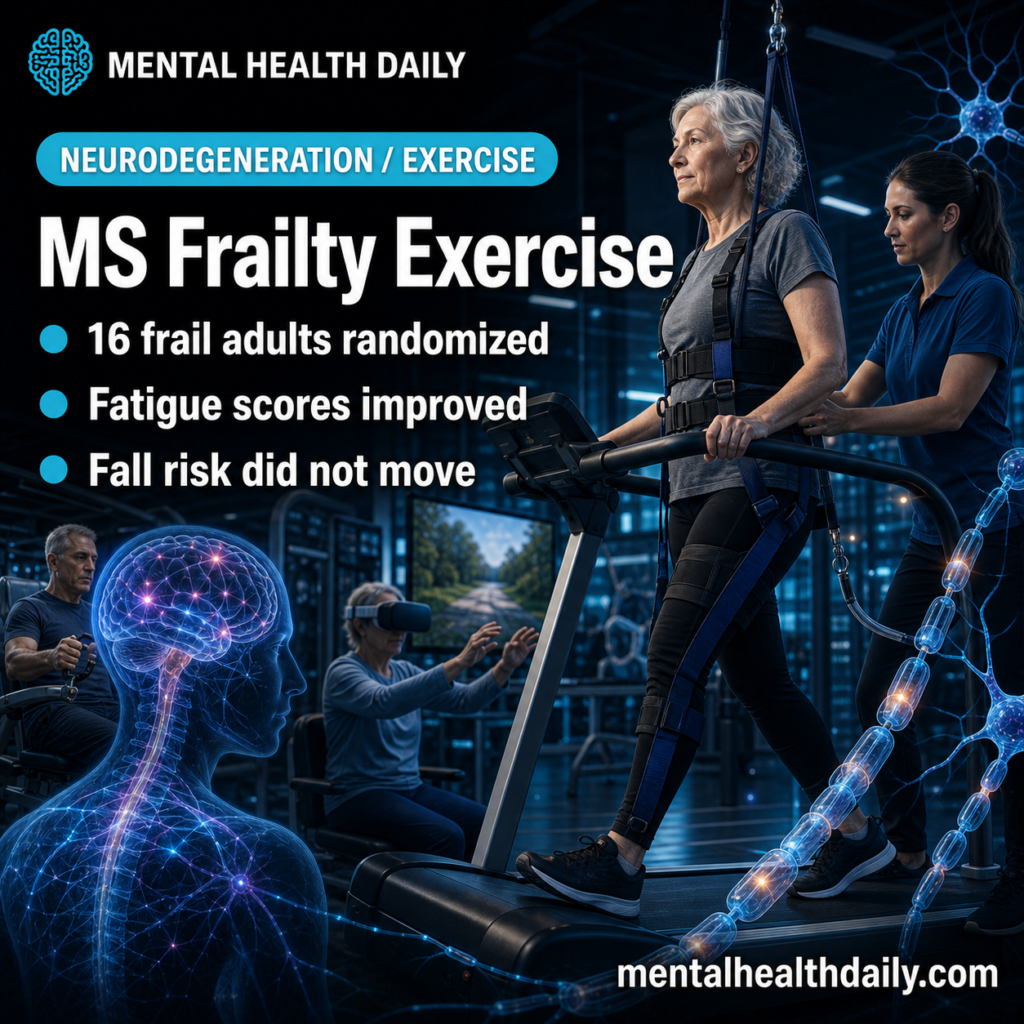
MHD featured image for multimodal exercise, frailty, fatigue, and quality of life in multiple sclerosis.

A 2026 pilot randomized trial in 16 frail adults with multiple sclerosis found that 6 weeks of supervised multimodal exercise was feasible: retention was 87.5%, adherence was 97.2%, no adverse events were recorded, and fatigue and quality-of-life scores moved more than they did with waitlist control.1 Research Highlights Feasibility cleared the prespecified bar: 14 of …

Read more

Sleep Memory Cues Do Not Boost Parkinson’s Motor Learning

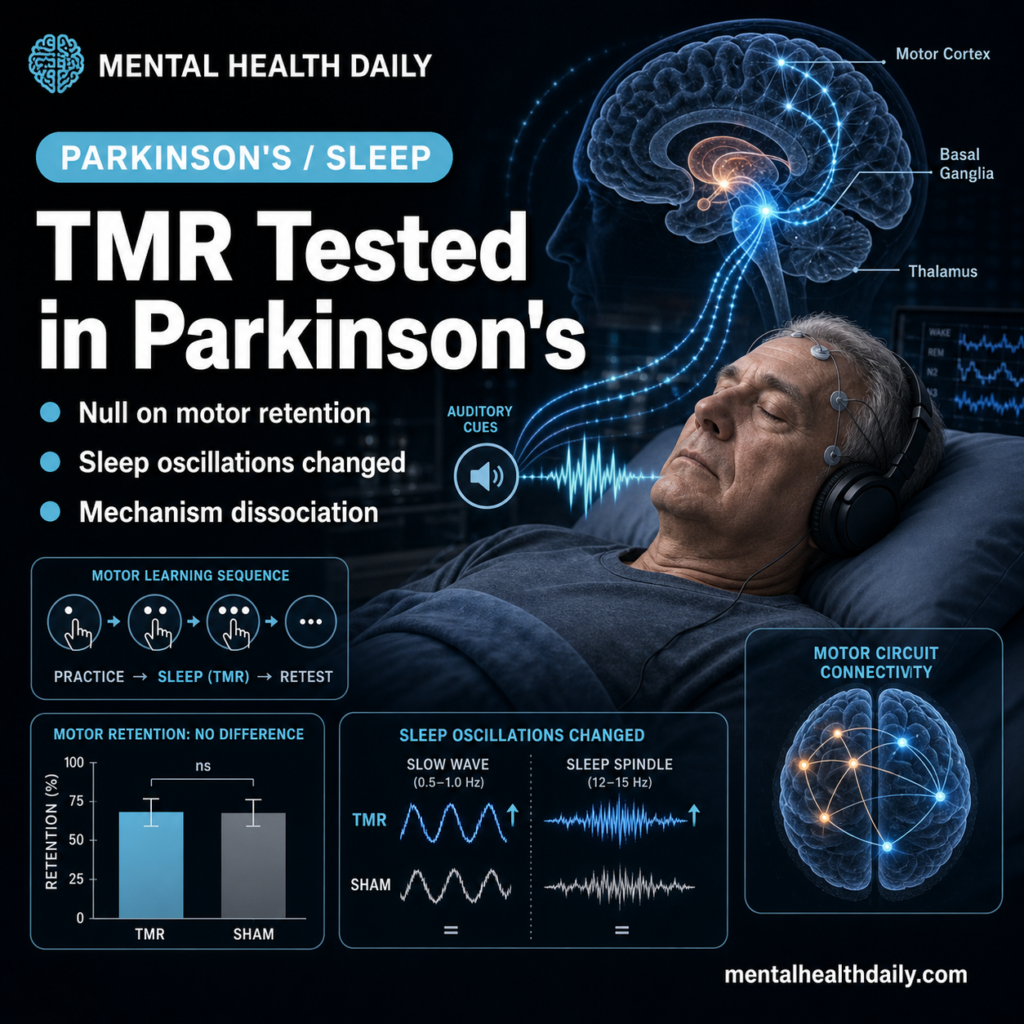
Photoreal illustration of an older adult sleeping with overlay of memory and brain oscillation imagery, conveying sleep-based learning intervention.

Auditory targeted memory reactivation during a 2-hour nap did not improve motor retention in 20 Parkinson’s disease patients or 20 healthy older adults, even though the same cues changed sleep physiology by reducing spindle density and increasing slow-wave density.1 Research Highlights First Parkinson’s TMR test: Micca et al. studied 20 Parkinson’s disease patients and 20 …

Read more