hit counter

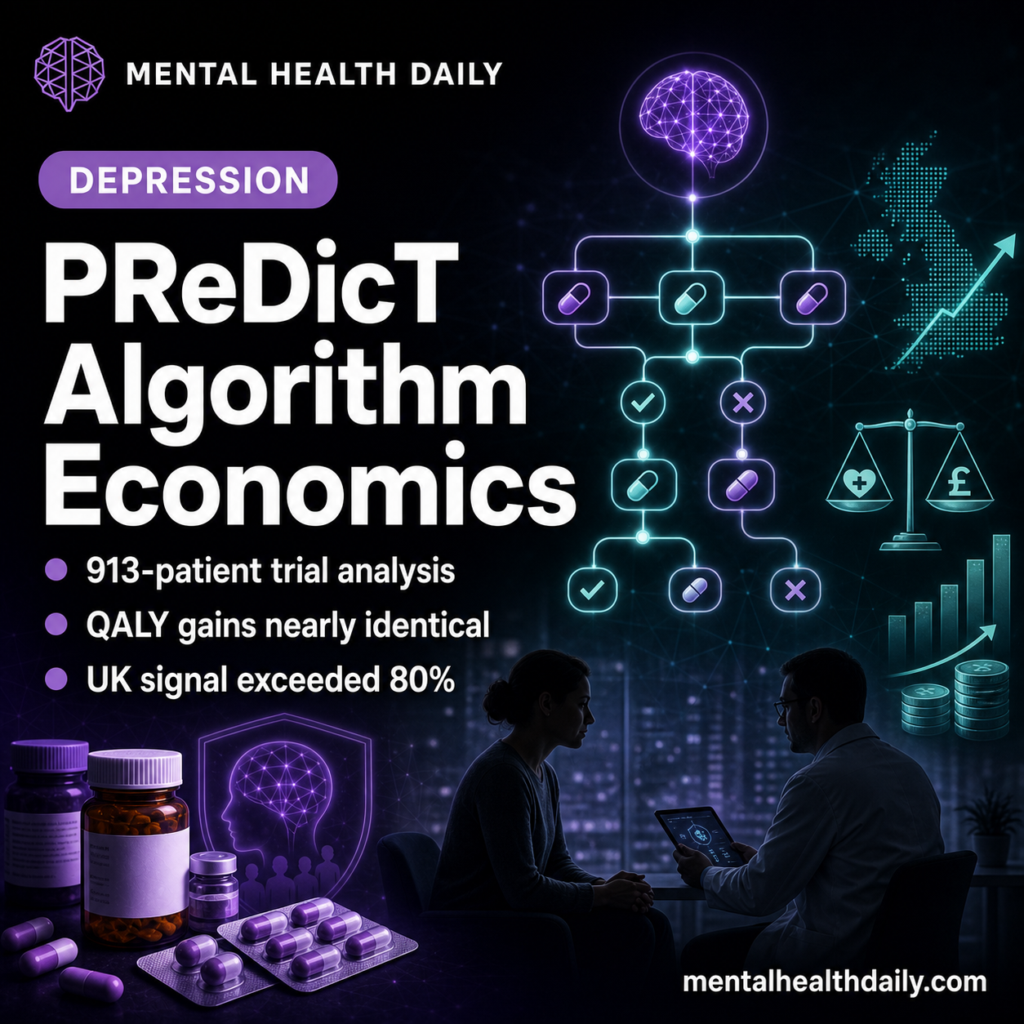
PReDicT Antidepressant Algorithm Cost-Effectiveness Was Uncertain

MHD featured image for PReDicT antidepressant algorithm cost-effectiveness.

A 913-person economic evaluation of the PReDicT antidepressant algorithm found nearly identical EQ-5D quality-of-life gains vs. treatment as usual (+0.139 vs. +0.140) and nearly identical societal cost reductions (−€2,589 vs. −€2,602), while cost-effectiveness probabilities were only 46% to 59% at trial level but exceeded 80% in the UK.1 The algorithm signal was country-specific and capability-weighted, …

Read more

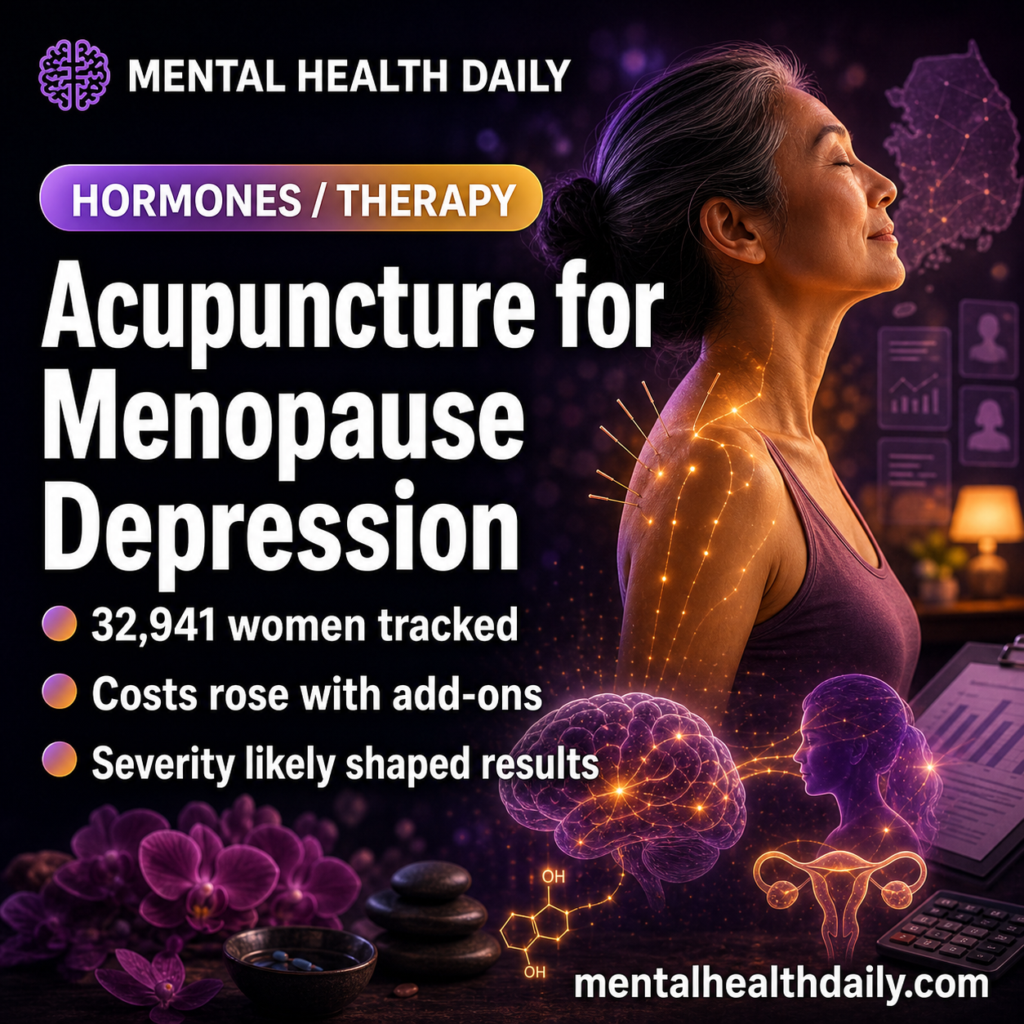
Acupuncture for Menopause Depression: Korean Cohort Found No QALY Gain

MHD featured image for acupuncture and cost-utility in menopause depression care.

A 2026 Korean claims analysis of 32,941 women with menopausal disorders found that traditional Korean medicine without recorded acupuncture claims had the lowest 3-year cost and the highest mean quality-adjusted life-year estimate, while acupuncture-inclusive or Western-medicine-inclusive strategies cost more and produced slightly lower QALYs. Research Highlights Lowest-cost group also had the highest QALYs: traditional Korean …

Read more

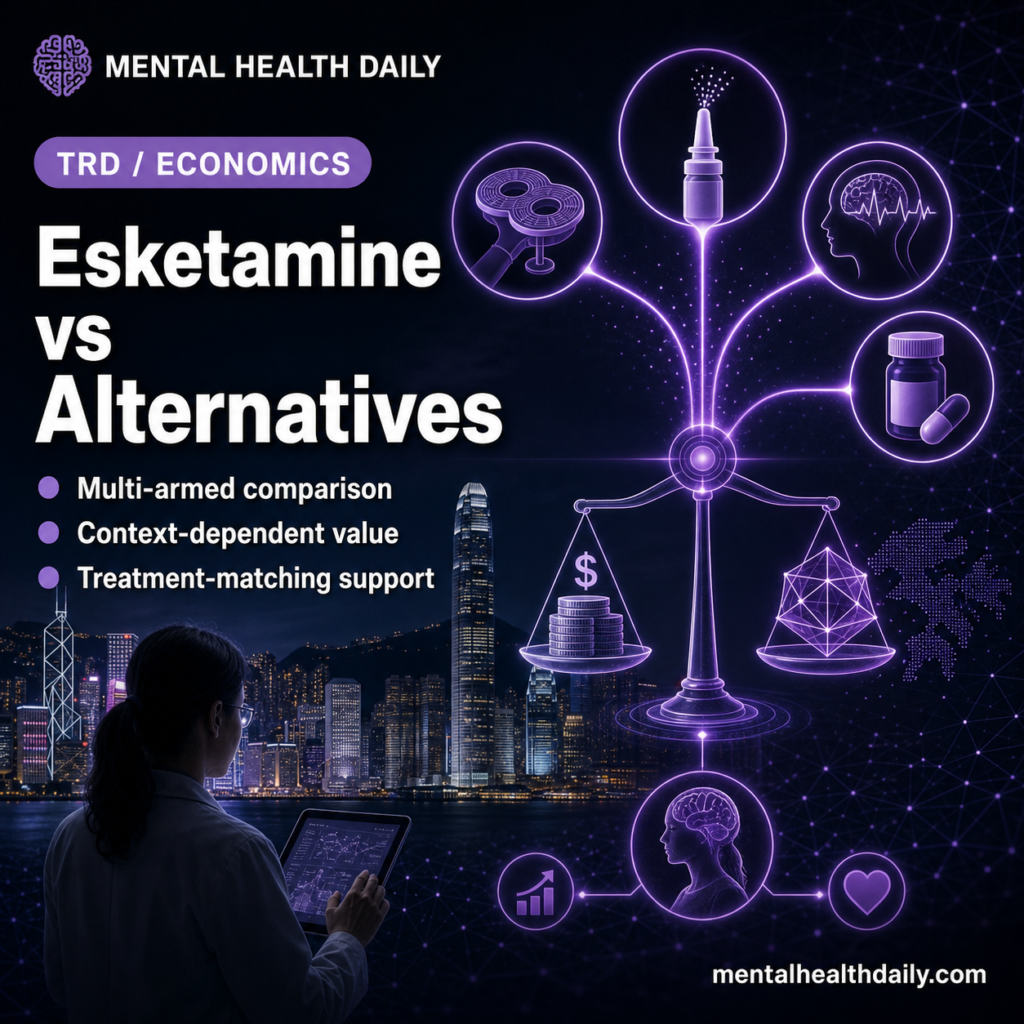
Esketamine Failed Cost-Effectiveness vs. Cheaper TRD Options at $50K/QALY

Photoreal illustration of a depression-treatment decision with cost and outcome imagery, conveying healthcare-economic decision-making.

Intranasal esketamine — FDA-approved for treatment-resistant depression in 2019 — failed cost-effectiveness benchmarks against four cheaper third-line options in a 2026 Hong Kong modeling study, with incremental cost-effectiveness ratios (ICERs) of US$134,127 to US$312,750 per quality-adjusted life-year (QALY) at a US$50,000/QALY willingness-to-pay (WTP) threshold.1 Combination antidepressant therapy was the most cost-effective strategy modeled. Research Highlights …

Read more