hit counter

Music During Ketamine Did Not Improve Resistant Depression

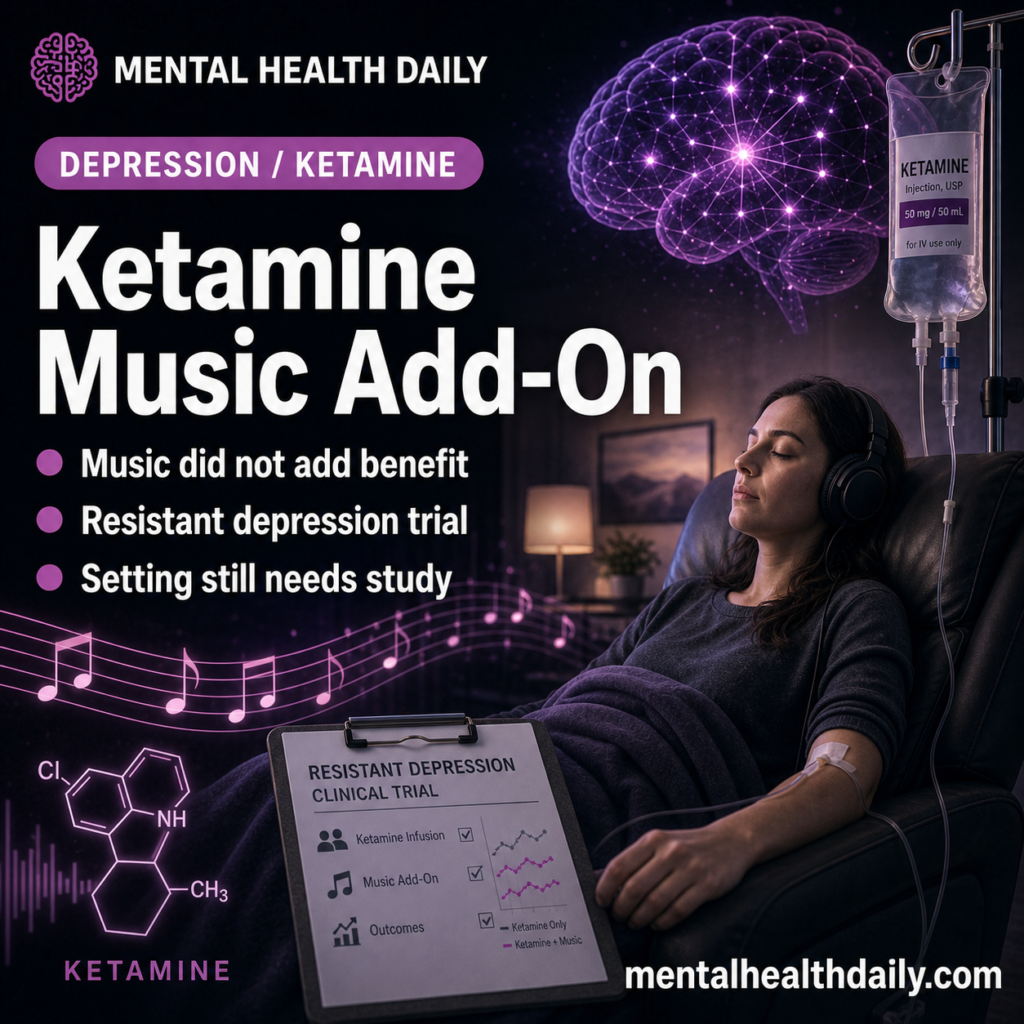
MHD featured image for ketamine psychotherapy, treatment-resistant depression, music, and psychedelic-like treatment context.

Adding music to ketamine psychotherapy failed to provide extra antidepressant benefit over matched non-music support in a 2026 randomized clinical trial (RCT; a study that assigns participants to groups by chance), even though the full 6-infusion ketamine-psychotherapy course was followed by large depression-score reductions. Research Highlights Music added no confirmed MADRS benefit: in the MUSIK …

Read more

Chord Progressions and Eye Contact Boost Brain Synchrony in 20 Dyads

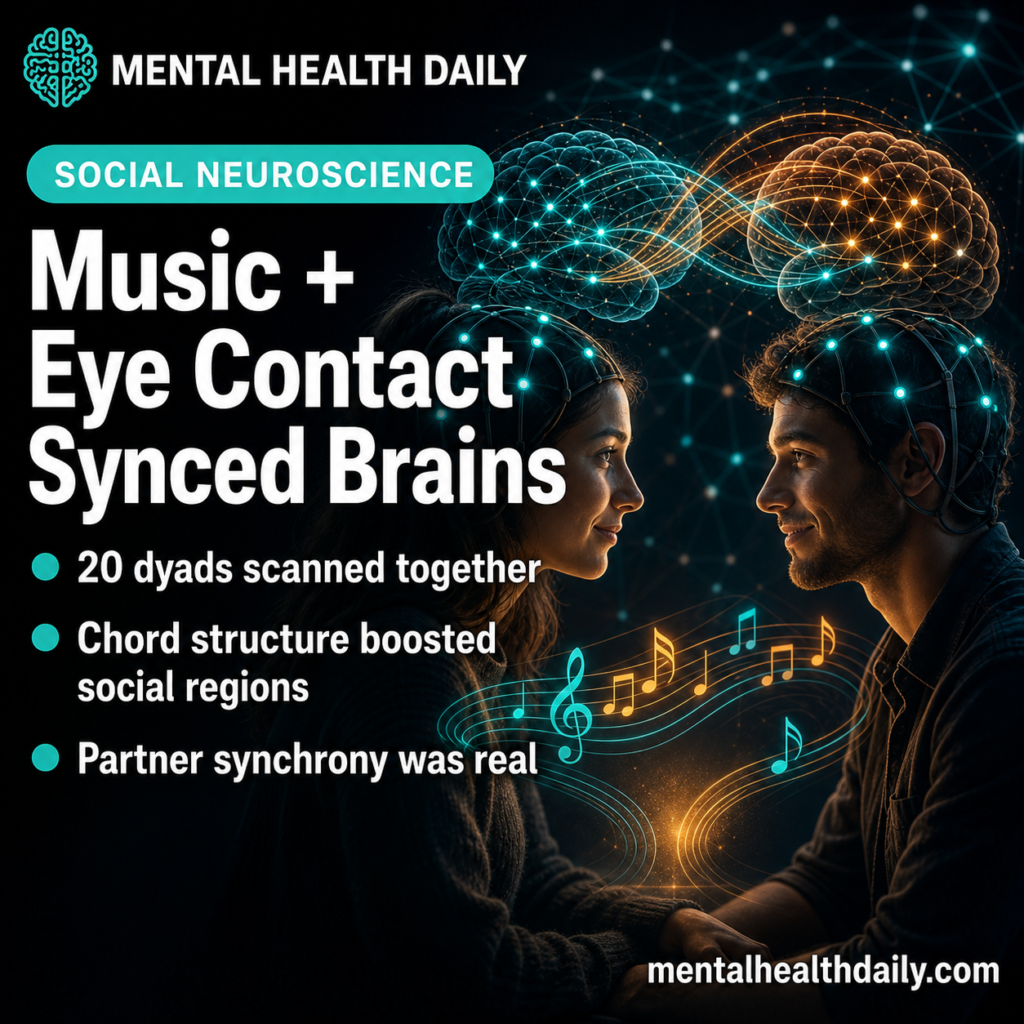
Editorial card showing two people listening to music while neural synchrony lines connect across a dark social-neuroscience scene.

A 2026 fNIRS hyperscanning study involving 20 dyads found that structured chord progressions paired with live eye contact increased activity in social-brain regions and produced partner-specific neural synchrony more than scrambled-note control music.1 The result supports a plausible mechanism for music-supported connection, but it does not prove that chord progressions treat loneliness or replace clinical …

Read more

5 Music Therapy Sessions Reduced Psychiatric Stress

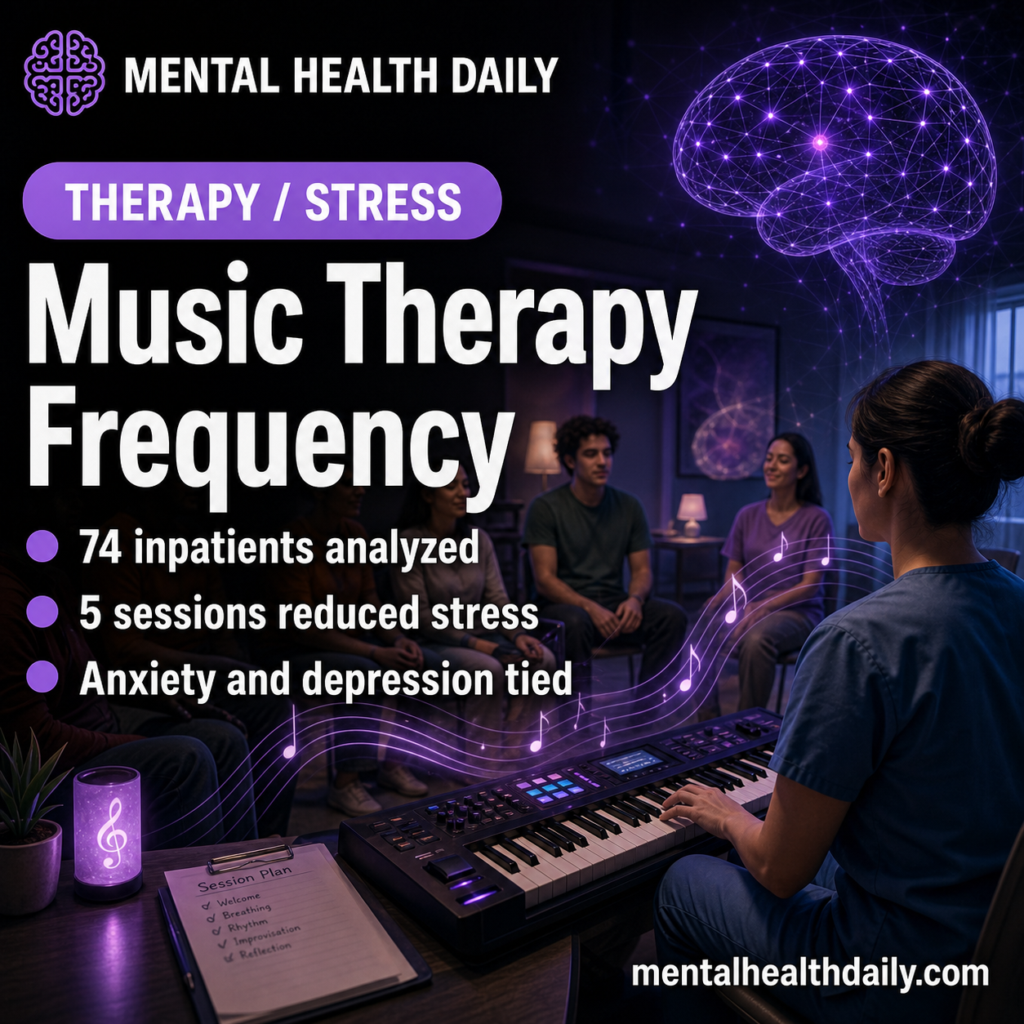
MHD featured image for music therapy frequency and psychiatric inpatient stress.

A 2026 randomized trial of 74 psychiatric inpatients found that 5 consecutive MIDI-assisted group music therapy sessions reduced DASS-21 stress more than 1 session during the same hospital week, but the frequency advantage did not extend to anxiety, depression, life satisfaction, or immediate session-impact ratings. Research Highlights Stress separated by frequency: 5 sessions produced a …

Read more