hit counter

Social Anxiety: Prefrontal Connectivity Differs but Amygdala-PFC Doesn’t

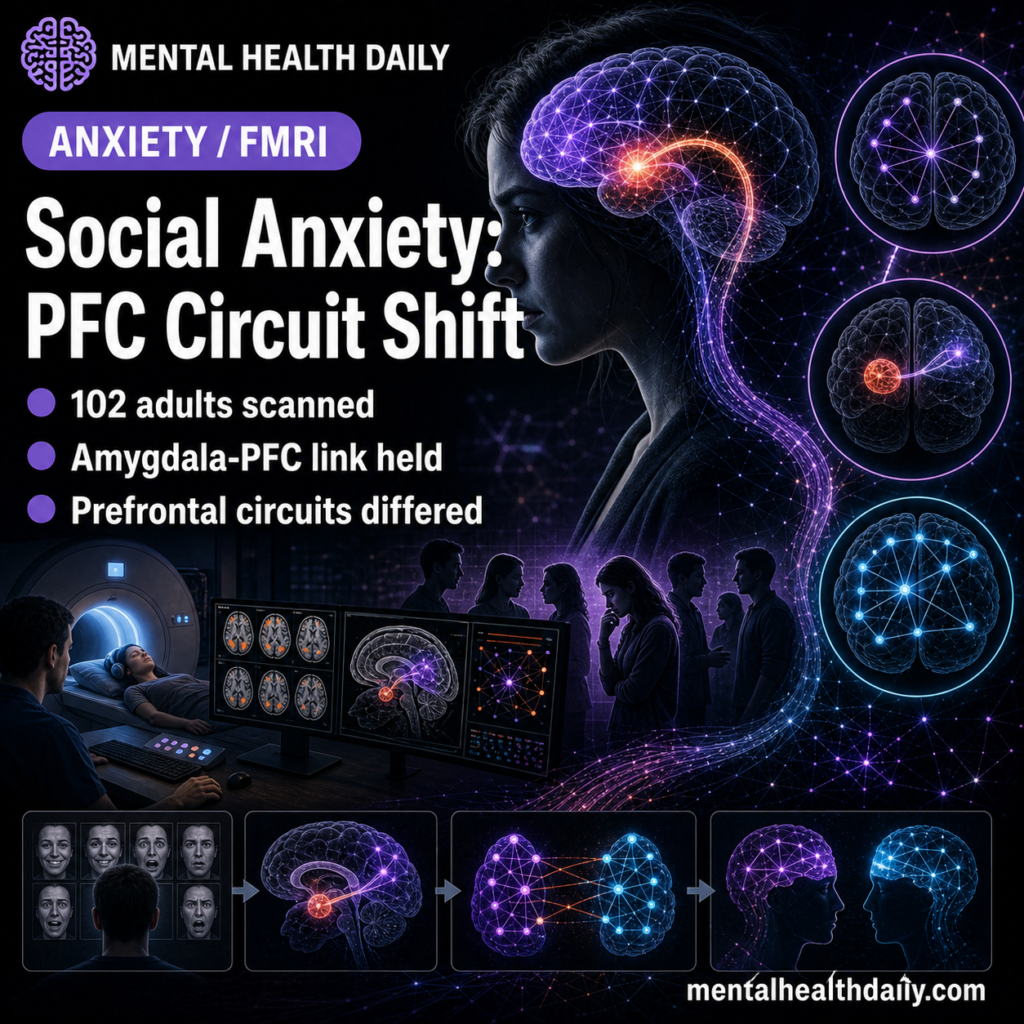
Stylized fMRI connectivity map showing prefrontal and amygdala circuits during emotion regulation in social anxiety disorder.

The textbook story of social anxiety disorder is broken amygdala-prefrontal regulation — an overactive threat system the prefrontal cortex can’t calm down. A 2026 effective-connectivity study of 102 adults found something different: amygdala-prefrontal connectivity didn’t differ between social anxiety patients and controls, but connectivity between prefrontal regions did, particularly involving the pre-supplementary motor area.1 Research …

Read more

Dream Content Tracks Personality, Sleep Quality, and Stress

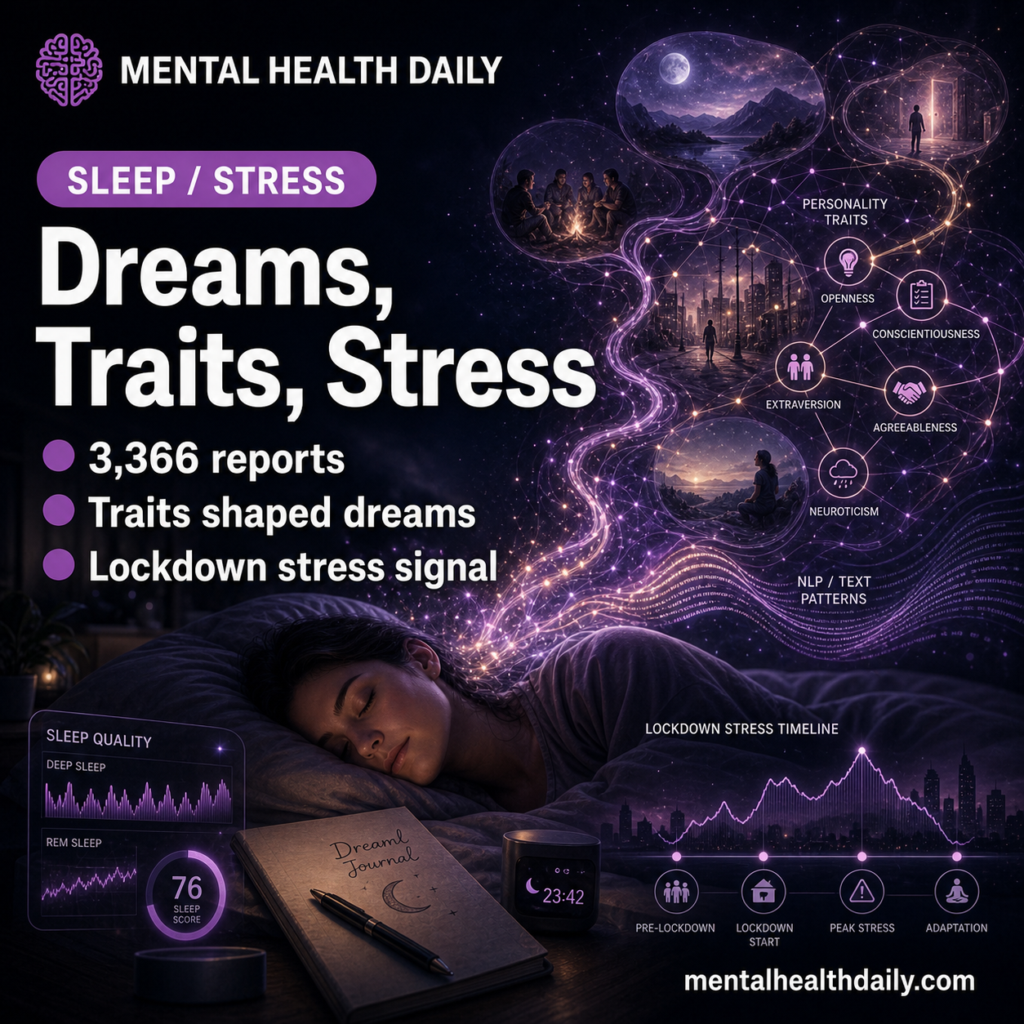
Dreams transform waking life rather than replaying it directly. In a 2026 Communications Psychology study of 3,366 reports, dreams were more visual, spatial, social, and bizarre than waking reports, while attitude toward dreaming, mind-wandering tendency, sleep quality, and COVID lockdown stress each left measurable fingerprints on dream content.1 Research Highlights Dreams were not random word …

Read more

STAIR-R Did Not Beat Supportive Care for Refugee PTSD

A pilot randomized trial involving 71 refugees with posttraumatic stress disorder found large symptom improvement after narrative exposure therapy-based care, but adding refugee-adapted emotion-regulation training before narrative exposure therapy did not outperform supportive problem-solving before narrative exposure therapy in the full sample.1 Research Highlights 71 refugees were randomized: 35 received STAIR-R plus narrative exposure therapy, …

Read more

Naltrexone Reduced Reappraisal Distress in 38-Person Threat fMRI Trial

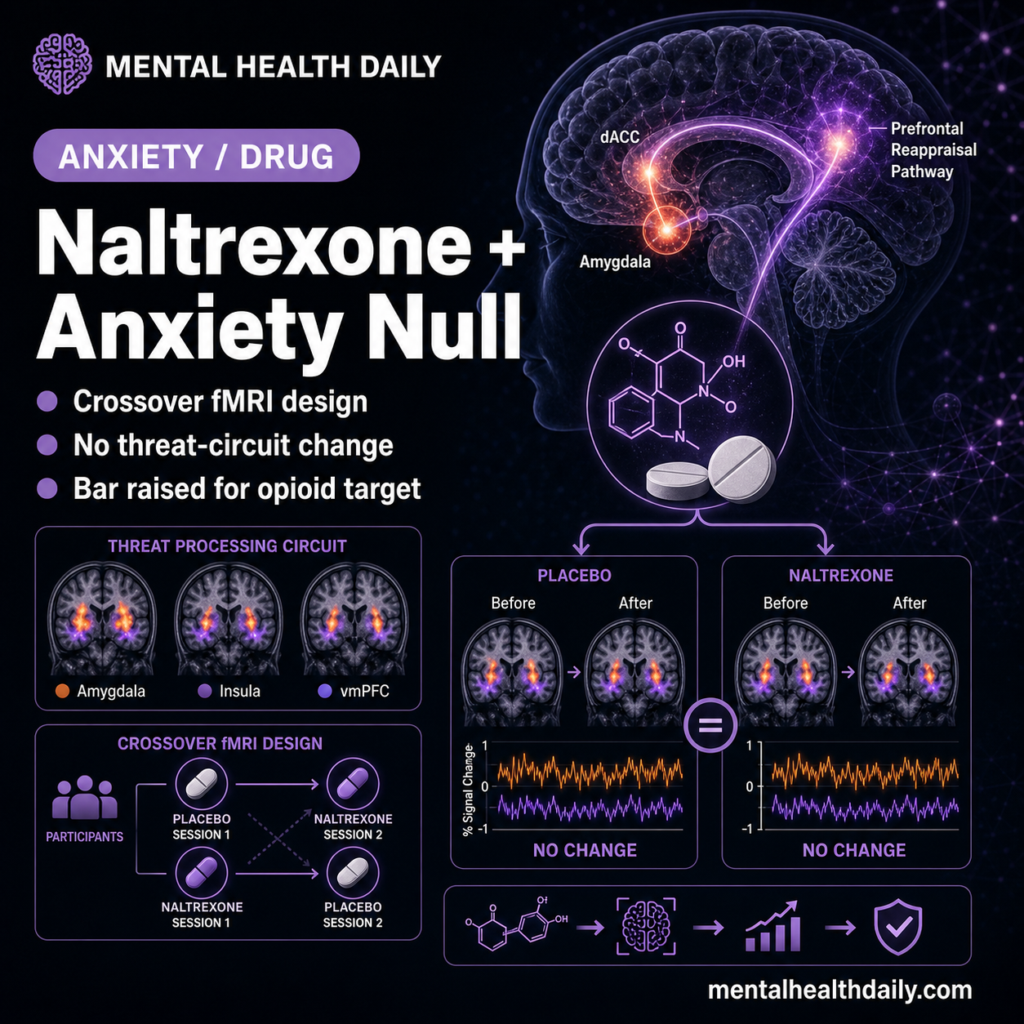
Photoreal illustration of brain with vmPFC, amygdala, and threat-processing circuitry highlighted under pharmacological challenge.

The endogenous opioid system has been a candidate target for novel anxiety treatments, but a 2026 placebo-controlled crossover fMRI study in 38 healthy volunteers ran opposite the hypothesis: instead of increasing threat-related distress and amygdala reactivity, 50 mg oral naltrexone reduced subjective distress during cognitive reappraisal (p = 0.044, d = 0.57) and shifted ventromedial …

Read more