hit counter

Brazilian Eating Disorder Guidelines: CBT First for Bulimia and Binge Eating, Fewer Proven Options for Anorexia

MHD card with an open glowing guideline book on a dark navy background, three colored pathways branching from its spine to three nodes, and stepped translucent evidence tiers at the right edge, illustrating eating disorder treatment guidelines.

New Brazilian Psychiatric Association guidelines put cognitive behavioral therapy (CBT) first for bulimia and binge-eating disorder. When medication is needed, they recommend fluoxetine as an add-on for bulimia and lisdexamfetamine as the first-choice drug for binge-eating disorder. For anorexia, no single therapy has proven best, and drugs play only a small supporting role.1 Research Highlights …
Read more

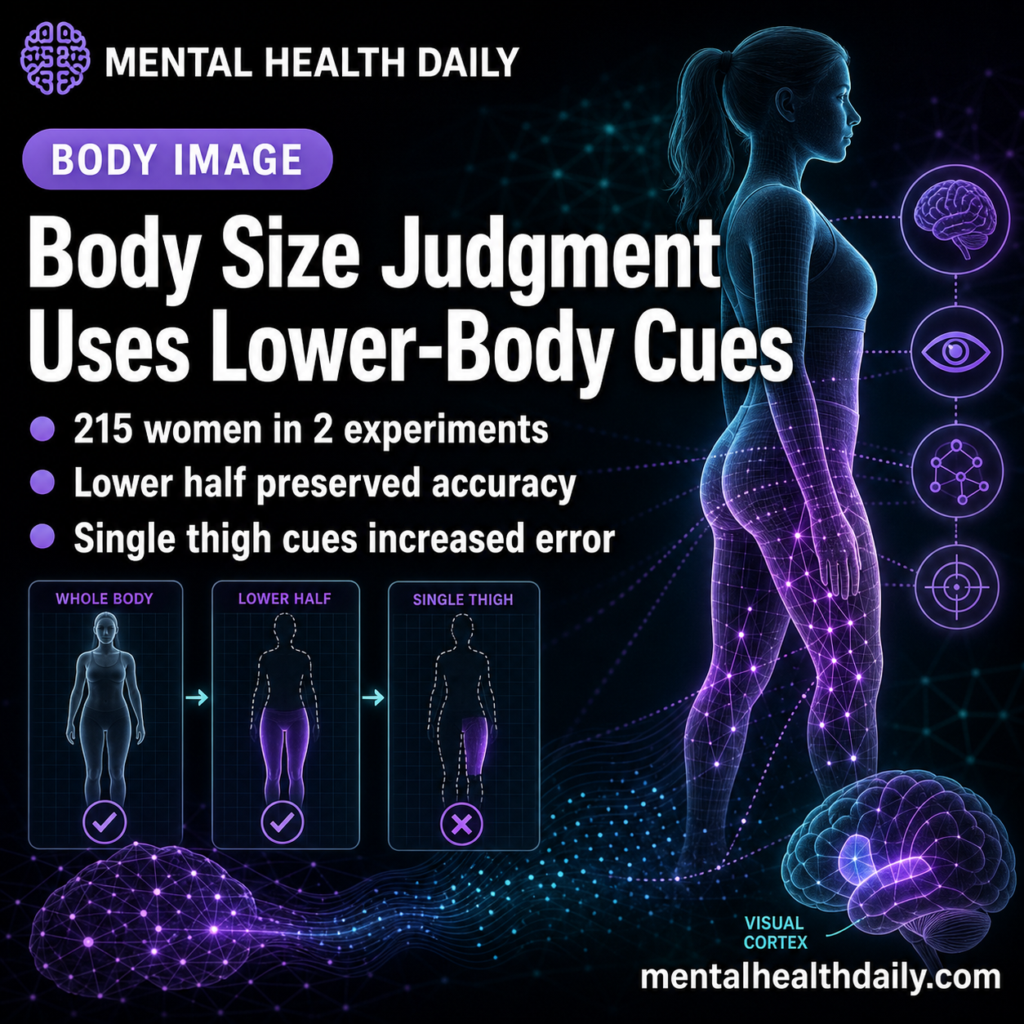
Female Body Size Judgments Depend on Lower-Body Visual Cues

MHD featured image for female body-size judgment, lower-body visual cues, and body-image perception.

A 2-experiment BMC Biology study found that female body-size judgments did not require a full-body view: bottom-half views preserved accuracy in 99 women, while isolated inner- or outer-thigh views produced more perceptual error than whole-body views in a second 116-woman experiment.1 The result is relevant to body-image research because it points to lower-body feature integration, …

Read more

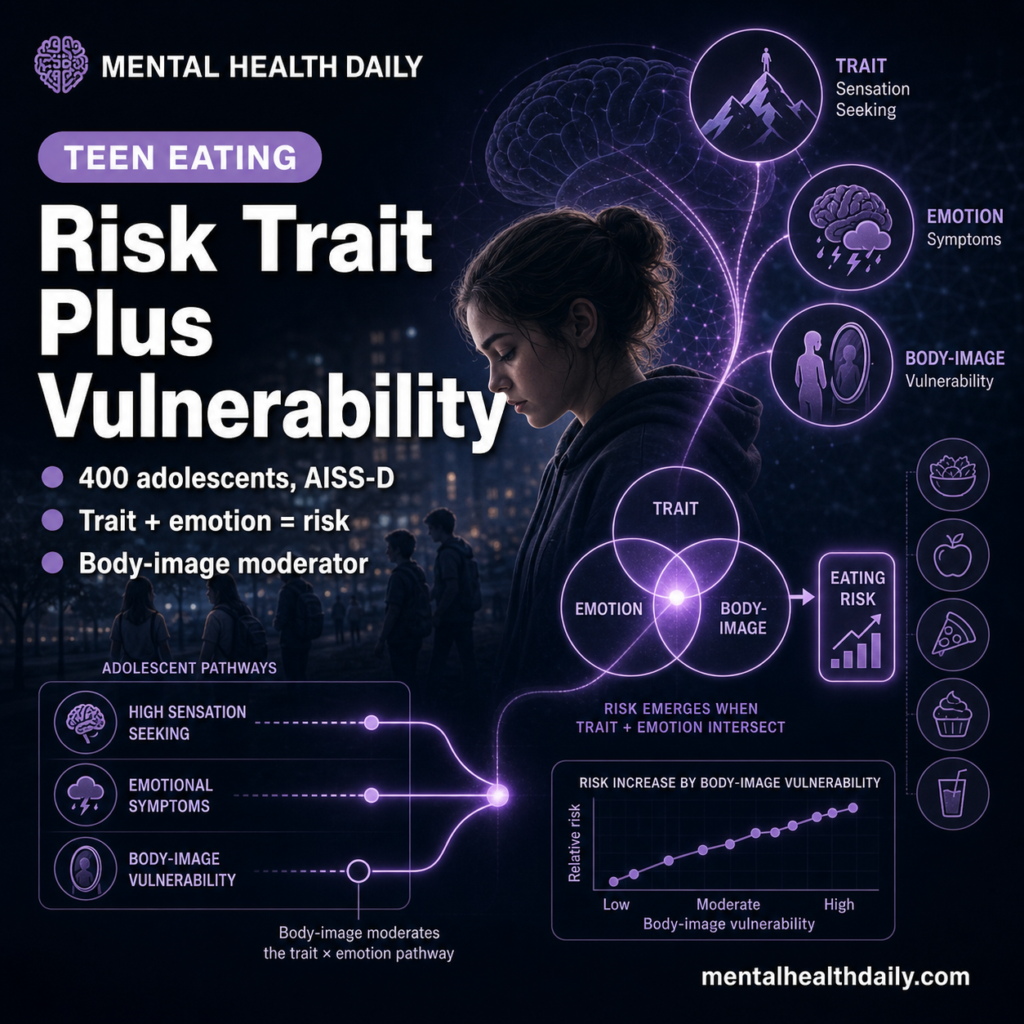
Sensation Seeking Predicts Disordered Eating in Teens

Photoreal illustration of a teenager with overlapping symbols of food and personality traits, conveying sensation-seeking eating-disorder risk.

Sensation seeking has long been linked to risky behaviors in teens, but its role in eating-disorder psychopathology has been mixed. A 2026 study by Bogner and colleagues clarifies the picture in 400 German adolescents: sensation seeking matters for disordered eating, but the effects are moderated by weight status and emotional symptoms.1 Research Highlights Sensation seeking …

Read more