hit counter

SPP1 Marks Cross-Disease Microglial Activation in Neurodegeneration
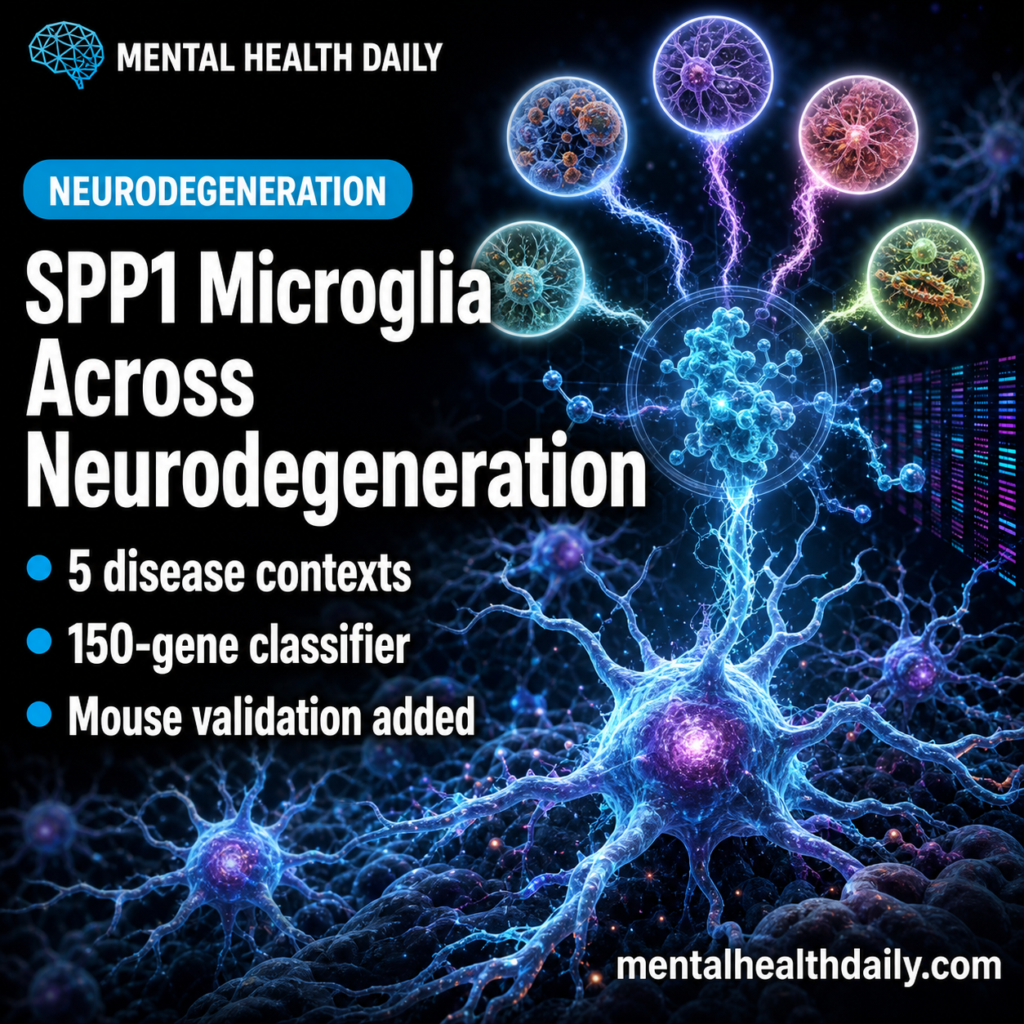
MHD featured image for SPP1 microglia and neurodegeneration transcriptomics.

A 2026 Glia analysis found a shared microglial transcriptional program across 5 neurodegenerative contexts: ALS, frontotemporal dementia, Alzheimer’s disease, aging, and Parkinson’s disease.1 The standout marker was SPP1, a gene encoding osteopontin, but the finding is a cellular-state signal rather than a ready diagnostic test. Research Highlights Cross-disease microglia converged: the integrated dataset covered ALS, …
Read more

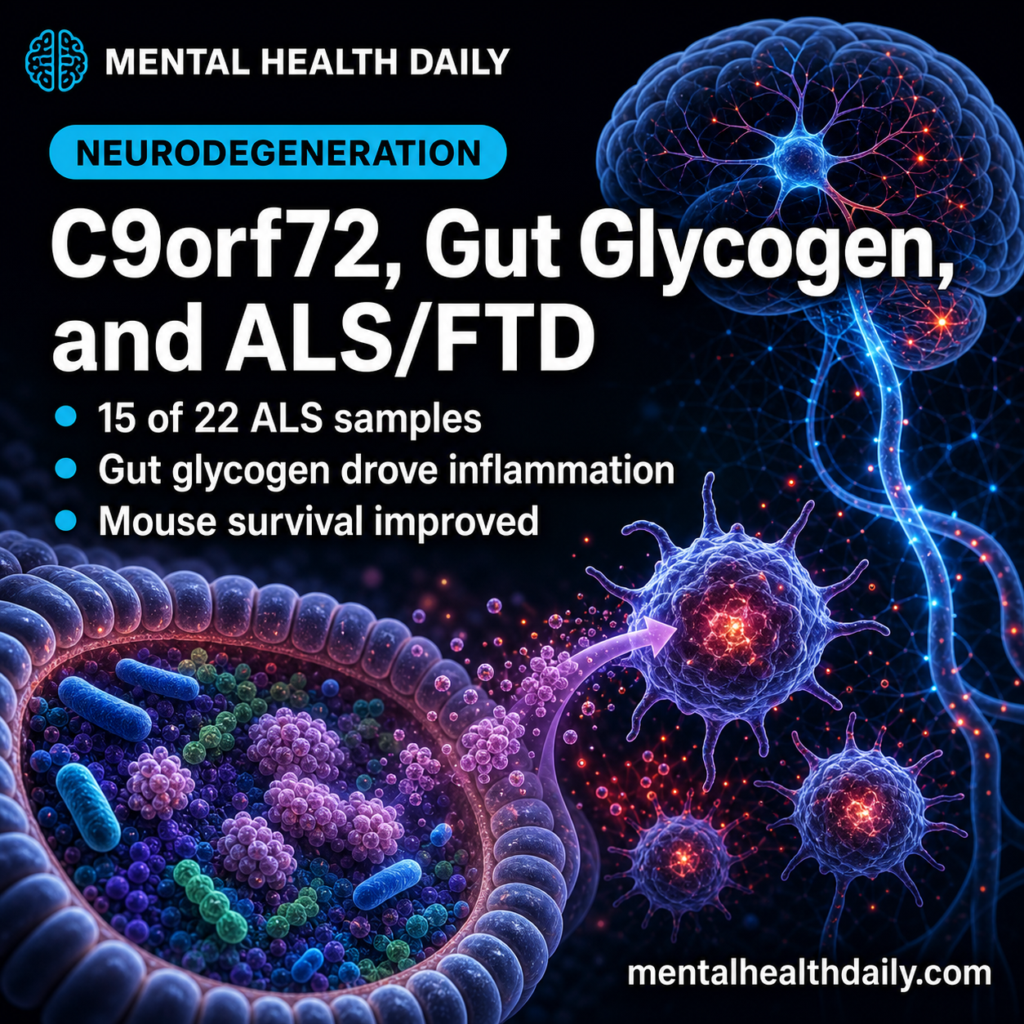
C9orf72 ALS/FTD Inflammation Linked to Microbial Glycogen in Gut

MHD featured image for C9orf72, microbial glycogen, gut inflammation, and ALS/FTD risk.

A Cell Reports study tied C9orf72-related ALS/FTD inflammation to a gut-bacterial product: inflammatory microbial glycogen appeared in 15 of 22 ALS fecal samples, 1 of 1 C9orf72-frontotemporal dementia sample, and 4 of 12 healthy controls.1 The result supports a narrower gene-by-microbial-product mechanism that makes C9orf72 loss of function more inflammatory. Research Highlights Human samples carried …

Read more

Masitinib for ALS: AB10015 Reports 42.3% 5-Year Survival

MHD featured image for masitinib, ALS survival, and AB10015 long-term follow-up.

A 2026 AB10015 post-hoc preprint reported 42.3% 5-year survival from amyotrophic lateral sclerosis symptom onset among patients originally assigned to masitinib 4.5 mg/kg/day with riluzole. The number is large for ALS, but the long-term comparison is historical and modeled rather than randomized placebo follow-up.1 Research Highlights 42.3% reached 5 years from onset: Ludolph et al. …

Read more

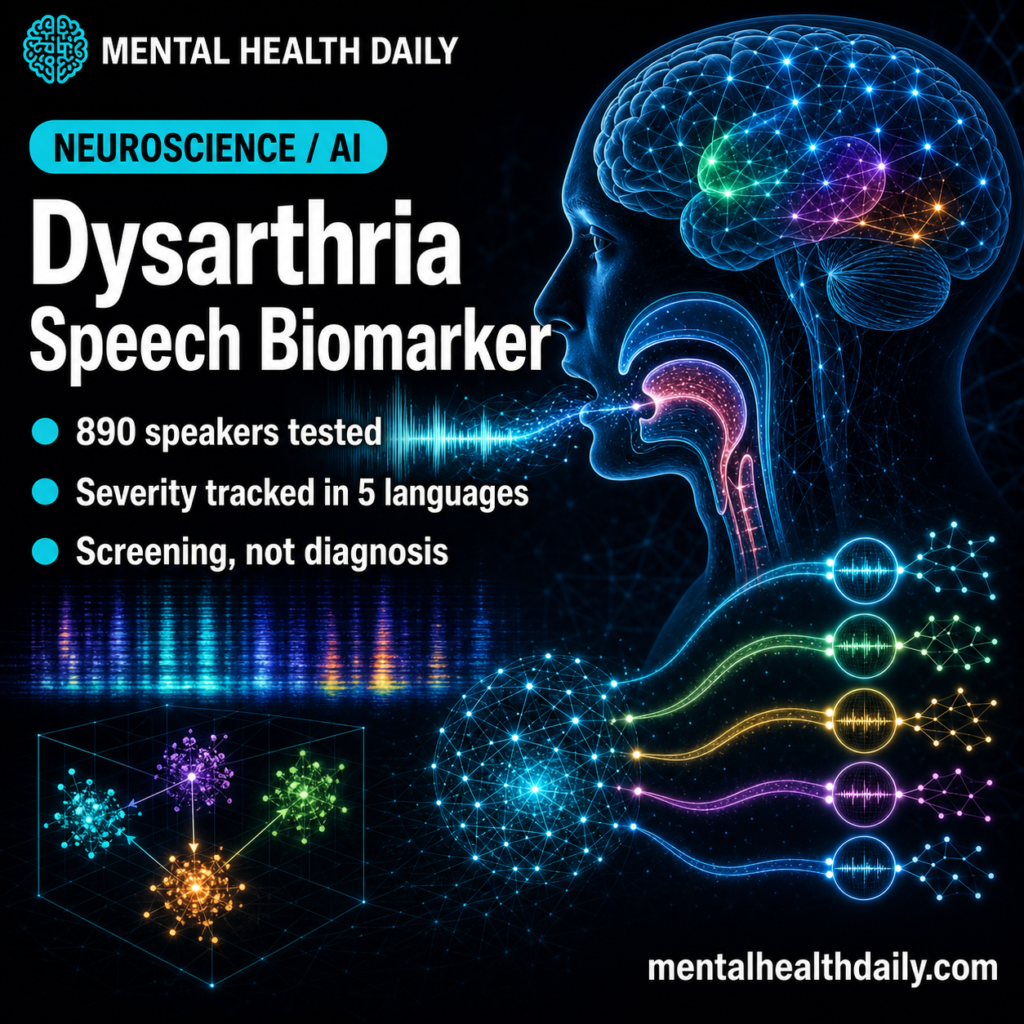
Dysarthria Speech Biomarker Tracked Severity Across 5 Languages

MHD featured image for dysarthria speech biomarkers, phonological subspace collapse, and cross-language severity tracking.

A 2026 medRxiv preprint found that a training-free speech biomarker tracked dysarthria severity across 890 speakers, 10 corpora, and 5 full-pipeline languages, with all 5 consonant d-prime features showing random-effects correlations with clinical severity (rho = −0.50 to −0.56; all p < 2e−4). Research Highlights Speech-severity signal was broad: Muller et al. evaluated 890 speakers …

Read more

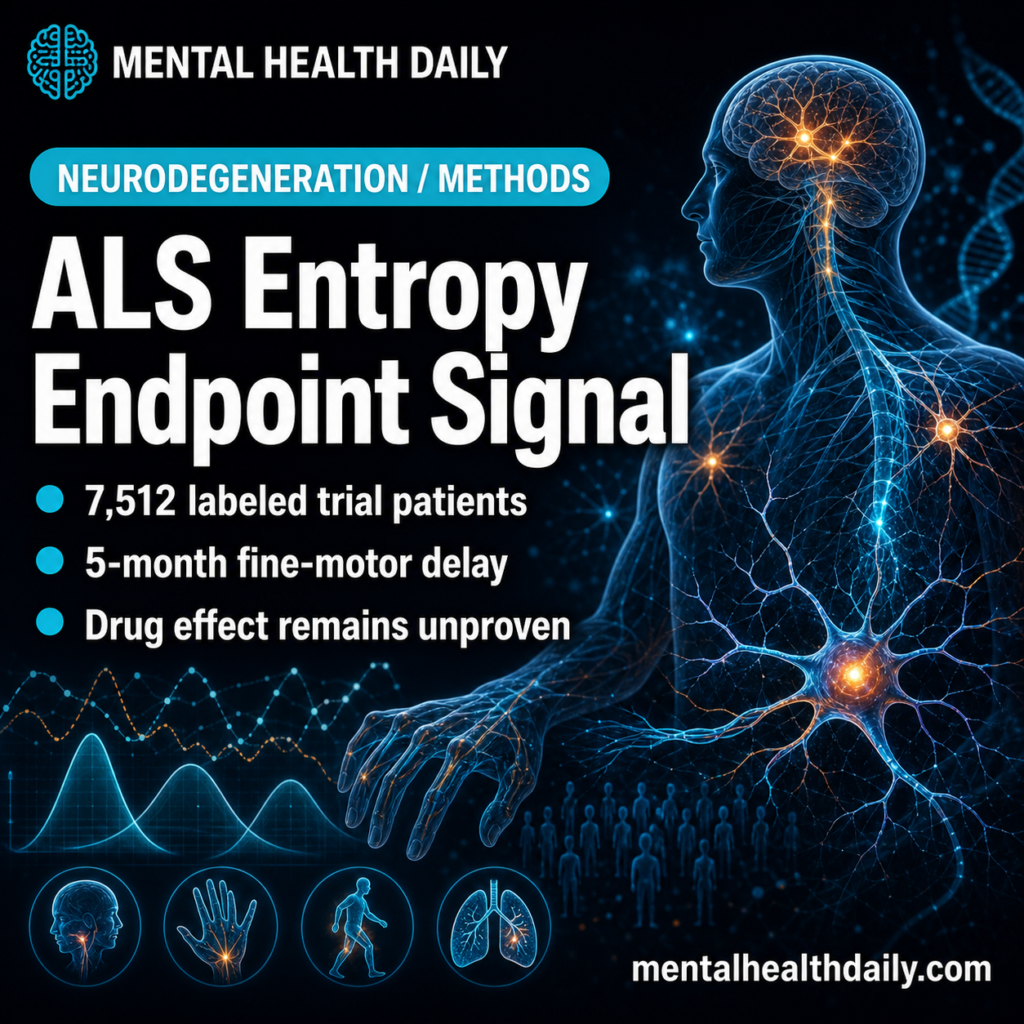
ALS Entropy Analysis Finds 5-Month Signal Hidden by ALSFRS Scores

MHD featured image for ALS trial endpoints, Shannon entropy, and ALSFRS domain trajectories.

A 2026 PRO-ACT analysis of amyotrophic lateral sclerosis (ALS) trial data found a signal that ordinary ALSFRS total-score slopes cannot even express: Shannon entropy trajectories diverged between pooled active and placebo arms, including a 5-month delay in peak Fine Motor distributional spread for active-arm patients.1 Research Highlights Entropy found an endpoint-level signal: Rodriguez analyzed 7,512 …

Read more

Leaded Gasoline and ALS: Australia’s MND Surge Tracks Lead

Photoreal illustration linking historical leaded-petrol exposure with motor neurone disease, with imagery of a vintage gas pump and motor neuron motifs.

A 2026 Australian ecological model found that 20-year-lagged cumulative population blood-lead burden was nonlinearly tied to motor neuron disease mortality (lead spline p = 0.00024), while national insecticide use did not independently explain the curve after adjustment (p = 0.39).1 That is a real lead signal, but it is still population-level evidence, not proof that …

Read more