hit counter

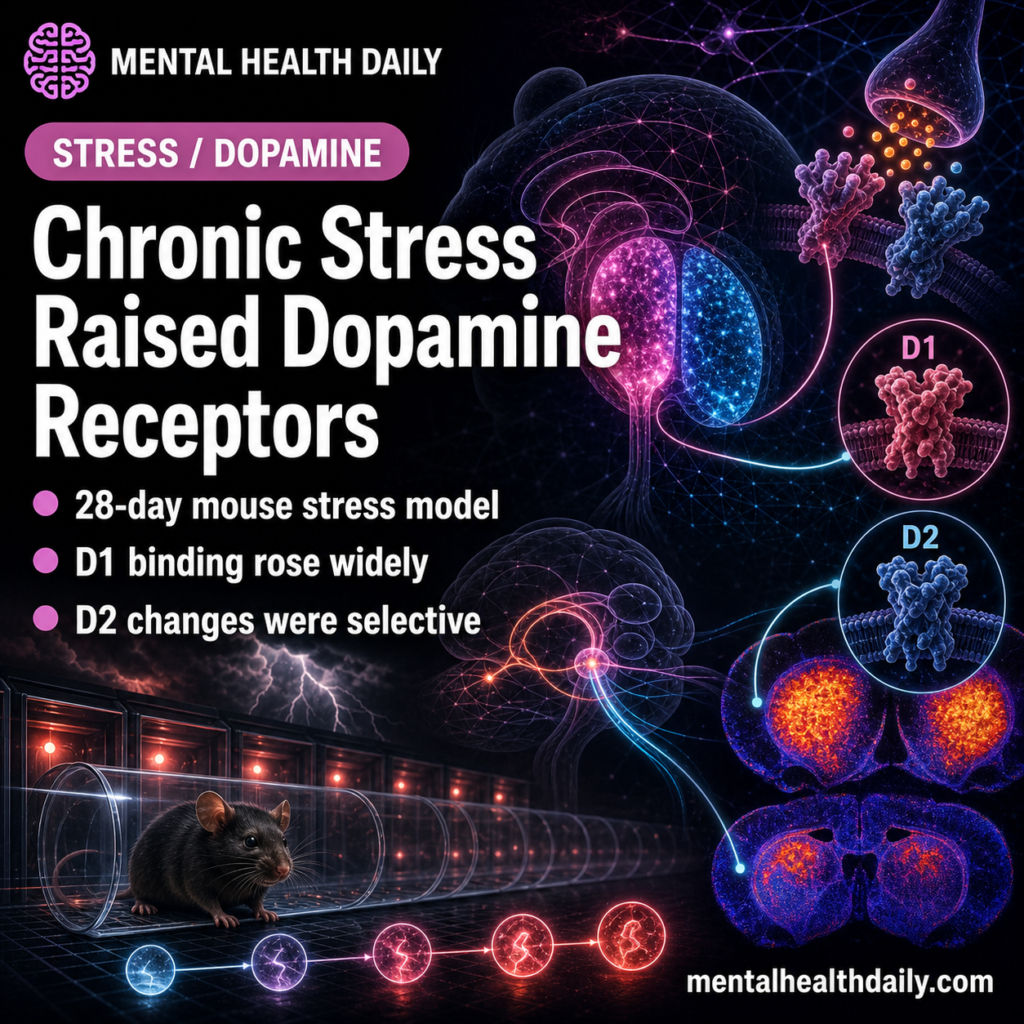
Chronic Stress Increased Mouse D1 and D2 Dopamine Receptors

Stylized striatal dopamine receptor map in a mouse stress model, highlighting widespread D1 receptor binding increases and selective D2 changes after chronic mild stress.

Chronic stress is a candidate mechanism for both depression and addiction risk. A 2026 mouse study found that 28 days of unpredictable chronic mild stress increased striatal dopamine D1 receptor binding by 22–48% across nearly every region examined, plus more selective D2 receptor increases — pointing to a stress-driven shift in reward signaling that may …

Read more

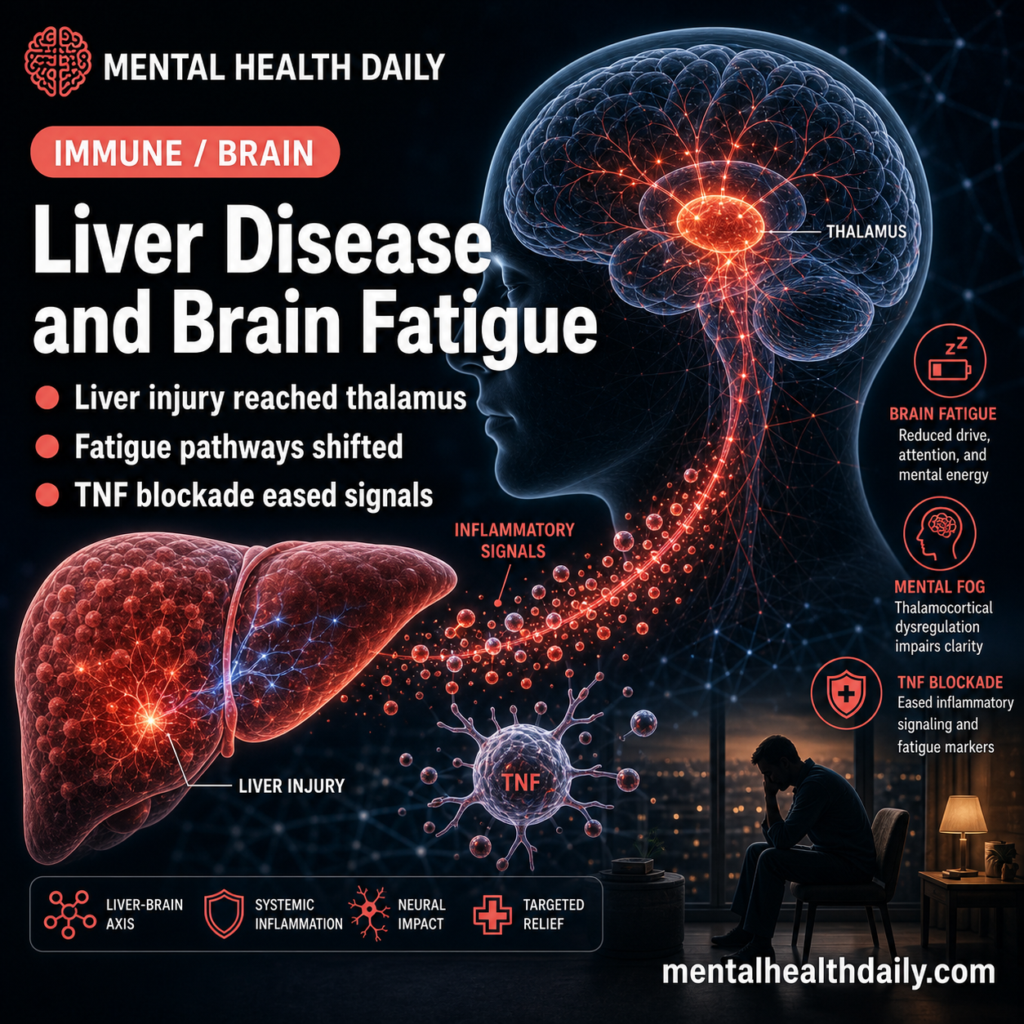
Cholestatic Liver Injury Alters Thalamus Fatigue Genes

MHD featured image for cholestatic liver disease, thalamus changes, fatigue, and TNF signaling.

A 2026 mouse study linked cholestatic liver injury to smaller thalamic volume than control injury-free mice, broad thalamus gene-expression changes, and partial pathway rescue after systemic tumor necrosis factor neutralization. Research Highlights Thalamic volume decreased: bile duct ligation (BDL; a mouse model of obstructive cholestatic liver injury) reduced thalamic volume vs. sham surgery by magnetic …

Read more

Complex PTSD Therapy Helped Affect Regulation Most

A 2026 systematic review and meta-analysis of randomized trials found no broad superiority for phase-based complex PTSD care across most outcomes. Affect dysregulation was the clearest exception, improving more when treatment was phase-based, multi-phase, and exposure-containing. Research Highlights Most therapy formats helped: across waitlist and treatment-as-usual comparisons, psychological interventions reduced PTSD symptoms (k = 9; …

Read more

Bhagavad Gita and Yoga Reduced Healthcare-Worker Anxiety in 68-Person Trial

MHD featured image for yoga, Bhagavad Gita teaching, and healthcare-worker anxiety.

A 68-person randomized trial in Indian healthcare workers found a narrow but useful pattern: combined yoga plus Bhagavad Gita teaching beat usual care immediately on GAD-7 anxiety scores (p = 0.009), while Gita teaching alone beat usual care at 45 days (p = 0.047).1 Yoga alone improved within its own arm, but it did not …

Read more

Hybrid Work Improved Psychosocial Work Experience in Women 4.3 Points

MHD featured image for hybrid work and psychosocial work experience.

A 148-worker Swedish longitudinal study found that psychosocial work experience improved after hybrid work was implemented, with total Work Experience Measurement Scale scores rising from 71.2 to 74.3 and the clearest subgroup signal appearing in women: +4.3 points vs. -1.2 points in men.1 Research Highlights Work experience improved: total WEMS scores increased from 71.2 before …

Read more