hit counter

Dexamethasone Disrupts Mouse Sleep Through Orexin Hyperarousal
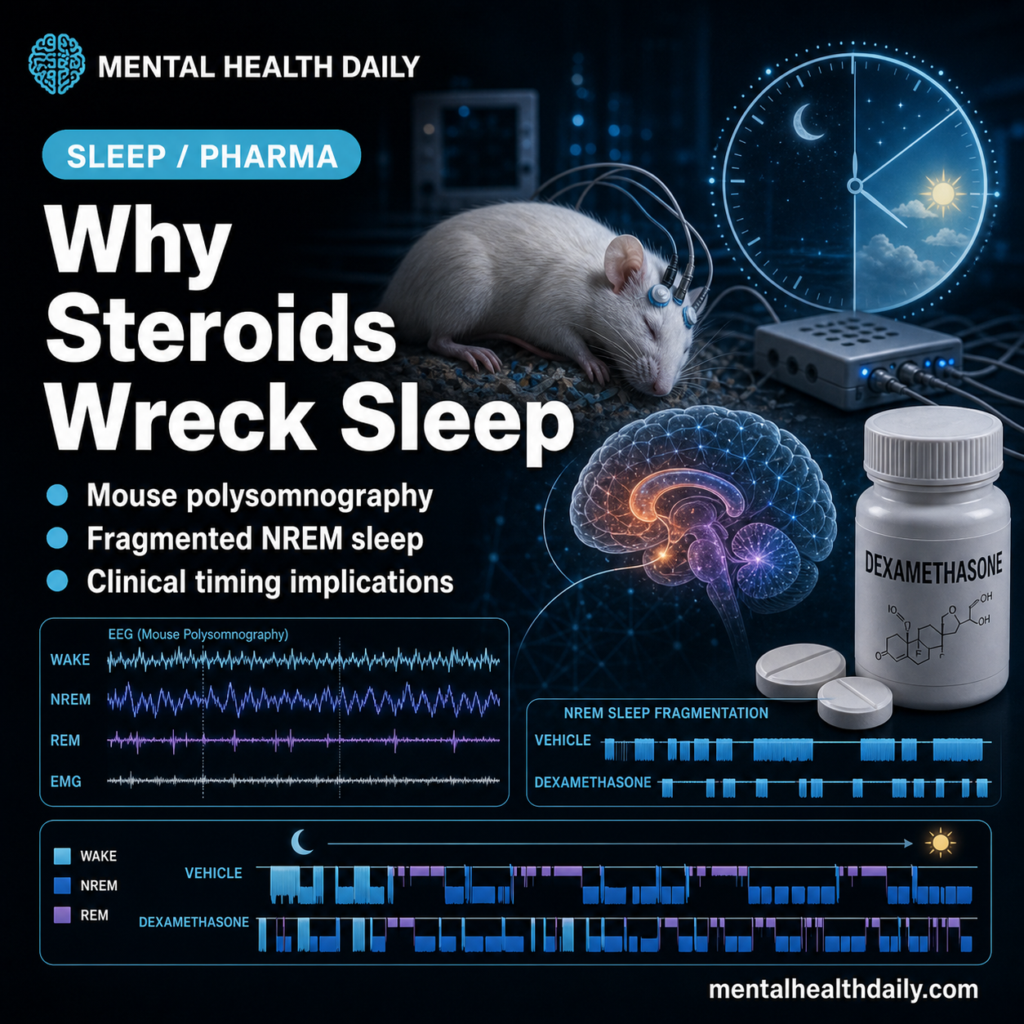
Photoreal illustration of a steroid pill bottle with overlay of disrupted sleep architecture, conveying glucocorticoid-induced insomnia mechanism.

A 2026 male-mouse study found that 30 mg/kg dexamethasone for 5 days increased light-phase wakefulness (t13 = 4.122, p = 0.0012), decreased NREM sleep (t13 = 4.412, p = 0.0007), and amplified orexin-neuron activity during NREM-to-wake transitions (F1,9 = 6.941, p = 0.0272). The result points to orexin-linked hyperarousal as a testable explanation for steroid-induced …

Read more

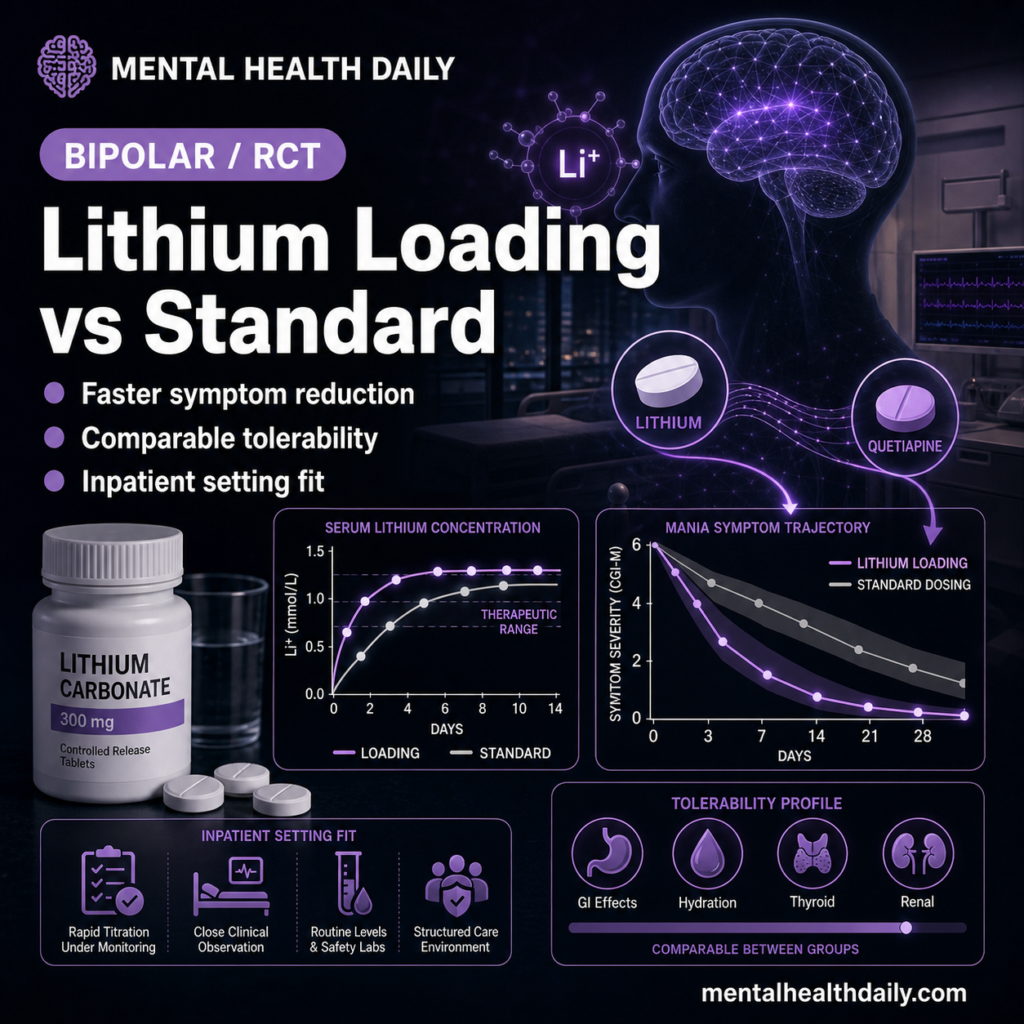
Lithium Loading Dose Did Not Clearly Beat Standard Acute-Mania Titration

Photoreal illustration of lithium tablets and blood-level monitoring chart, conveying acute-mania pharmacological strategy.

A 60-patient randomized trial of lithium loading for acute bipolar I mania reported faster serum lithium attainment than standard titration and a larger 14-day Young Mania Rating Scale (YMRS) change score, but the same accepted manuscript says absolute YMRS scores at Days 3, 7, and 14 were not significantly different between the 2 arms when …

Read more

Drug Addiction Linked to Cortical Thinning in 65 of 68 Brain Regions

Photoreal illustration of a human brain with cortical regions highlighted across substance categories, representing the cross-substance morphometric pattern in addiction.

Whether alcohol, cocaine, nicotine, and cannabis damage the same brain regions or different brain regions has been hard to settle in the addiction-imaging literature. A 2026 ENIGMA Addiction analysis by Georgiadis et al. — pooling 4,733 brains across 51 sites — now has an answer. Research Highlights Across 2,782 people with substance use disorder (SUD) …

Read more

Psychedelic Hallucinations May Reflect Wake-Time Memory Replay

Photoreal illustration of a brain shifting between perception and generative imagery under psychedelic influence.

A 2026 eLife computational study modeled classical psychedelics by increasing a network state variable from alpha = 0 to alpha = 1, shifting perception from bottom-up sensory inference toward top-down generative replay. The result is a useful but still unproven oneirogen model: hallucinations look less like random noise and more like wake-time replay of a …

Read more

Cannabis After Pregnancy Did Not Increase Hypertension Risk in nuMoM2b

Photoreal illustration of a postpartum woman with stethoscope and cannabis imagery, conveying cardiovascular implications of postpartum cannabis use.

A 2026 nuMoM2b Heart Health Study analysis tested whether urine-confirmed cannabis exposure 2–7 years after a first pregnancy predicted incident stage II hypertension; it did not: adjusted odds ratio (AOR) 1.05, 95% CI 0.63–1.76, with 216 of 4,079 participants developing hypertension.1 Research Highlights The headline result was null: cannabis exposure at the 2–7 year postpartum …

Read more

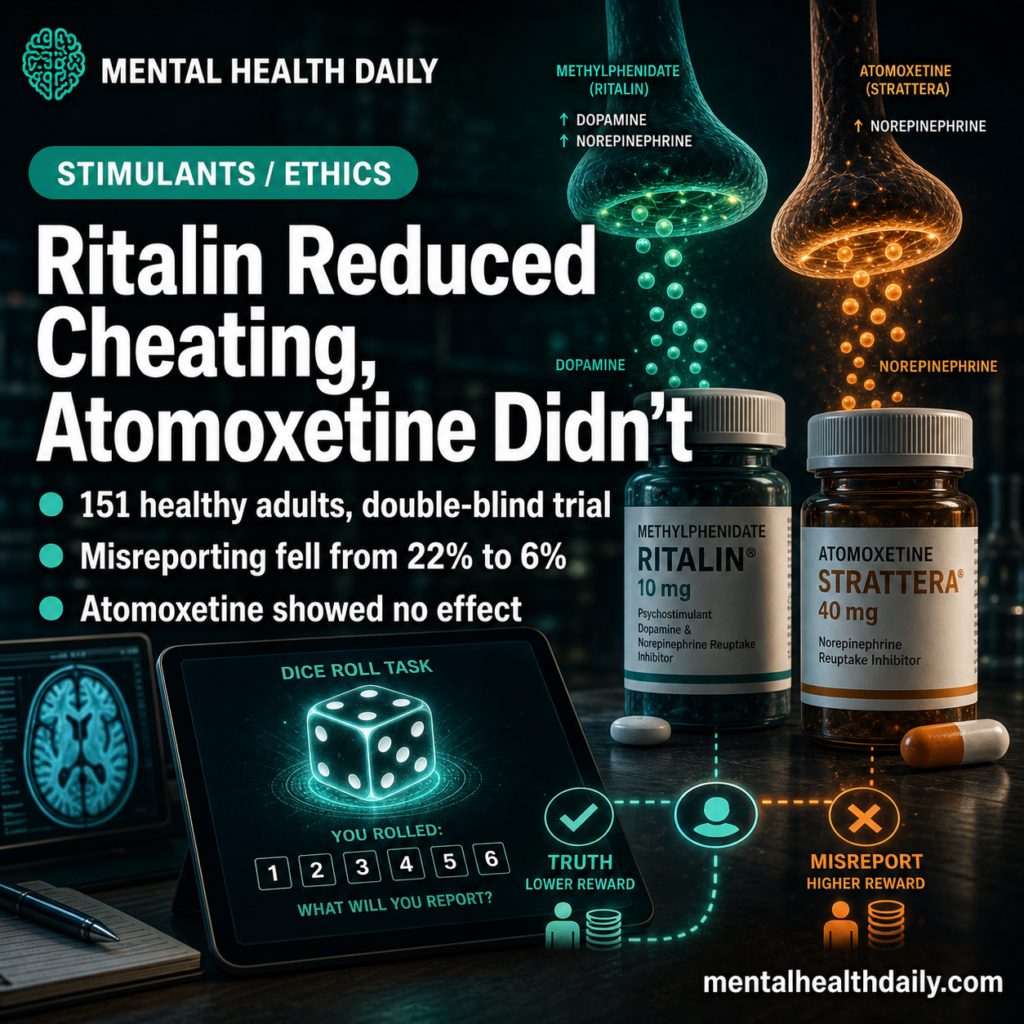
Methylphenidate Reduced Dishonesty and Cheating in 151 Adults; Atomoxetine Had No Effect

Editorial card showing methylphenidate molecular structure beside a die-rolling task, illustrating a counterintuitive randomized-trial result.

A 2026 double-blind randomized controlled trial by Kappes et al. in Psychopharmacology found something the smart-drug users likely wouldn’t have predicted: a single 30 mg dose of methylphenidate reduced dishonest misreporting on a die-rolling task from ~22% of trials in the placebo arm to ~6% (in the methylphenidate arm).1 Atomoxetine, a noradrenergic comparator, had no …

Read more

Antidepressant Use in Pakistan (2026): SSRI Prescribing Patterns and Patient-Reported Side Effects

Photoreal illustration of a pharmacist counseling patient on antidepressant medication, conveying global pharmacovigilance.

Most antidepressant pharmacovigilance data come from high-income countries, leaving prescribing patterns and adverse-effect profiles in low- and middle-income countries underdocumented. A 2026 cross-sectional study by Riaz and colleagues describes antidepressant use in Pakistan, with patient-reported adverse effects mapped against prescription patterns.1 Research Highlights Antidepressant use in low- and middle-income countries (LMICs) has grown substantially but …

Read more