hit counter

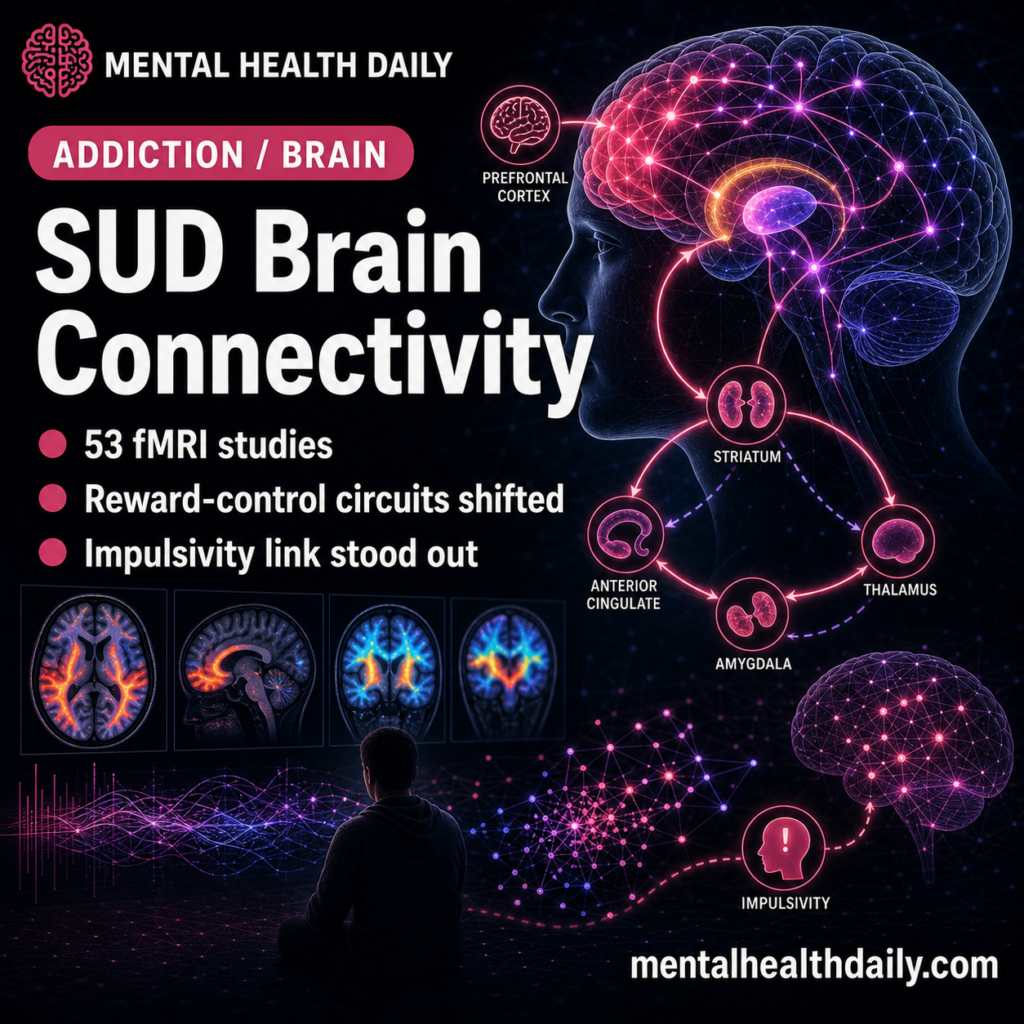
Substance Use Disorder Brain Connectivity in 53 Studies

MHD featured image for substance use disorder, resting-state fMRI, reward circuitry, and brain connectivity meta-analysis.

A 53-study resting-state functional magnetic resonance imaging (fMRI) meta-analysis found substance use disorder (SUD) linked to altered connectivity across prefrontal, striatal, thalamic, cingulate, and amygdala circuits. The most clinically relevant finding was an impulsivity correlation, not a diagnostic brain signature. Research Highlights Meta-analysis scale was meaningful: Zhang et al. pooled 53 whole-brain resting-state functional magnetic …

Read more

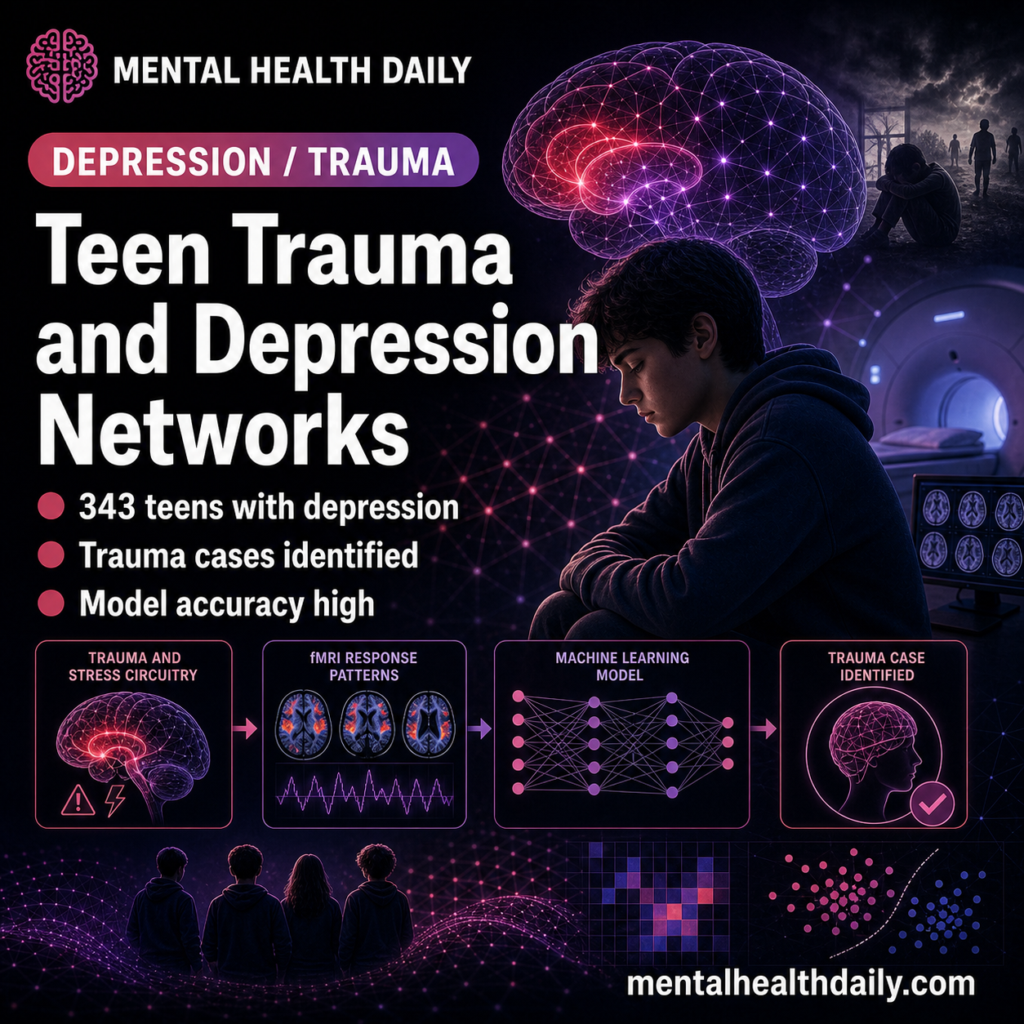
Teen Trauma Depression: fMRI Predicted Response at 82%

A 2026 adolescent depression study used resting-state functional magnetic resonance imaging to test whether childhood trauma leaves a measurable network signature in the depressed teen brain. The researchers found disrupted default-mode network hubs in teenagers with major depressive disorder and childhood trauma, and baseline functional-connectome patterns predicted treatment response with 82% accuracy.1 Research Highlights Large …

Read more

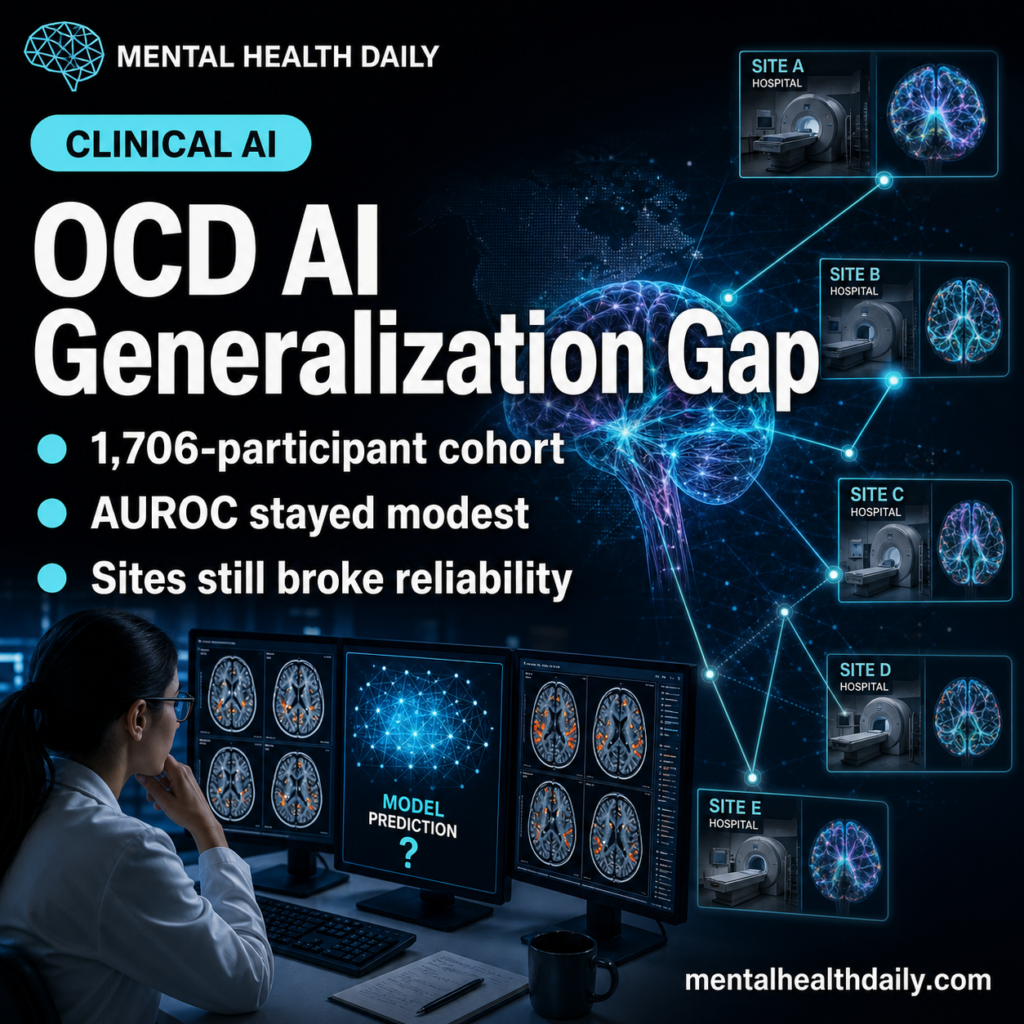
OCD Clinical AI Reached AUROC 0.653 but Failed Site Generalization

MHD featured image for OCD clinical AI and ENIGMA fMRI generalization.

A 2026 ENIGMA-OCD preprint tested a transformer model on resting-state fMRI from 1,706 participants and reached AUROC = 0.653 ± 0.039 for OCD classification.1 The more important result was the failure mode: held-out-site performance ranged from AUROC 0.427 to 0.819, which is exactly the gap clinical AI has to close before brain-scan diagnosis is credible. …

Read more

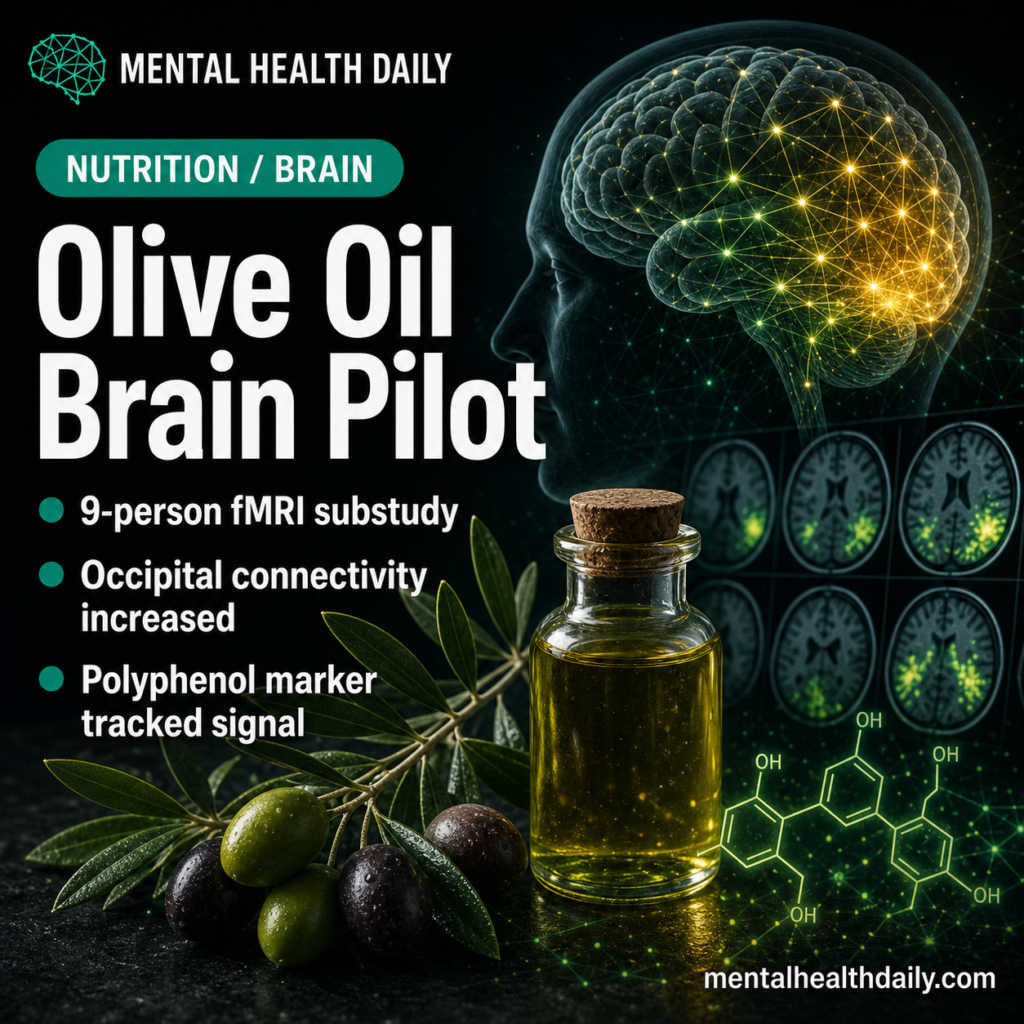
Extra-Virgin Olive Oil Raised Brain Connectivity in a 9-Person Pilot

MHD featured image for extra-virgin olive oil and brain connectivity.

A 9-person randomized crossover neuroimaging substudy found that high-polyphenol extra-virgin olive oil increased occipital resting-state functional connectivity compared with regular olive oil, beta = 0.20, 95% CI 0.03 to 0.37, p = 0.016.1 The result is a measurable brain-signal finding, but the clinical claim stays small: connectivity changed, cognition was not the endpoint. Research Highlights …

Read more

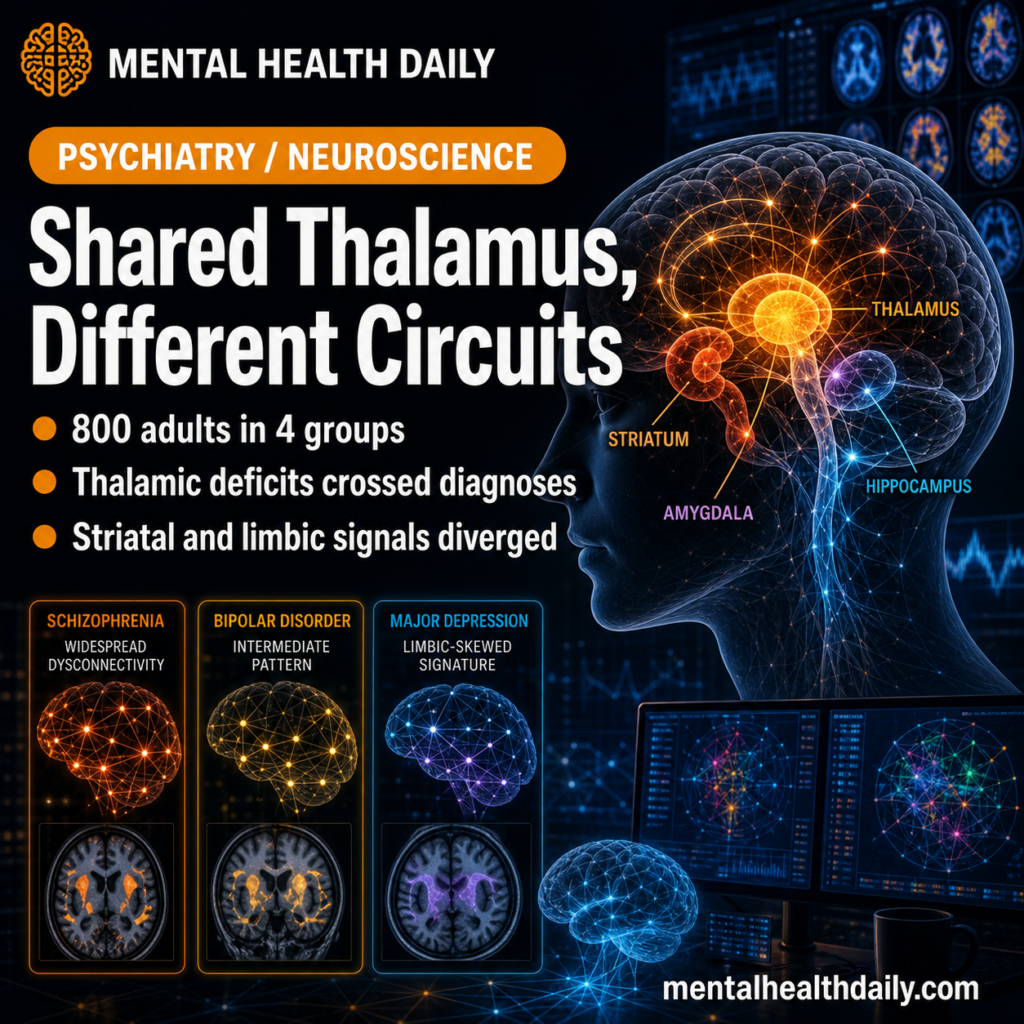
Subcortical Connectivity Differs in Schizophrenia, Bipolar, Depression

MHD featured image for subcortical connectivity patterns across schizophrenia, bipolar disorder, and depression.

A 2026 resting-state fMRI study of 800 adults found intra-thalamic hypoconnectivity across schizophrenia, bipolar disorder, and major depression, but schizophrenia showed far broader subcortical dysconnectivity than bipolar disorder or depression.1 The calibrated read is that these diagnoses may share a thalamic vulnerability while diverging in striatal and limbic circuitry. Research Highlights Shared thalamic deficit: In …

Read more

Autism vs. ADHD Connectome Study: Frontal-DMN Signal Tracks Autism Severity

MHD featured image for autism, ADHD, and connectome-based symptom mapping.

A 166-child resting-state fMRI study found that clinician-observed autism severity, not ADHD severity, tracked connectivity strength between a left middle frontal gyrus node and the posterior cingulate/default mode network across children diagnosed with autism or ADHD without autism. The result is transdiagnostic, but asymmetrical: autism traits carried the connectome signal after ADHD ratings were controlled.1 …

Read more