motivation
Published research on motivation.
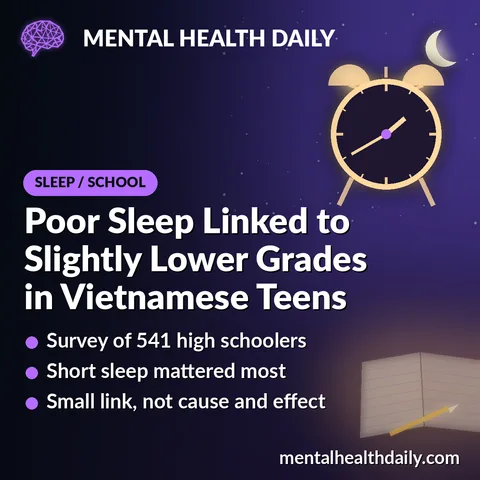
High-school students in Vietnam who slept worse reported slightly lower grades, according to a 2026 survey of 541 students in Grades 10 and 11. Shorter sleep carried most of that link, which…
Read article →
Advice on how parents and schools should guide children’s use of AI tools like ChatGPT is running well ahead of the evidence. A 2026 review found that only 8 of 46 studies it drew on include…
Read article →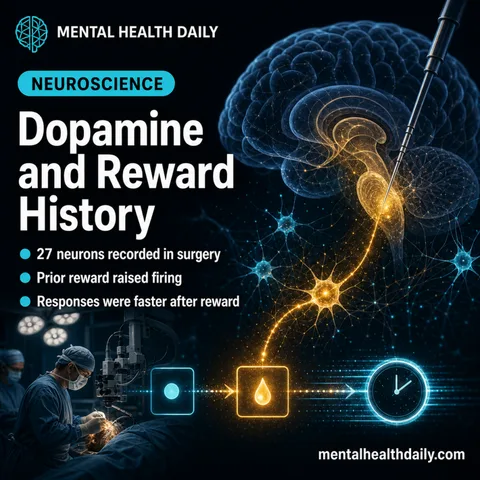
A 2026 iScience study recorded 27 substantia nigra neurons during deep-brain-stimulation surgery in 11 Parkinson’s disease patients and found that prior reward shaped both putative dopamine-…
Read article →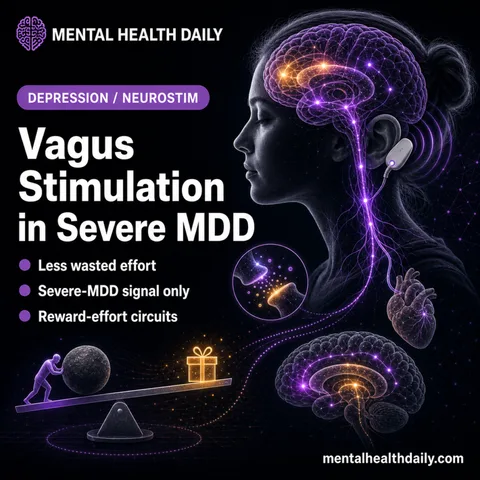
An ear-clip that modulates mood by stimulating the vagus nerve has obvious appeal — but the evidence base for non-invasive tVNS in depression has been mixed for a decade. A 2026 cross-over R…
Read article →
Recent research reveals a notable association between vitamin D levels and the severity of negative symptoms in individuals with first-episode psychosis (FEP). A new study explored the genet…
Read article →Phentermine is an anorectic medication utilized principally for the short-term treatment of obesity as an adjunct to caloric restriction, dietary modifications, and physical exercise. It is …
Read article →Vyvanse (Lisdexamfetamine) is a drug developed by Shire Pharmaceuticals as a successor to Adderall. Vyvanse was first approved for the treatment of attention-deficit/hyperactivity disorder (…
Read article →