hit counter

Suspected Narcolepsy Turned Out to Be Epilepsy and Sleep Apnea
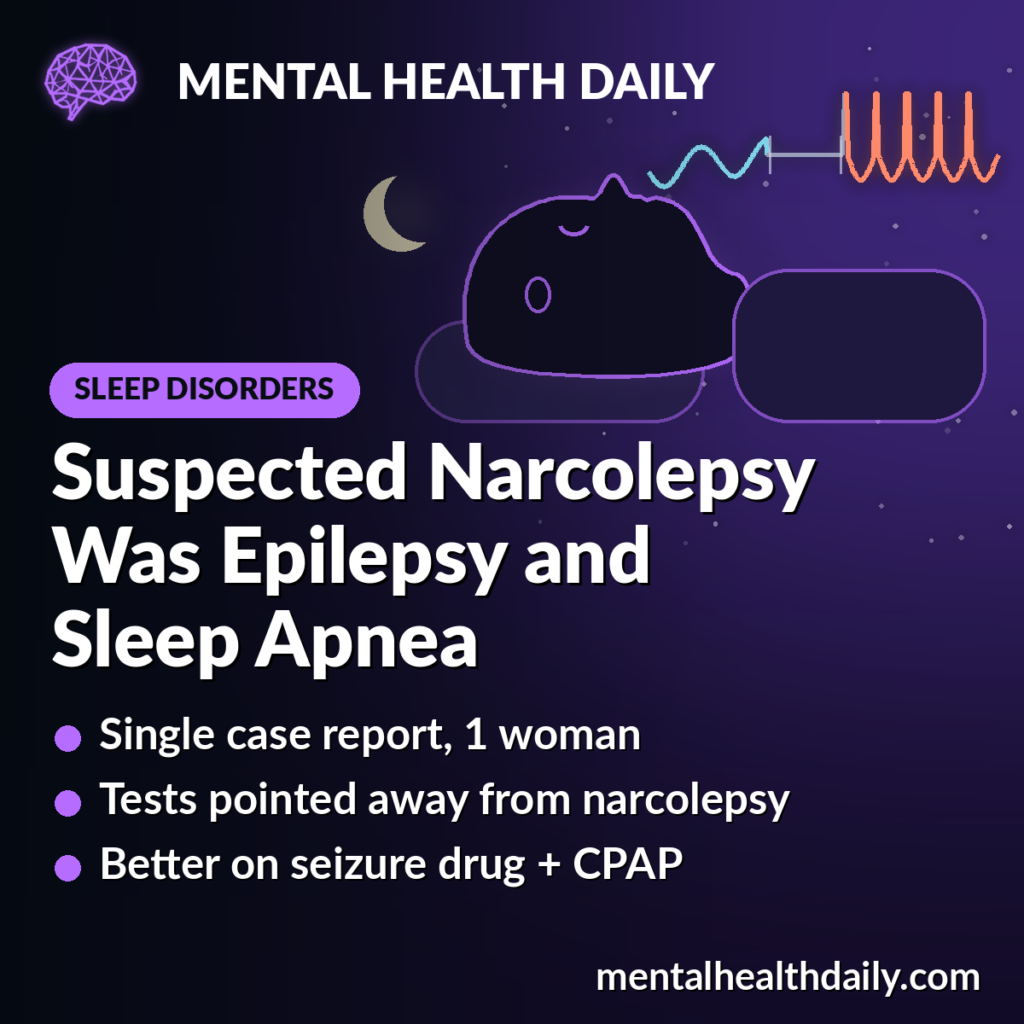
MHD card showing a sleeping person lying face-up on a pillow under a crescent moon, with a breathing wave that pauses and then turns into a jagged seizure-like burst, illustrating a case of suspected narcolepsy that turned out to be epilepsy and sleep apnea.

In a 2026 case report from China, a 34-year-old woman with mild intellectual disability was sent for evaluation of possible narcolepsy. Sleep testing and EEG instead showed epilepsy and moderate obstructive sleep apnea.1 Research Highlights Narcolepsy was ruled unlikely: she took 9.3 minutes on average to fall asleep during daytime nap tests, with no early …
Read more

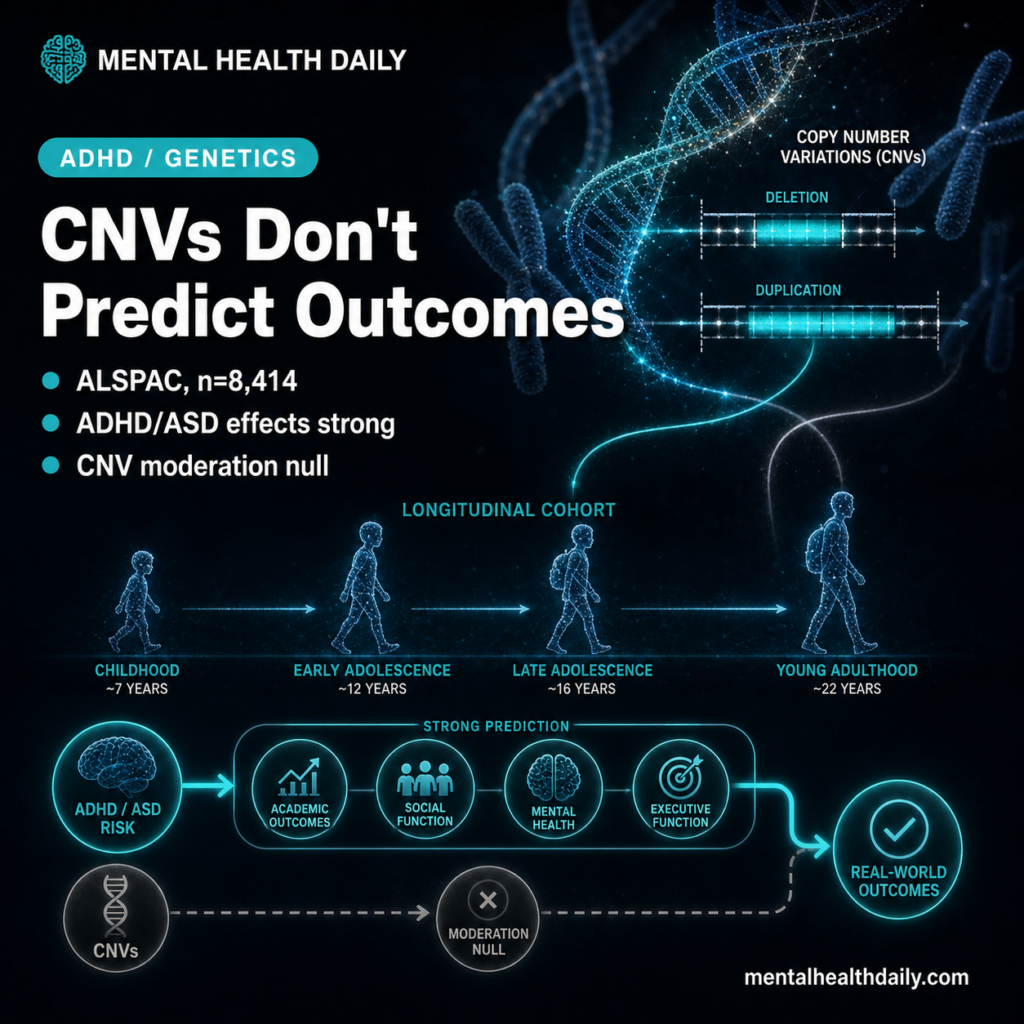
Copy Number Variants Did Not Moderate ADHD or Autism Outcomes in ALSPAC

Photoreal illustration of DNA strands and developmental timeline overlaid on a schematic young adult, conveying genetic moderation of childhood neurodevelopmental outcomes.

A 2026 ALSPAC analysis tested a narrow claim behind routine genetic screening for childhood attention-deficit/hyperactivity disorder (ADHD) and autism spectrum disorder (ASD): whether rare copy number variants (CNVs; deleted or duplicated DNA segments) make young-adult outcomes worse than ADHD/ASD status alone would predict. In 8,414 people with usable CNV data, ADHD and ASD predicted worse …

Read more

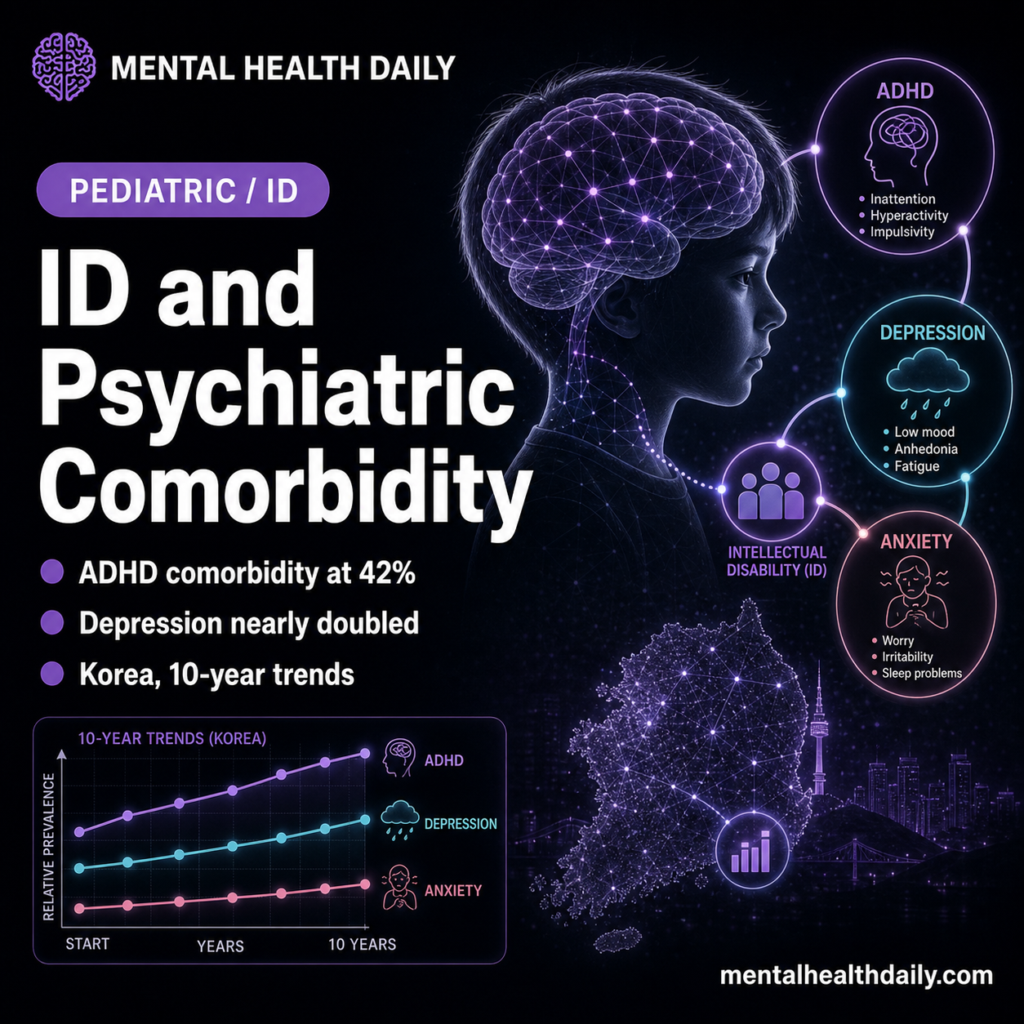
Intellectual Disability in Korean Children and Psychiatric Disorders (ADHD 42%, Depression 19%)

Photoreal illustration of a child interacting with cognitive and developmental motifs, representing intellectual disability and psychiatric comorbidity.

Children with intellectual disability are 3–4x more likely to have a comorbid psychiatric disorder than peers without ID. A 2026 nationwide Korean study by Joo and colleagues tracks how those rates changed across a decade.1 Research Highlights Korean children and adolescents (ages 2–18) with intellectual disability had ADHD comorbidity rise from 30.2% in 2012 to …

Read more