hit counter

Social Anxiety: Prefrontal Connectivity Differs but Amygdala-PFC Doesn’t
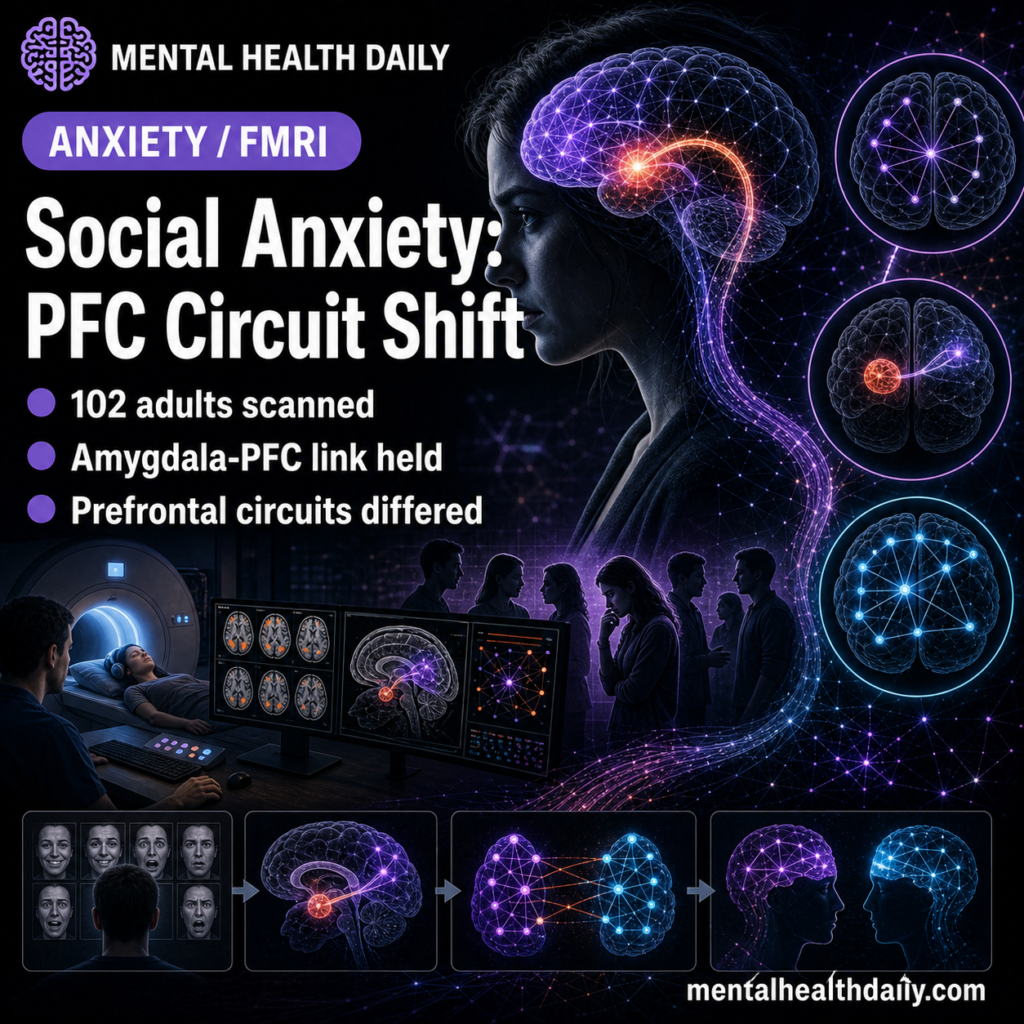
Stylized fMRI connectivity map showing prefrontal and amygdala circuits during emotion regulation in social anxiety disorder.

The textbook story of social anxiety disorder is broken amygdala-prefrontal regulation — an overactive threat system the prefrontal cortex can’t calm down. A 2026 effective-connectivity study of 102 adults found something different: amygdala-prefrontal connectivity didn’t differ between social anxiety patients and controls, but connectivity between prefrontal regions did, particularly involving the pre-supplementary motor area.1 Research …
Read more

Eye Movement Biomarkers Separated Anxiety from Controls With AUC 0.82

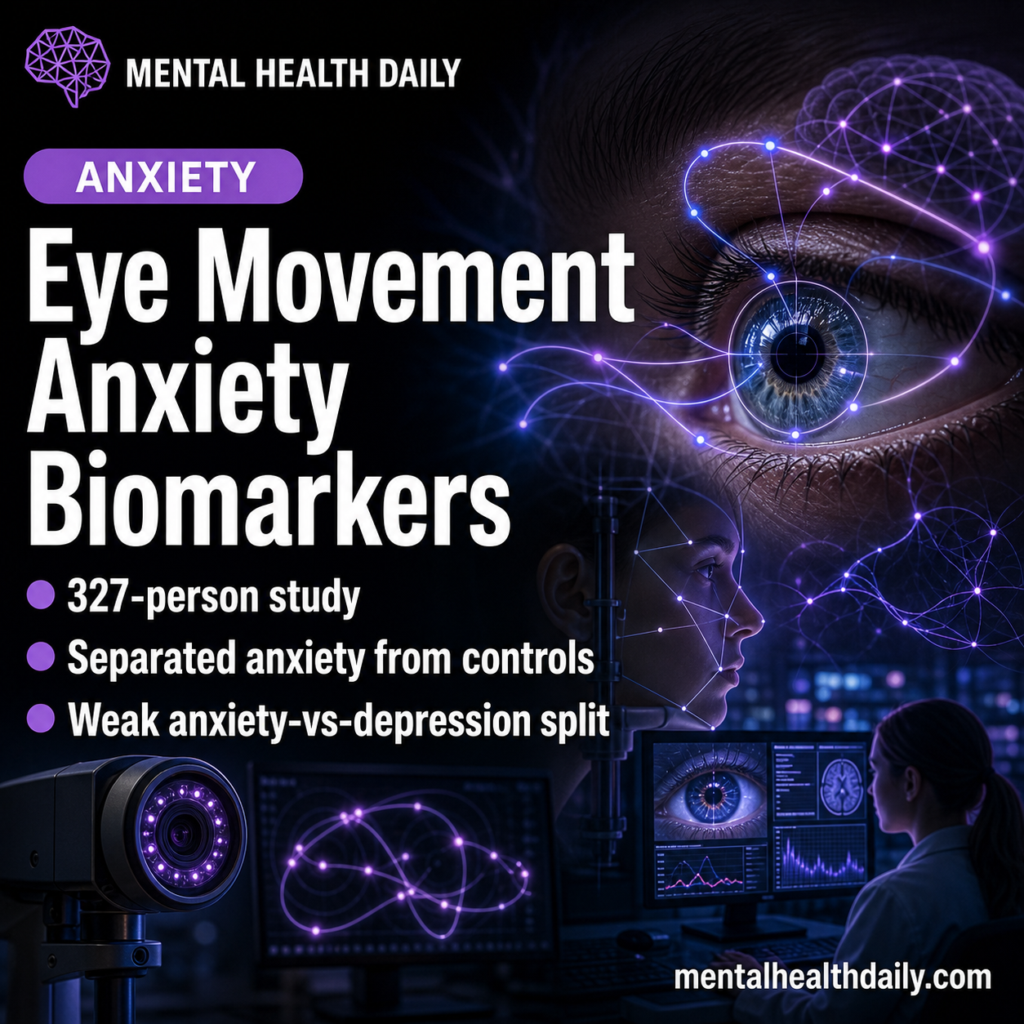
MHD featured image for anxiety eye movement biomarker research.

A 327-person eye-tracking study found that anxiety disorders carried a hyper-scanning and hyper-pursuit signature, separating anxiety patients from healthy controls with AUC 0.82.1 The same eye-movement data separated anxiety from depression poorly, so the result is better read as a behavioral arousal marker than as a ready diagnostic test. Research Highlights Anxiety vs controls separated …

Read more

Bergen 4-Day Treatment (B4DT) for Social Anxiety Disorder: Effective with High Patient Satisfaction (2024 Study)

Social anxiety disorder (SAD) is a debilitating condition that affects a significant portion of the population, characterized by a paralyzing fear of social situations. Recent studies have explored concentrated and intensified cognitive behavior therapy (CBT) methods, such as the Bergen 4-Day Treatment (B4DT), as innovative approaches to treating SAD. Highlights: High Efficacy: The B4DT has …

Read more

Gut Microbiome & Social Anxiety Disorder: Abnormal Bacterial Composition (2023 Study)

Recent scientific endeavors have unveiled a fascinating link between our gut microbiome and mental health, with a focus on Social Anxiety Disorder (SAD). This complex relationship, highlighting the role of microbial inhabitants in our gut in influencing our brain and behavior, marks a significant shift in understanding mental disorders. Highlights: Social Anxiety Disorder (SAD) affects …

Read more

Effexor (Venlafaxine) For Anxiety Disorders: An Effective Anxiolytic?

Effexor (Venlafaxine) is a drug that was introduced in 1993 as a pharmaceutical antidepressant by Wyeth; its marketing rights are now owned by Pfizer.  Pharmacodynamically, it functions primarily as a serotonin-norepinephrine reuptake inhibitor (SNRI) and is understood to be the first-ever “dual reuptake inhibitor” approved by the FDA for the treatment of major depressive disorder.  …

Read more

Eating Fermented Foods For Social Anxiety Disorder: Preliminary Study Suggests Benefit

Fermentation is considered the conversion of carbohydrates to organic acids using yeast and/or bacteria.  During the fermentation process, millions of tiny microorganisms become infused with the food so that when consumed, those bacteria enter your gut. While all the health effects associated with consumption fermentation of foods remain unknown, most evidence suggests that regular consumption …

Read more

Social Anxiety Disorder Caused By Too Much Serotonin?

Those with social anxiety disorder are reported to suffer from debilitating, uncontrollable anxiety in social situations.  This condition, also known as “social phobia” can lead to an intense fear of public speaking, forming friendships, maintaining social bonds, and even getting a job.  Individuals living with social anxiety often isolate themselves, suffer from low self-esteem, and …

Read more