hit counter

GLP-1 Stroke Review Finds Prevention Signal, No Acute Neuroprotection Proof
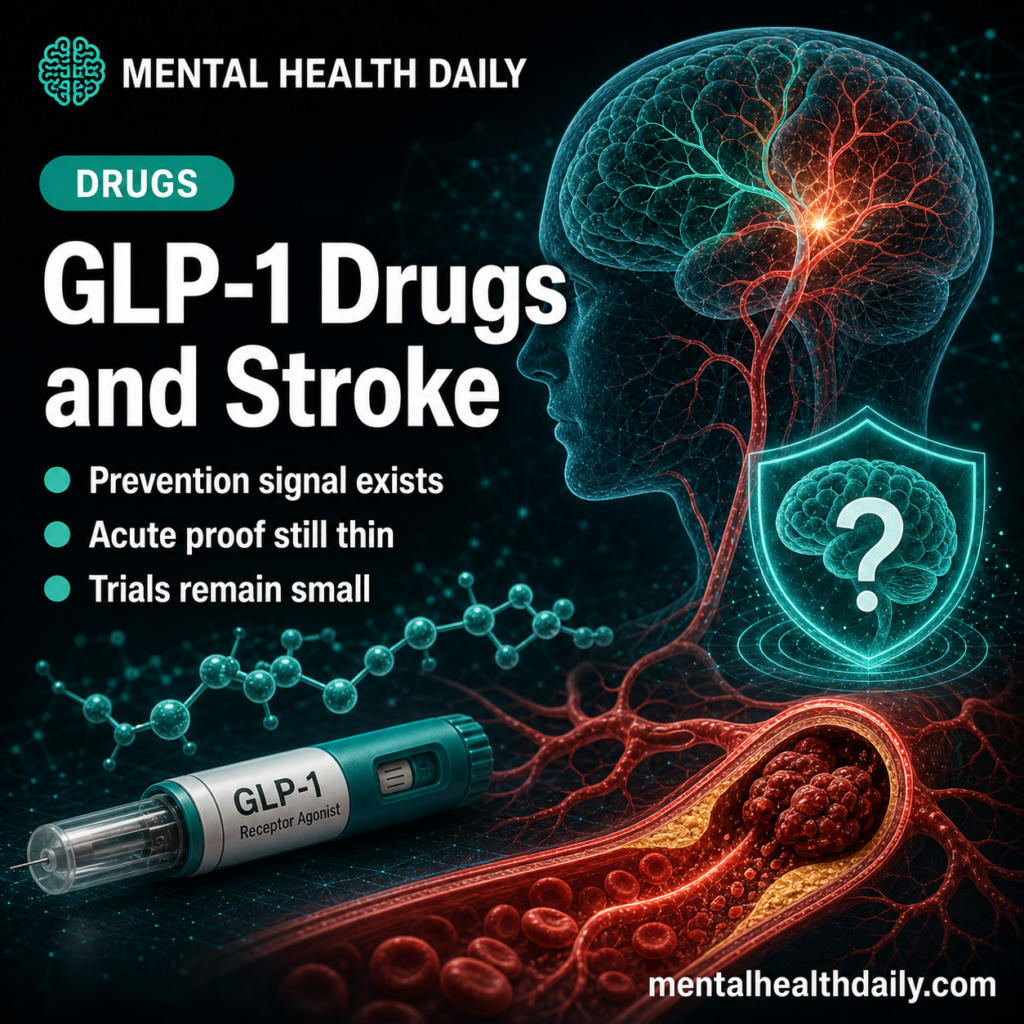
MHD featured image for GLP-1 receptor agonists and stroke neuroprotection.

A 2026 review concluded that GLP-1 receptor agonists have plausible stroke biology and modest prevention signals, but current human evidence does not support routine use as acute ischemic stroke neuroprotection.1 The useful clinical split is prevention in cardiometabolic patients vs. acute brain-rescue treatment after stroke onset. Research Highlights Acute neuroprotection is not established: the 2026 …
Read more

Parkinson’s Disease Prevention: Prodromal Symptoms, RBD, Early Intervention Trials

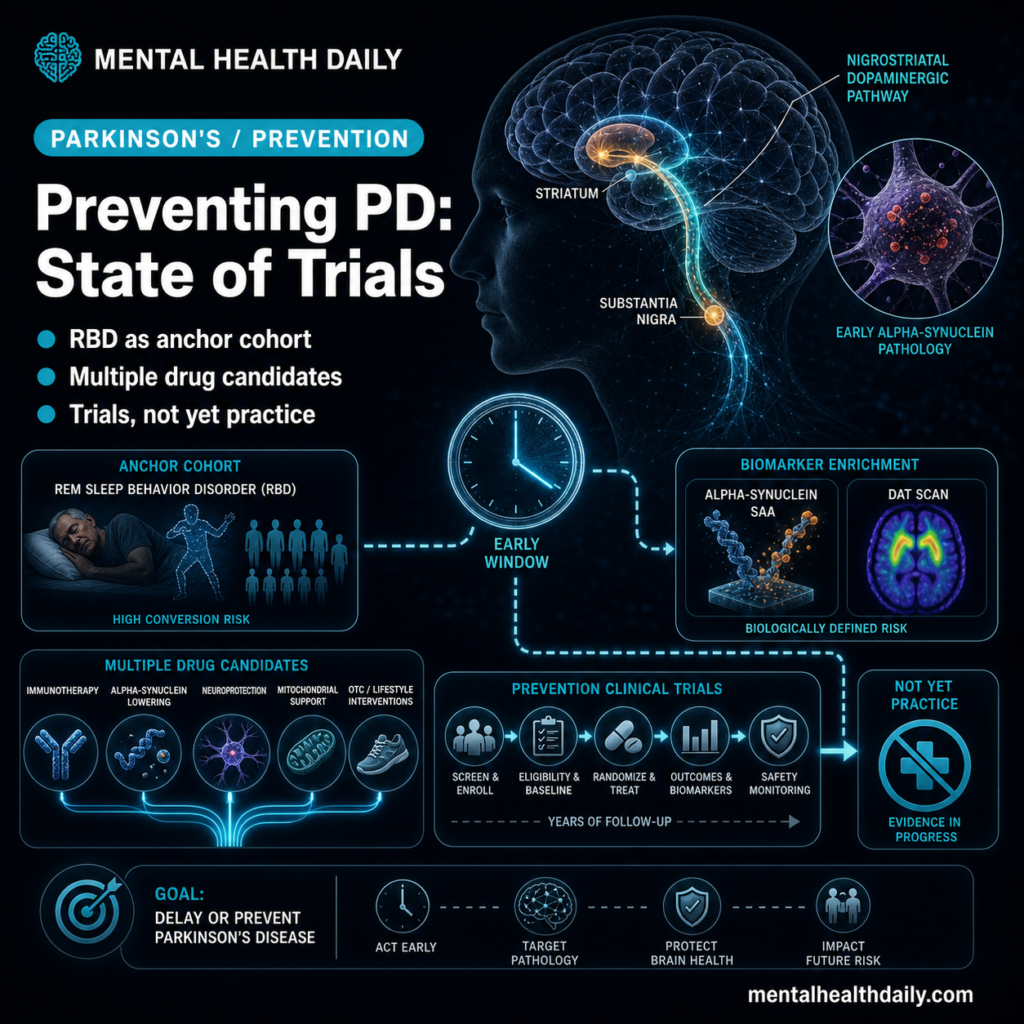
Photoreal illustration of a brain with prodromal pathology and a clock indicating early-window intervention opportunity for Parkinson's prevention.

Parkinson’s disease has a years-to-decades prodromal stage where motor symptoms haven’t yet emerged but pathology is accumulating. A 2026 review by Schaeffer et al. synthesizes the case for (and limits of) intervening during this window — with implications for high-risk individuals weighing whether to enter preventive trials.1 Research Highlights Prodromal Parkinson’s disease is the period …

Read more

GLP-1 Drugs for Parkinson’s: Lixisenatide Signal, Exenatide Miss

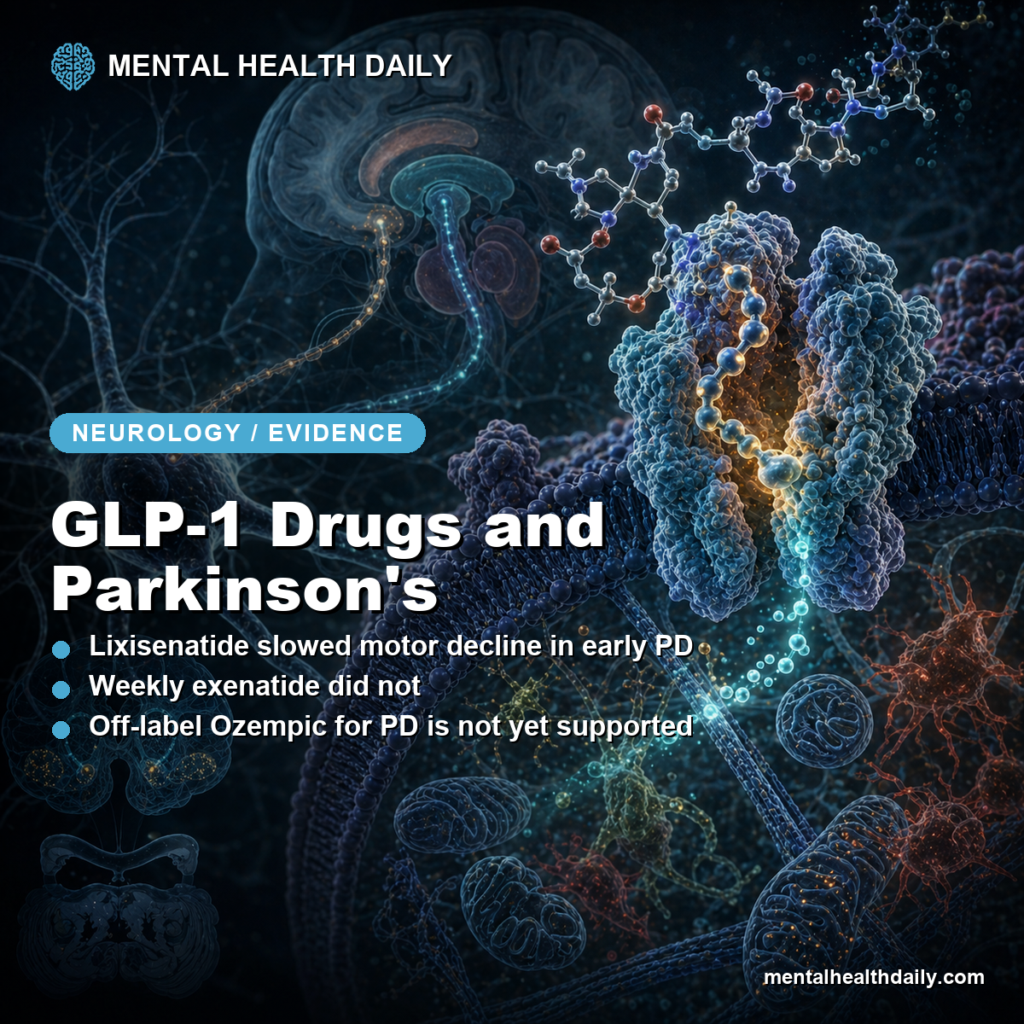
Stylized illustration representing GLP-1 receptor agonists being investigated as potential disease-modifying treatments for Parkinson's disease.

Parkinson’s disease is the second most common neurodegenerative disorder, affecting around 10 million people worldwide. The mental-health burden is heavy: depression affects 40-50% of patients9, anxiety 30-40%, sleep disorders most patients eventually, and dementia about a third of long-duration cases. Standard treatment with levodopa controls motor symptoms but doesn’t slow the underlying neurodegeneration. The clinical …

Read more