hit counter

150 mg Caffeine Did Not Trigger Panic in Panic Disorder Trial
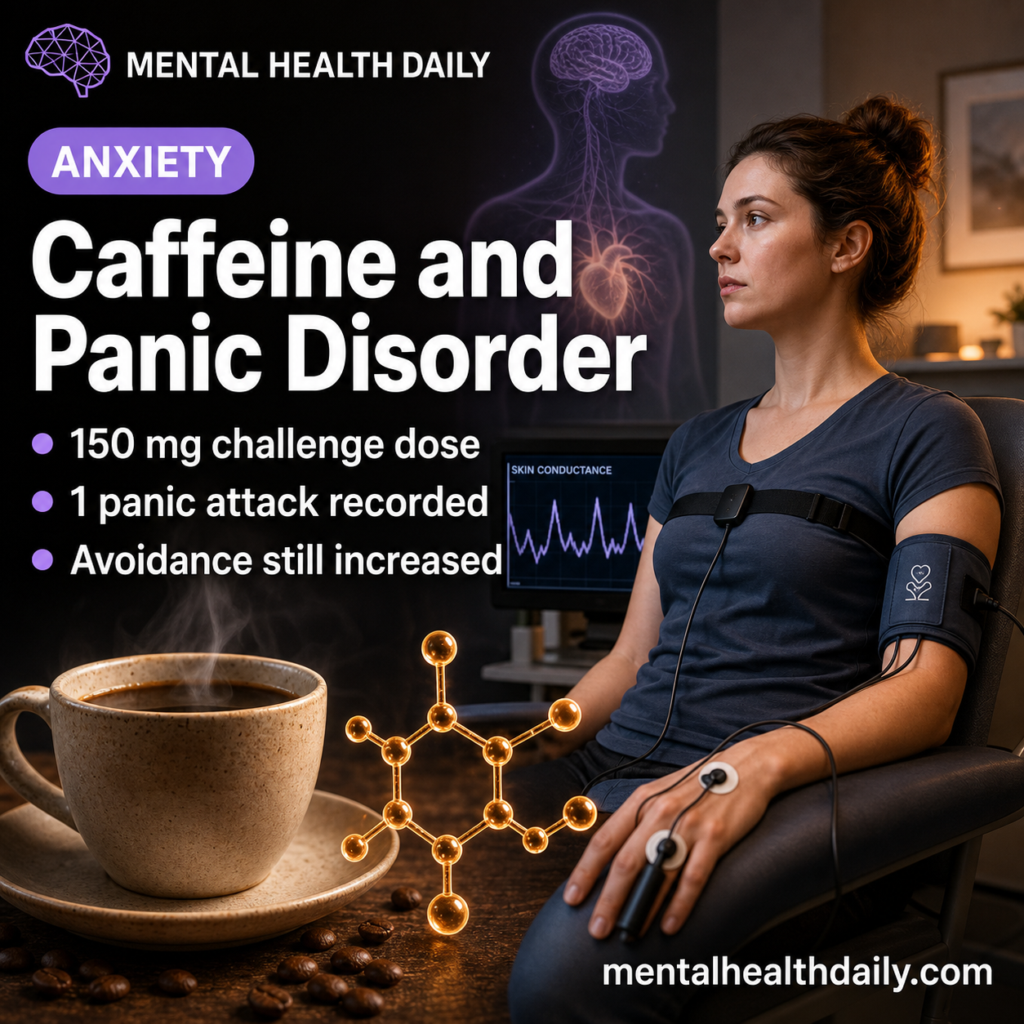
MHD featured image for caffeine and panic disorder challenge research.

A randomized crossover trial found that 150 mg caffeine did not increase subjective anxiety, interoceptive attention, or anxiety from body sensations in 29 people with panic disorder compared with 53 healthy controls.1 The result runs opposite the hypothesis, but it does not make caffeine inert: caffeine still increased physiological arousal, costly avoidance, and attention problems …
Read more

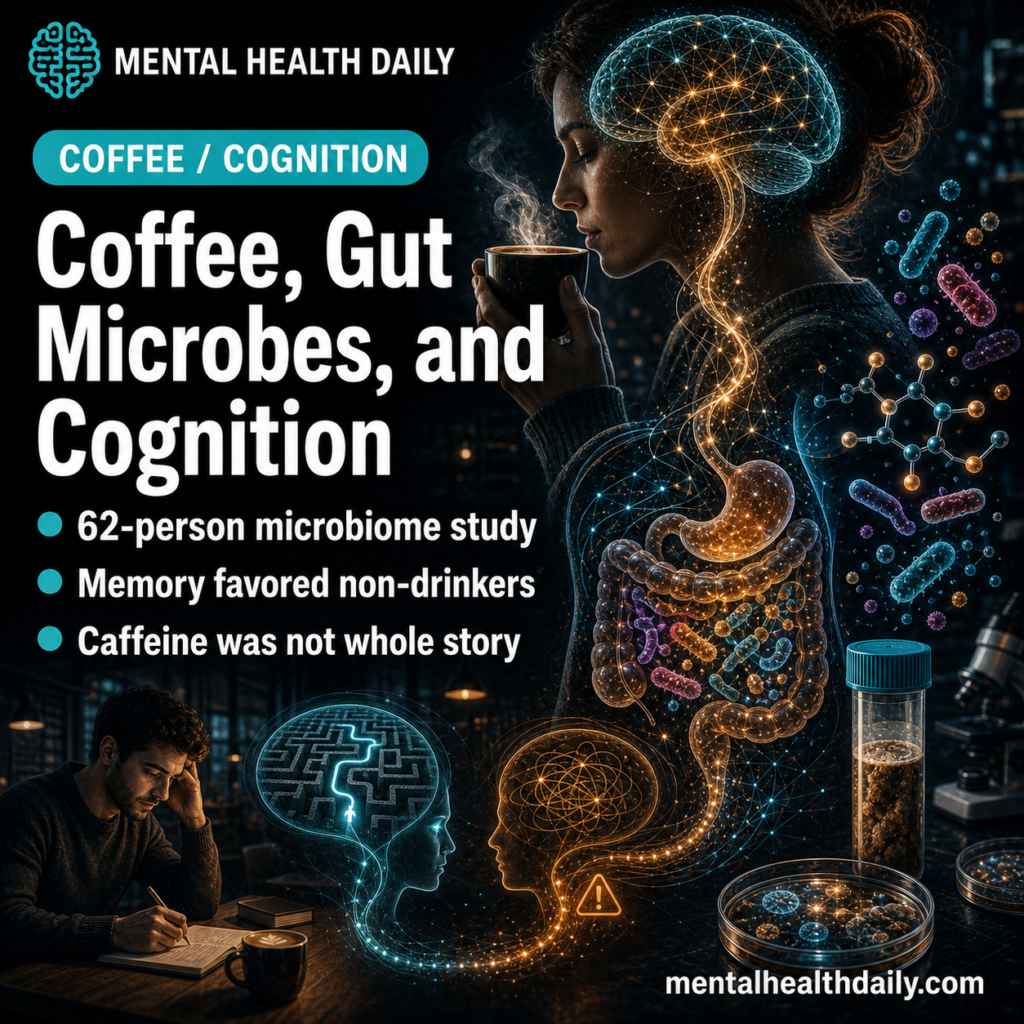
Coffee, Gut Microbes, Memory, and Impulsivity in 62 Adults

Stylized illustration of a coffee cup overlaid with gut bacteria silhouettes and brain neurons with neurotransmitter symbols, representing the gut-brain axis effects of habitual coffee intake.

Coffee is widely framed as cognitively friendly, but a 2026 prospective study from Boscaini et al. published in Nature Communications used shotgun metagenomics, metabolomics, and cognitive testing in 62 healthy adults to show that coffee drinkers and non-coffee drinkers differ on the gut microbiome, key neurotransmitter-related metabolites, and behavioral measures — with coffee drinkers showing …

Read more

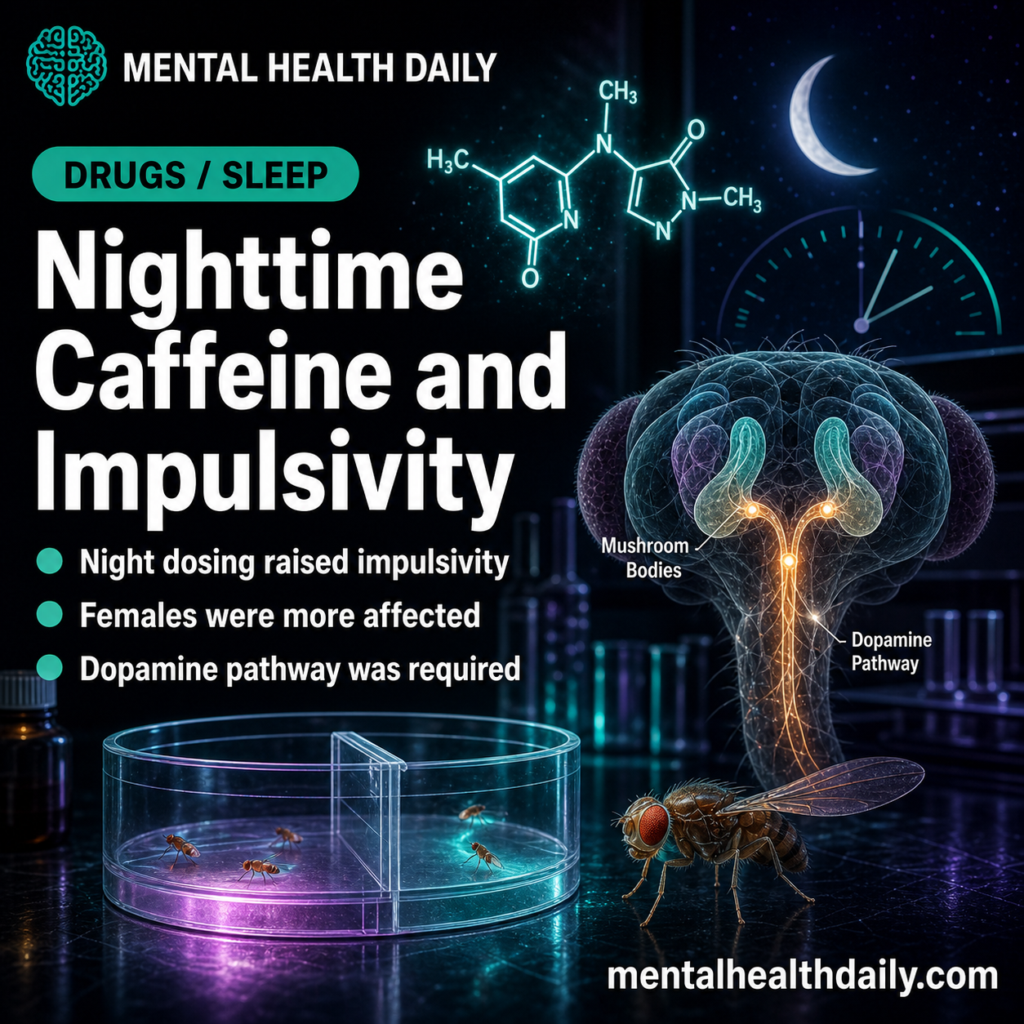
Nighttime Caffeine Increased Impulsivity Through Dopamine in Fly Study

MHD featured image for nighttime caffeine, dopamine, and impulsive motor behavior.

A 2025 iScience study found that nighttime caffeine increased motor impulsivity in Drosophila, with dose-dependent loss-of-inhibition events across n = 30-32 flies per behavioral condition and stronger effects in female flies than male flies.1 The result does not prove that an evening coffee makes humans reckless, but it sharpens a neglected point: caffeine’s alertness benefit …

Read more

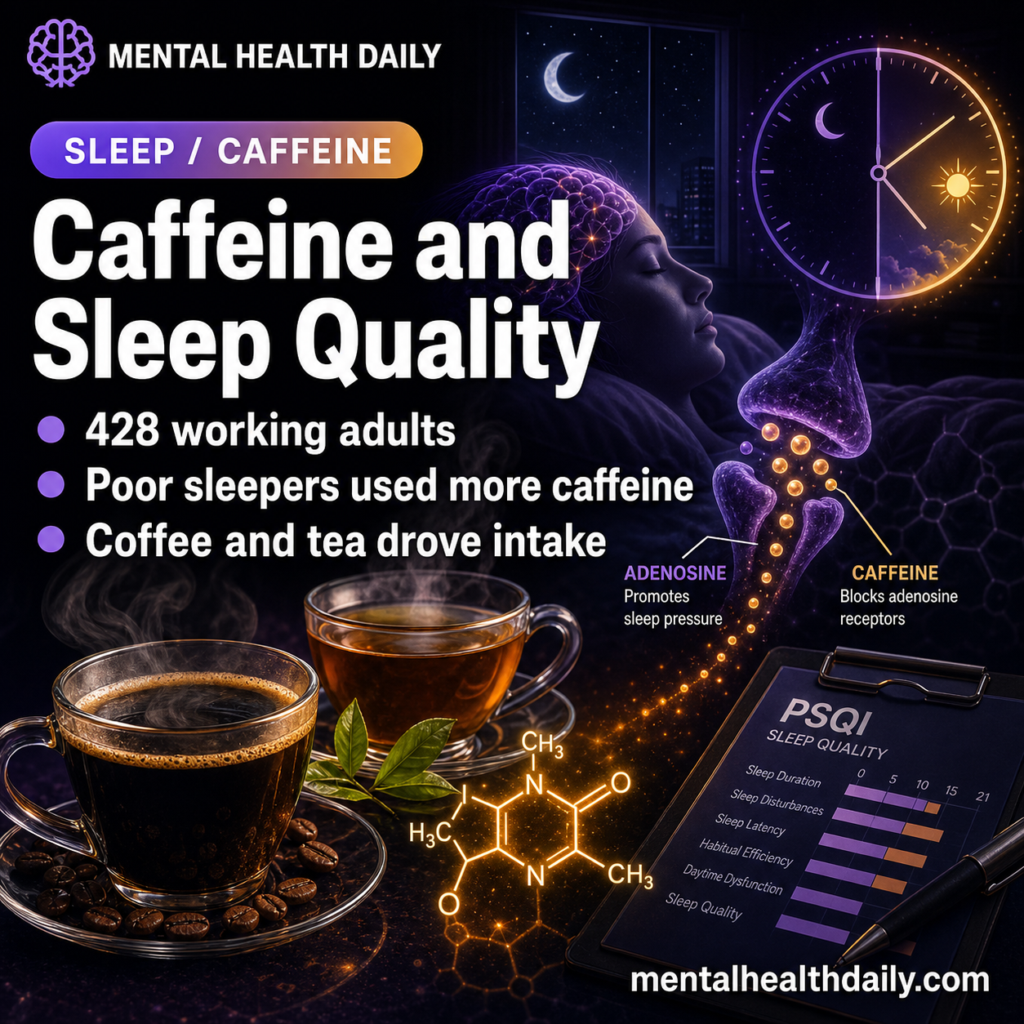
Caffeine Intake and Sleep Quality: 428 Working Adults, Source by Source

MHD featured image for caffeine intake, coffee and tea sources, and sleep quality in working adults.

A 2026 cross-sectional study involving 428 employed adults found that poor sleepers reported a median 292.8 mg/day of caffeine, compared with 176.1 mg/day among good sleepers, and total caffeine intake still predicted higher Pittsburgh Sleep Quality Index scores after adjustment (β = 0.147, p = 0.003). The source breakdown is the useful part: black coffee, …

Read more

Pharmaceutical & Recreational Drug Use During & After COVID-19 Pandemic (2020-2023 in Latvia) (2024 Study)

The COVID-19 pandemic has undeniably transformed various facets of human life, including our health behaviors and substance consumption patterns. Through the lens of wastewater-based epidemiology (WBE), a study conducted in Riga, Latvia, from December 2020 to July 2023, sheds light on how the pandemic and subsequent restrictions have impacted the use of pharmaceuticals and recreational …

Read more

Caffeine & Depression: Lower Risk with >90 mg per Day in Adults (2022 Study)

In the quest to understand the intricate links between our dietary habits and mental health, a recent study leveraging data from the National Health and Nutrition Examination Survey (NHANES) 2017-2018 offers new insights into how caffeine consumption correlates with depression. This comprehensive analysis reveals that moderate caffeine intake might have a protective effect against depression, …

Read more

Effects of Coffee & Caffeine on Brain Connectivity in Habitual Drinkers (2023 Study)

Coffee, one of the world’s most consumed beverages, is often lauded for its ability to enhance alertness and cognitive performance. Recent studies utilizing advanced neuroimaging techniques like resting-state functional magnetic resonance imaging (fMRI) have begun to unravel the intricate ways in which coffee, and its key component caffeine, modulate brain activity. This exploration into the …

Read more