hit counter

Alzheimer’s Plasma Protein Structure Panel Reached AUCs Above 0.93
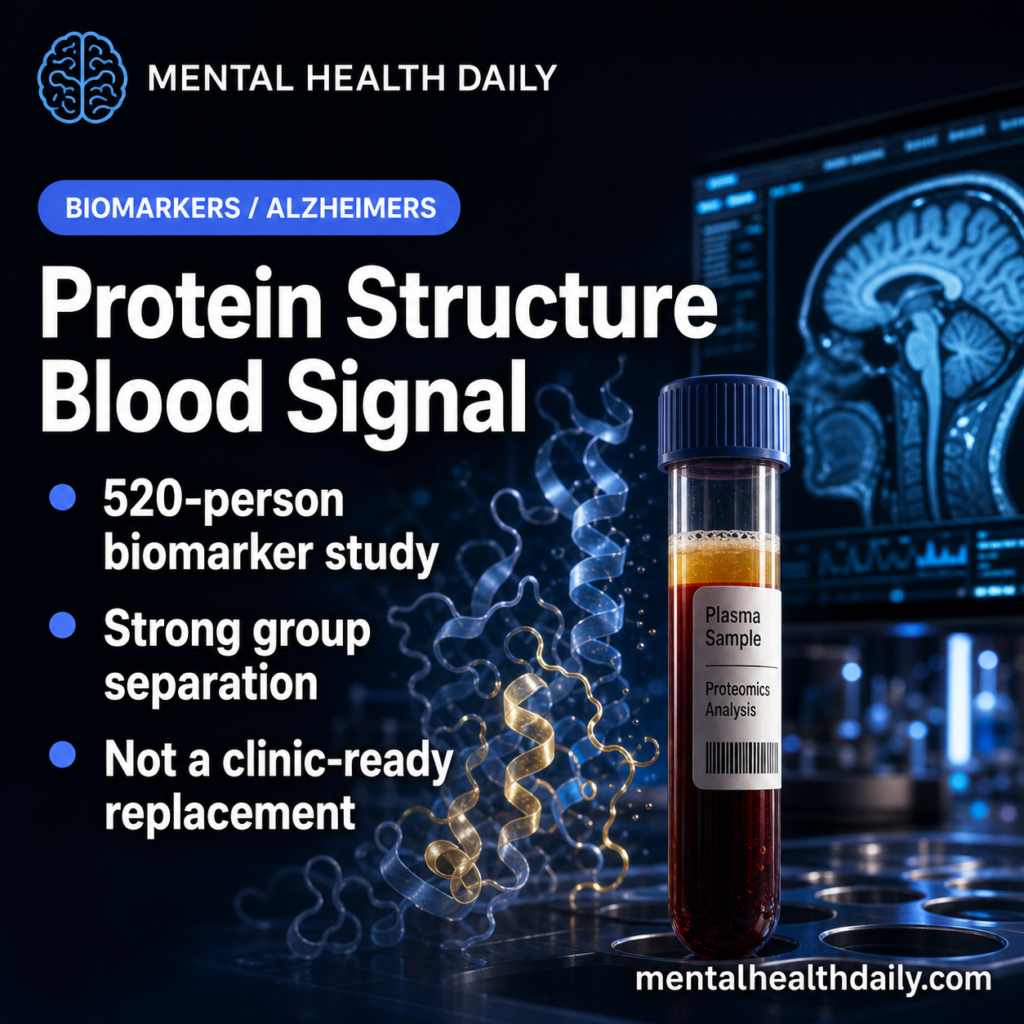
MHD featured image for Alzheimer's plasma protein-structure biomarkers.

A 2026 Nature Aging study involving 520 participants found that plasma protein-structure signatures classified healthy control, mild cognitive impairment, and Alzheimer’s disease groups with 83.44% three-way accuracy.1 The result is a serious biomarker signal, but it is not a clinic-ready replacement for established Alzheimer’s testing. Research Highlights Classification was strong: The plasma structural-proteomics panel reached …
Read more

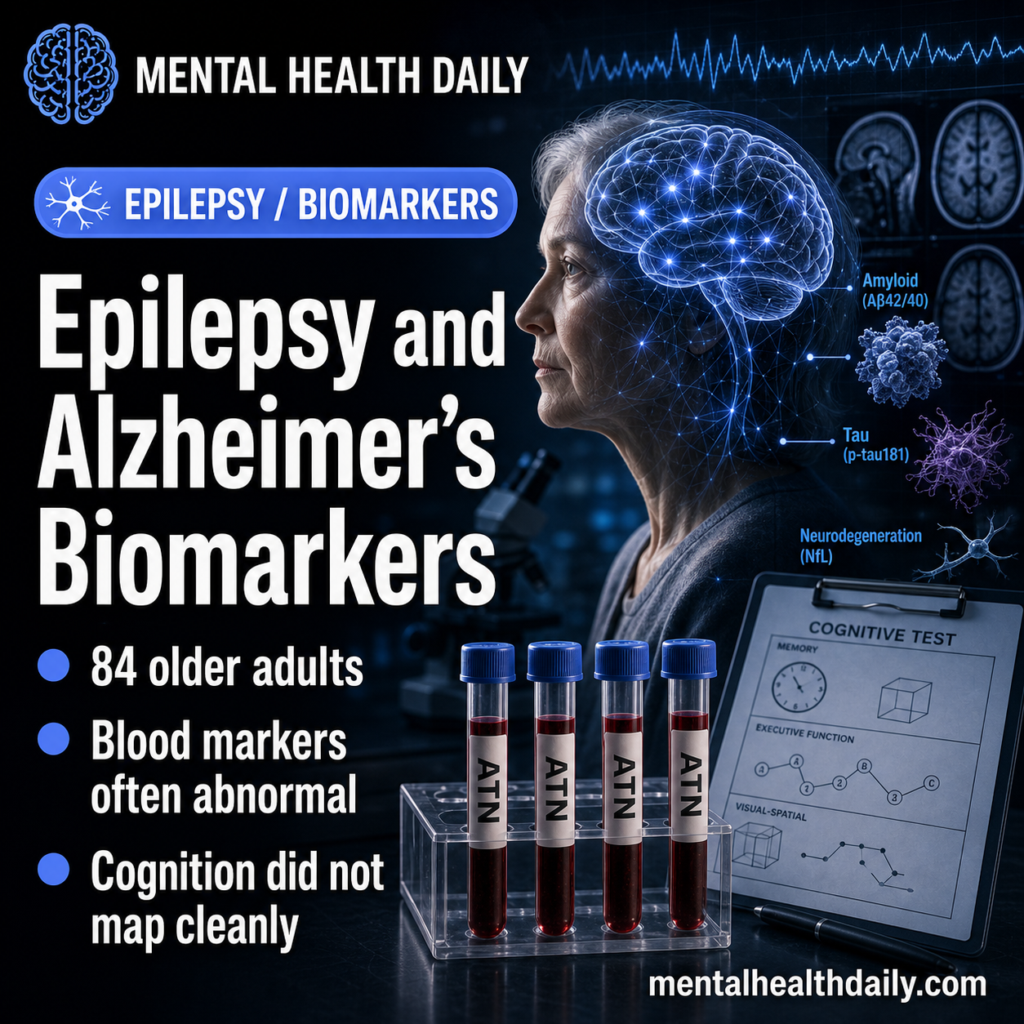
Epilepsy and Alzheimer’s Blood Biomarkers in Older Adults

MHD featured image for epilepsy, Alzheimer’s blood biomarkers, and AT(N) profiles in older adults.

A preprint in 84 older adults with epilepsy found that abnormal Alzheimer's-related blood biomarkers were common, but the biomarker categories did not line up neatly with cognitive impairment. Research Highlights Only 32.1% had normal biomarkers: 27 of 84 older adults with epilepsy were A−T−N− using blood-based amyloid, tau, and neurodegeneration markers.1 AD-continuum profiles were common: …

Read more

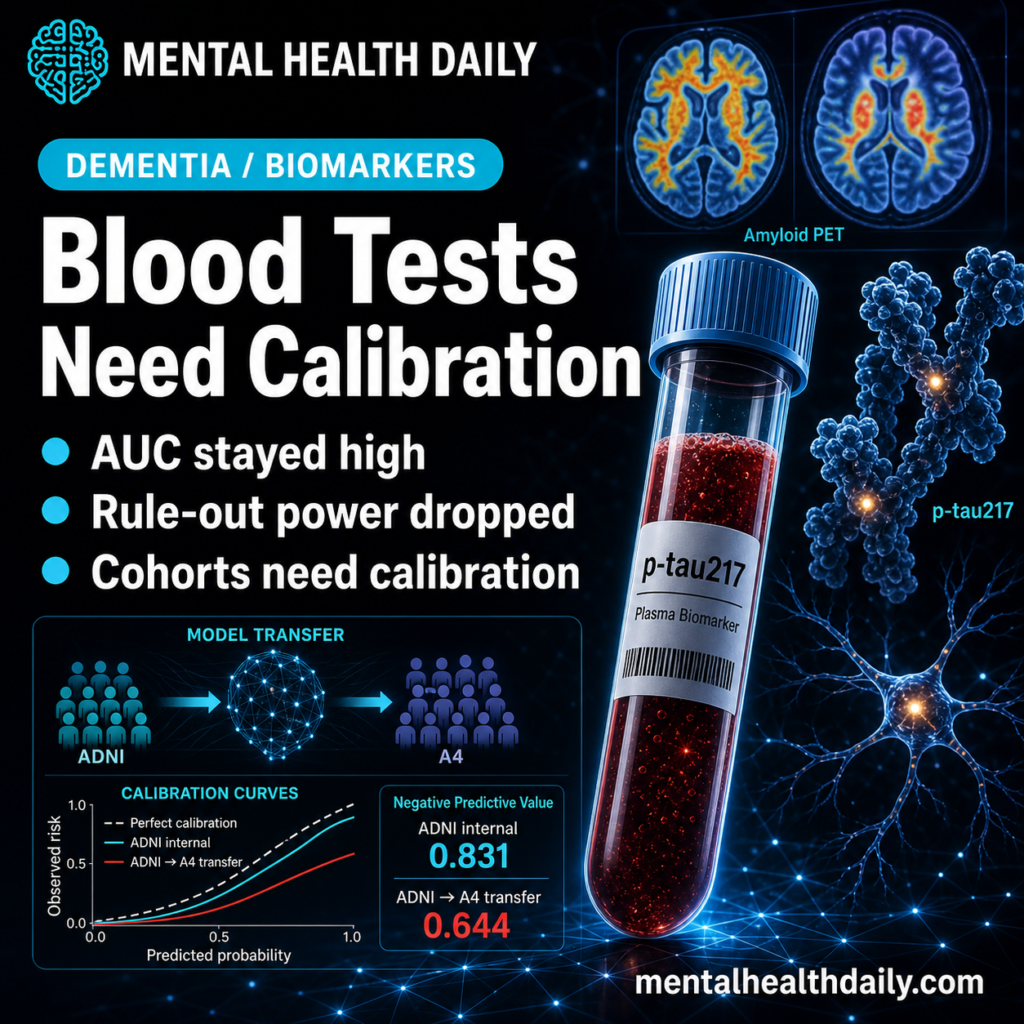
Alzheimer’s Blood Biomarker Models Lose Rule-Out Power Across Cohorts

Editorial card showing Alzheimer's blood biomarker model transfer across cohorts with PET scan and blood assay imagery.

A 2026 ADNI/A4 validation study found that Alzheimer’s plasma-biomarker machine-learning models still ranked amyloid PET status well across cohorts, but the practical rule-out number moved hard: negative predictive value fell from 0.831 inside ADNI to 0.644 when the ADNI-trained model was applied to A4.1 Research Highlights 1,707-person ADNI/A4 test: researchers trained amyloid PET prediction models …

Read more

Abnormal Glutamate Biomarkers in ADHD: CDK5, MAP2, GKAP, PSD95 (2023 Study)

Attention-Deficit Hyperactivity Disorder (ADHD) is a complex neurodevelopmental condition that has puzzled researchers and clinicians for decades. Recent studies have begun to unravel the intricate relationship between ADHD and the glutamatergic system, a major neurotransmitter pathway in the brain. A newer study evaluated the roles of cyclin-dependent kinase 5 (CDK5), microtubule-associated protein-2 (MAP2), guanylate kinase-associated …

Read more