hit counter

VR Training for Alzheimer’s Improved Memory Tests, Not Daily Function
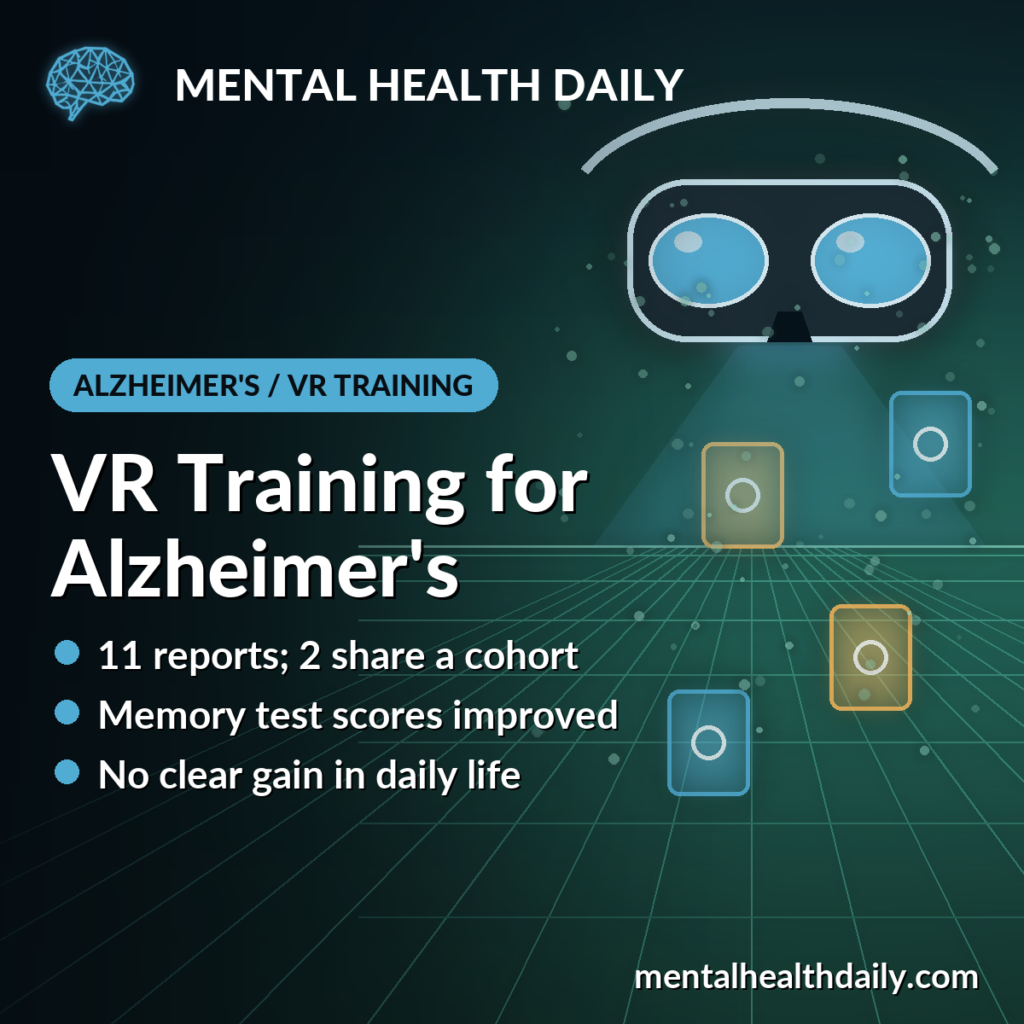
MHD card with a VR headset and memory tiles: 11 study reports include 2 from the same cohort; memory test scores improved, with no clear gain in daily life.

A 2026 meta-analysis of 11 reports from small randomized trials found that virtual reality (VR) training modestly improved thinking-test scores in people with Alzheimer’s dementia (standardized effect 0.44), but it did not produce a clear benefit for everyday functioning, quality of life, or mood.1 The studies were small, several had design problems, and the researchers …
Read more

SPP1 Marks Cross-Disease Microglial Activation in Neurodegeneration

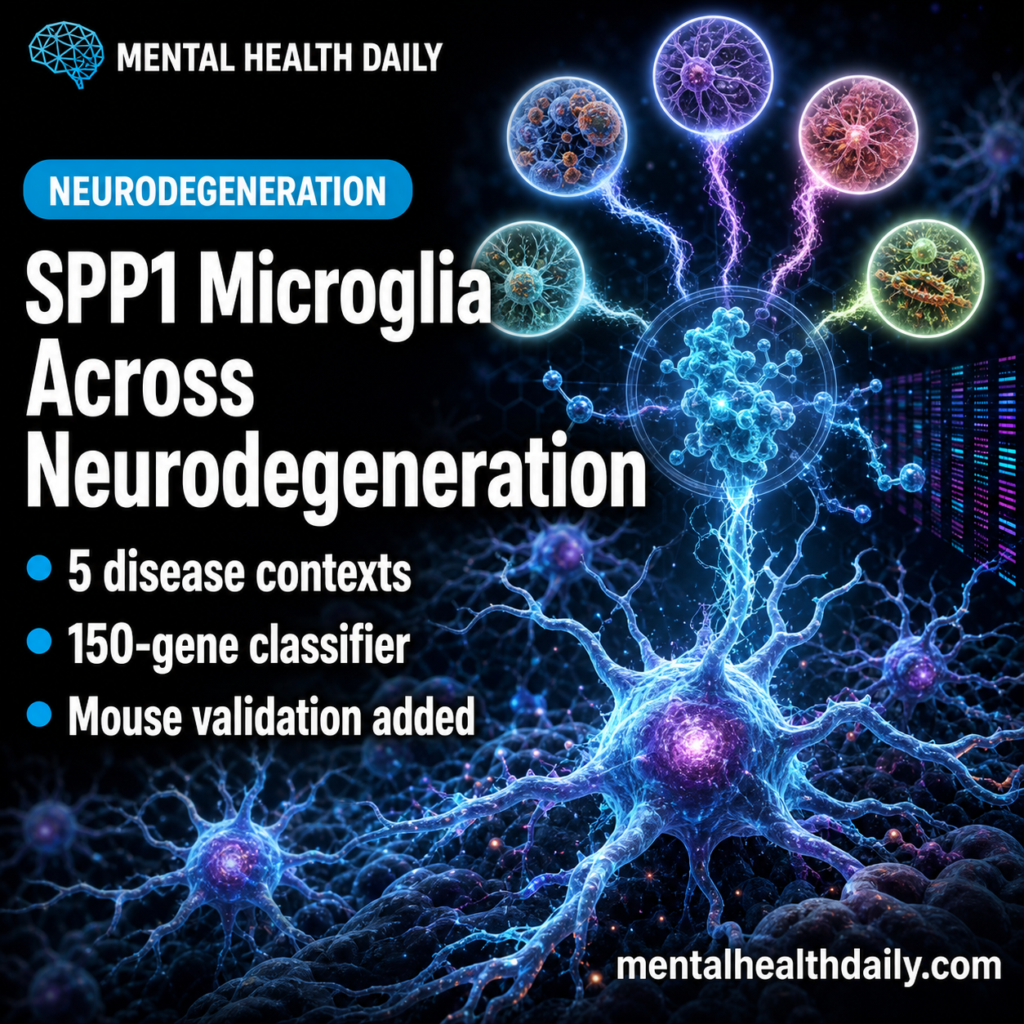
MHD featured image for SPP1 microglia and neurodegeneration transcriptomics.

A 2026 Glia analysis found a shared microglial transcriptional program across 5 neurodegenerative contexts: ALS, frontotemporal dementia, Alzheimer’s disease, aging, and Parkinson’s disease.1 The standout marker was SPP1, a gene encoding osteopontin, but the finding is a cellular-state signal rather than a ready diagnostic test. Research Highlights Cross-disease microglia converged: the integrated dataset covered ALS, …

Read more

Under-Mattress Sensors Predict Dementia Agitation: 333-Night Cohort

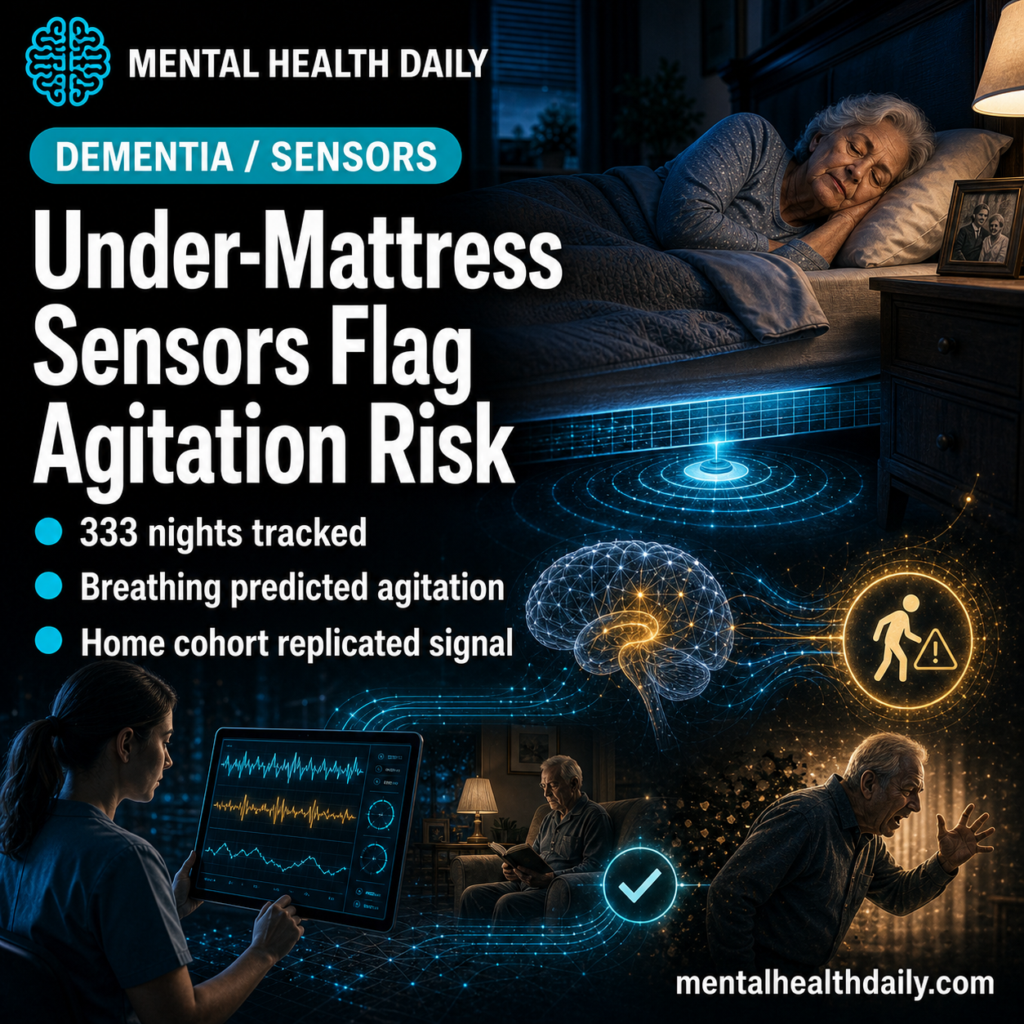
Stylized illustration of an under-mattress sensor connected to a clock and waveform pattern, indicating overnight respiratory and movement signals predicting next-day behavioral risk in a dementia care setting.

Daytime agitation in dementia fluctuates day-to-day, and a 2026 explanatory study from Liu et al. used contactless under-mattress sensors in 55 long-term-care residents and an external 17-person home-monitoring cohort to show that lower nocturnal respiratory rate and higher activity instability robustly predict next-day agitation occurrence — but not severity.1 Research Highlights Lower breathing rate: adjusted …

Read more